
What’s making headlines this time isn’t a new language model or a record token-per-second sprint. It’s a raw number, almost blunt: +93%. That’s how much Taiwan’s electronics production grew in the first five months of 2026, a figure that encapsulates an entire ecosystem under strain.
The island—home to TSMC and the hub of global semiconductor manufacturing—is in the midst of an expansion season comparable only to the early smartphone era. But the driver now isn’t a consumer device; it’s artificial intelligence, with its voracious appetite for denser circuits, faster memory, and ever-higher thermal envelopes.
Chips and AI: the engine behind the surge
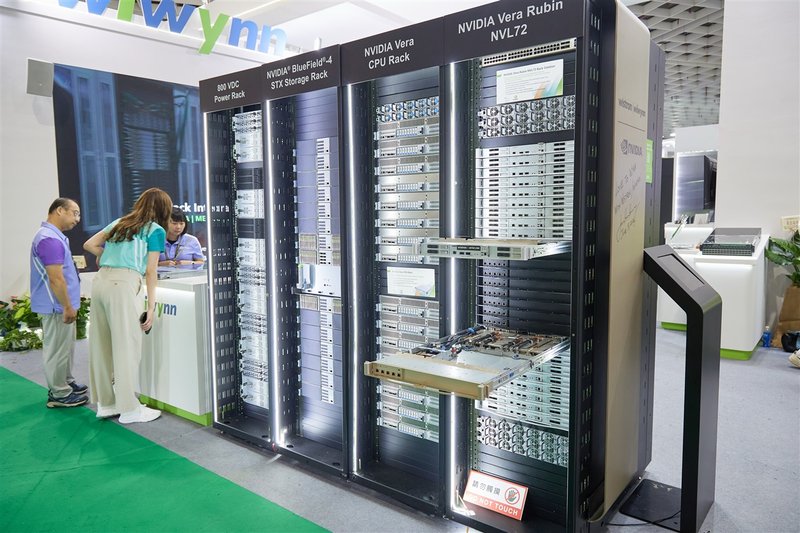
To understand the number, follow the silicon. Training and inference for LLMs consume GPUs and accelerators at an unprecedented rate. The most recent architectures—spanning data centers to local workstations—rely on advanced process nodes (3nm and below) and on packaging technologies like CoWoS, where TSMC holds a near-monopoly. Almost every AI server, every on-premise cluster, is built on components that start their journey in a Taiwanese foundry.
The 93% leap thus reflects the collision of two forces: on one side, the arms race among hyperscalers booking entire production lines; on the other, the emerging demand from companies that choose to bring inference in-house, on self-hosted hardware, for latency, cost, or data sovereignty reasons. Both push in the same direction, inflating order books.
What it means for on-premise deployment
Anyone evaluating a local LLM infrastructure today knows that hardware availability is a make-or-break factor. The production boom is an ambivalent signal: it shows the supply chain is reacting to chronic GPU shortages, but the geographic concentration in Taiwan makes that chain fragile. A geopolitical storm or a new logistics crisis could erase the growth within weeks.
That’s why many on-premise projects are pivoting toward single-node GPU machines or standard-format servers, steering clear of custom configurations tied to unstable supplies. Sustained production growth could narrow the gap between demand and supply, yet the risk of bottlenecks remains high.
The energy knot and compute capacity
Another collateral effect of the output surge concerns energy costs. More chips mean more powered-on servers, and data centers—even local ones—become high-energy-intensity assets. TCO estimates that pit cloud against on-premise must now factor in not just hardware purchase but projected consumption over a three-to-five-year lifecycle. In this sense, availability of more efficient components does not guarantee overall efficiency: poorly tuned systems can negate gains at the silicon level.
Beyond cloud: sovereignty and control
The Taiwanese figure is more than an industrial thermometer. For IT leaders pushing on-premise deployment, it’s a reminder: existing manufacturing capacity is being absorbed by a few large cloud customers. Those who want to build a controlled, air-gapped environment must move early, diversify suppliers, and accept trade-offs on the latest GPUs.
AI-RADAR has been tracking these dynamics, offering analytical frameworks to evaluate when it makes sense to bring inference in-house and how to balance CapEx, consumption, and latency. In a market where production grows at double digits but demand runs even faster, the ability to decide with objective data is the real competitive edge.
The Taiwanese wave, in short, is more than a milestone. It’s a leading indicator of how difficult—but also how necessary—it will be to build AI infrastructure that doesn’t depend solely on three data centers on the U.S. West Coast.





💬 Comments (0)
🔒 Log in or register to comment on articles.
No comments yet. Be the first to comment!