
The Shockwave of the AI Race
The global technological landscape is in full effervescence, driven by a true "AI race." This term describes the intense competition among companies, nations, and research centers to develop and implement increasingly advanced artificial intelligence capabilities. At the heart of this revolution are Large Language Models (LLMs), which demand exponential computing power for both training and inference.
This acceleration is not merely a matter of more sophisticated algorithms or models; it is a phenomenon with profound repercussions across the entire technological value chain. The demand for computational resources, particularly for the Transformer architectures that underpin modern LLMs, is growing at a dizzying pace, putting pressure on the entire production and distribution pipeline.
The Impact on Infrastructure and Hardware Demand
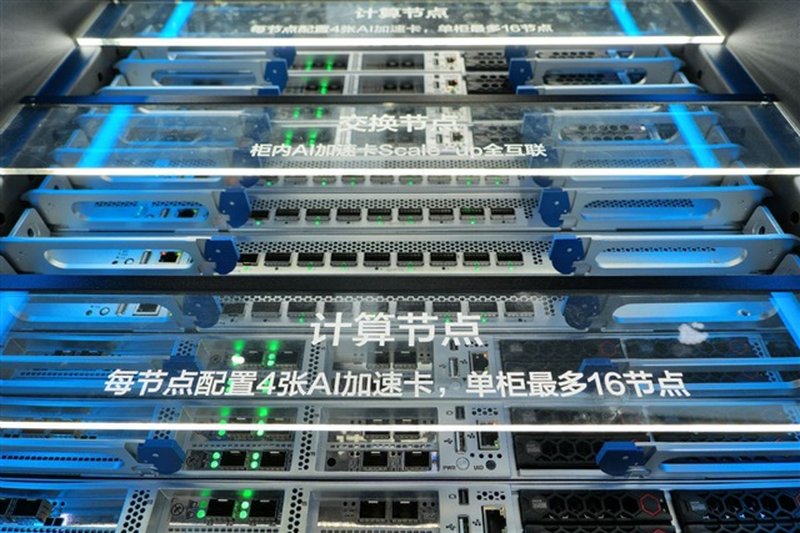
The explosion of LLMs and other AI applications has generated a massive demand for specialized hardware. High-performance GPUs, with ample VRAM and parallel processing capabilities, have become the cornerstone of any AI deployment strategy. Models like the NVIDIA H100 or A100 series, with their architectures optimized for tensor computation, are essential for managing complex workloads, from Fine-tuning to large-scale Inference.
This demand is not limited to GPUs but extends to the entire supporting infrastructure: advanced cooling systems, robust power supplies, high-speed networks, and performant storage solutions. For companies considering an on-premise deployment, planning these infrastructures becomes a critical factor in ensuring high Throughput, low latency, and granular data control. The ability to efficiently scale these resources is fundamental to supporting the evolution of AI models.
Market Dynamics and Total Cost of Ownership (TCO)
The increasing demand for AI components and systems is inevitably influencing market dynamics. In this scenario, some companies, such as Fortune Electric, are cited as being able to gain a "pricing edge," a competitive advantage in pricing, likely due to their strategic position in supplying essential components or infrastructure solutions. This highlights how the ability to meet AI infrastructure demand has become a key success factor.
For IT decision-makers, evaluating the Total Cost of Ownership (TCO) for AI deployments is more relevant than ever. While cloud solutions offer flexibility, long-term operational costs, especially for intensive and persistent workloads, can outweigh initial benefits. An on-premise deployment, while requiring a more significant initial investment (CapEx), can offer a lower TCO over time, greater control over data sovereignty, and more efficient management of hardware resources.
Prospects for On-Premise Deployment and Data Sovereignty
In an era dominated by the AI race, the choice between on-premise and cloud solutions for LLMs becomes a crucial strategic decision. Self-hosted infrastructures offer distinct advantages, particularly for organizations operating in regulated sectors or handling sensitive data. Data sovereignty, regulatory compliance (such as GDPR), and the ability to operate in Air-gapped environments are factors that lead many companies to seriously consider the on-premise option.
The ability to maintain direct control over hardware, software, and data is not just a matter of security but also of performance optimization. With dedicated infrastructure, it is possible to customize the technology stack to maximize Throughput and minimize latency, vital aspects for real-time AI applications. For those evaluating on-premise deployment, AI-RADAR offers analytical frameworks on /llm-onpremise to assess the trade-offs between costs, control, and performance, supporting informed decisions in this rapidly evolving scenario.






💬 Comments (0)
🔒 Log in or register to comment on articles.
No comments yet. Be the first to comment!