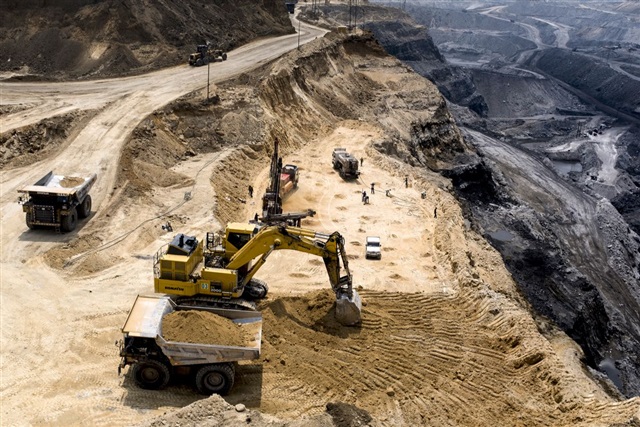
The AFP dispatch is blunt: the European Union is falling behind in critical raw materials, just as demand from artificial intelligence, electric vehicles, and software-defined vehicles (SDVs) explodes. The bottleneck no longer just squeezes battery plants or automotive lines—it directly hits the backbone of modern AI (GPUs, high-bandwidth memory, advanced packaging) and, with it, any deployment strategy that aims for direct data control.
For those running Large Language Models on-prem, this is structural. The accelerator boards powering inference and fine-tuning on self-hosted infrastructure depend on gallium, germanium, rare earths for magnets and cooling, plus copper and lithium for rack power. Europe extracts almost none of it: over 90% comes from outside the bloc, with China dominating refining for many of these commodities. As geopolitical tensions constrict flows—and U.S. export controls further shift the balance—the cost and availability of GPUs for local data centers become unpredictable.
This is more than a pricing issue. The raw-material squeeze translates into glacial lead times for training nodes and inference servers, forcing enterprises to fall back on cloud solutions run by hyperscalers that, paradoxically, don't offer the same data-residency guarantees European law demands. The GDPR becomes hollow if the compute power to process sensitive data physically sits outside EU borders, in data centers beyond audit reach.
AI-RADAR has been tracking this short circuit: digital sovereignty is first built in minerals and silicon ingots. Europe’s raw-material weakness merely amplifies the trade-off between control and practicality. Companies wanting to keep models on-prem for compliance or architectural reasons find themselves competing with vertically integrated giants—Tesla for lithium in cells, NVIDIA for substrates and packaging—wielding mining budgets and partnerships of a different magnitude.
Structurally, the EU seeks to respond with the Critical Raw Materials Act, targeting domestic extraction, recycling, and diversification. But mining bureaucracy moves at geological speed, while AI roadmaps burn through quarters. In the meantime, European labs and system integrators are exploring alternative architectures: inference on NPUs or FPGAs, aggressive quantization down to INT4 to shrink memory footprint, and smaller models fine-tuned to run on clusters of older-generation GPUs that are easier to source and less dependent on rare-earth supply chains.
In short, the raw-materials game isn't just for gigafactories. It's a silent variable deciding where European LLMs will really be able to reside, and whether AI on EU soil will be a legally verifiable asset or a service rented from far-off jurisdictions.



💬 Comments (0)
🔒 Log in or register to comment on articles.
No comments yet. Be the first to comment!