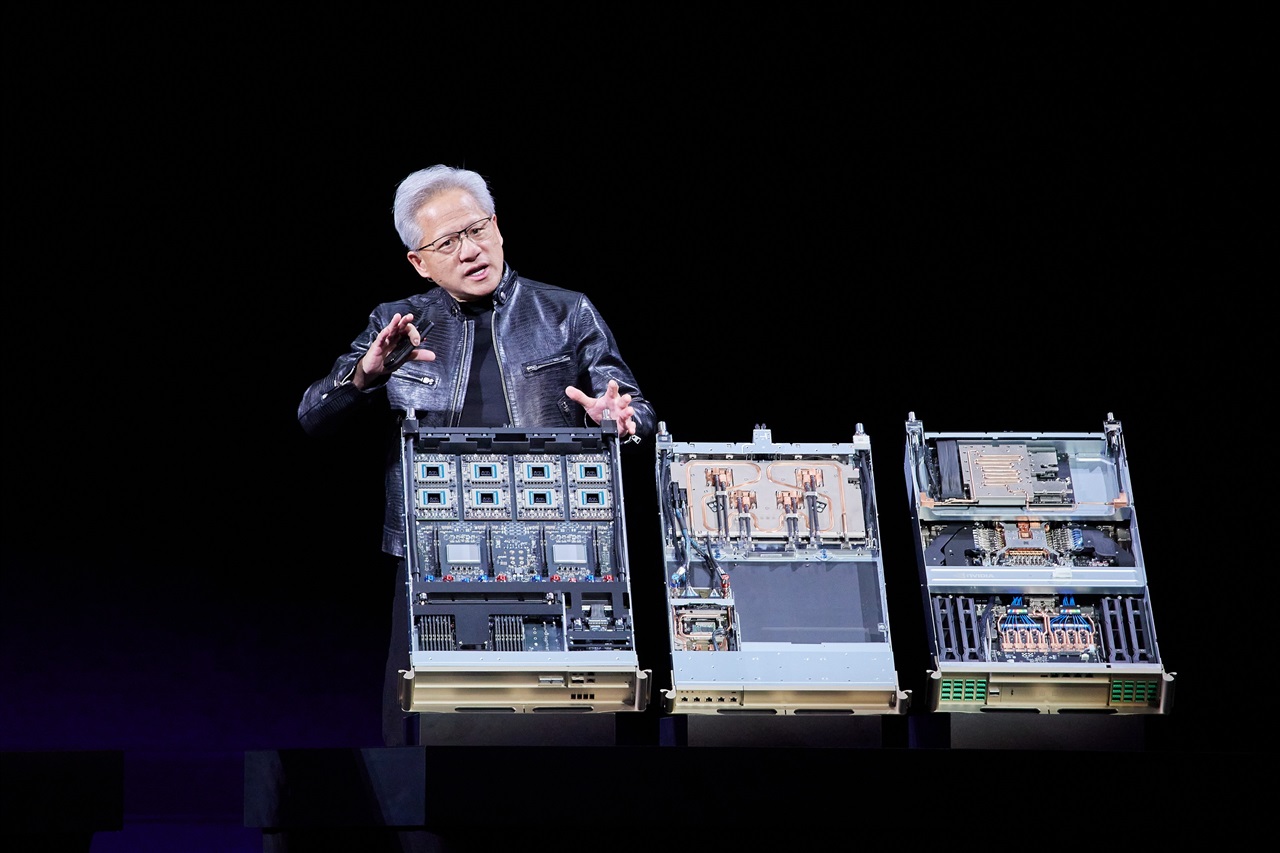
The Era of AI Agents and Nvidia's Vera CPU
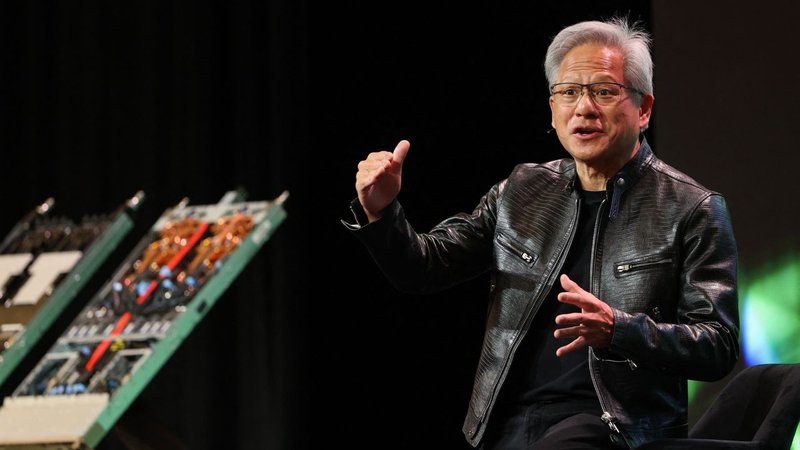
Nvidia has unveiled the Vera CPU, a processor that marks a significant evolution in the landscape of hardware dedicated to artificial intelligence. Unlike traditional CPUs, which are designed for a wide range of computational tasks and direct user interaction, Vera has been conceived specifically for "AI agents." This distinction, highlighted by CEO Jensen Huang, suggests a focus on autonomous and automated workloads.
Huang stated that Vera opens up an entirely new market, a segment that did not exist before. This assertion underscores Nvidia's vision of a future where AI agents will play an increasingly central role across various sectors, from industrial robotics to autonomous data management, requiring a type of computing power and hardware architecture optimized for their specific needs.
Specialized Architectures for Artificial Intelligence
While specific technical details of the Vera CPU have not yet been deeply disclosed, its designation as a processor for "agents" implies optimization for complex, low-latency inference scenarios. AI agents often need to process large volumes of data in real-time, make rapid decisions, and interact with physical or digital environments autonomously. This demands an architecture that can efficiently manage data throughput, control logic, and potentially tight integration with GPU accelerators for computationally intensive tasks.
The trend towards specialized silicon is not new in the AI field. Alongside GPUs, which excel in training and inference of Large Language Models (LLM) and other complex models, custom solutions and optimized CPUs are emerging for specific stages of the AI pipeline. The goal is to maximize energy efficiency and performance for well-defined workloads, reducing the Total Cost of Ownership (TCO) for companies implementing these technologies at scale.
Implications for On-Premise Deployment and Data Sovereignty
The introduction of hardware like the Vera CPU has significant implications for on-premise deployment strategies. Companies developing and deploying AI agents, especially in critical sectors such as finance, healthcare, or defense, often require maximum control over their data and operations. A self-hosted deployment, perhaps in air-gapped environments, offers data sovereignty and regulatory compliance guarantees that cloud solutions cannot always match.
In this context, specialized hardware becomes an enabler. Optimizing performance and energy efficiency on bare metal or private cloud infrastructures is crucial for managing operational costs and ensuring the responsiveness required for autonomous agents. For CTOs, DevOps leads, and infrastructure architects evaluating these alternatives, AI-RADAR offers analytical frameworks on /llm-onpremise to understand the trade-offs between self-hosted and cloud solutions, considering aspects such as available VRAM, throughput, and latency.
The Future of Silicon for Autonomous Artificial Intelligence
Nvidia's vision with the Vera CPU suggests a future where hardware will no longer be a generic entity but a highly specialized component, designed to meet the unique demands of increasingly autonomous artificial intelligence. This shift towards targeted architectures reflects the maturation of the AI sector and the need to overcome the limitations of general-purpose solutions.
As the AI agent market continues to evolve, the availability of optimized silicon like the Vera CPU will be crucial for unlocking new applications and accelerating the adoption of these technologies. Infrastructure decisions, balancing performance, TCO, and control, will become even more strategic for organizations aiming to fully leverage the potential of intelligent agents.







💬 Comments (0)
🔒 Log in or register to comment on articles.
No comments yet. Be the first to comment!