The AI Demand Wave and its Supply Chain Repercussions
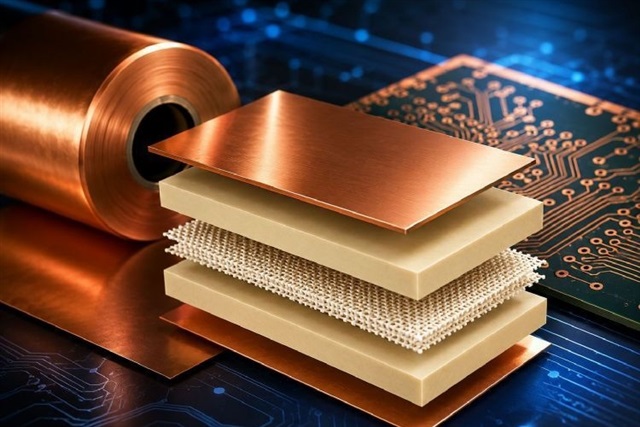
The unprecedented acceleration in the development and adoption of artificial intelligence, particularly Large Language Models (LLMs), is having a profound impact not only on the technological landscape but also on the very foundations of its infrastructure. The escalating demand for computational power, necessary for training and inference of increasingly complex models, is straining the entire global supply chain. A clear signal of this tension is emerging in the market for printed circuit board (PCB) materials, essential components for every electronic device, from GPUs to servers.
This dynamic is not new to the technology sector, but the scale and speed at which AI demand is growing make it particularly critical. Companies relying on AI solutions, whether for intensive training workloads or large-scale inference, are facing a market where the availability of key components is increasingly limited, and costs tend to rise.
The Crucial Role of PCBs in AI Infrastructure
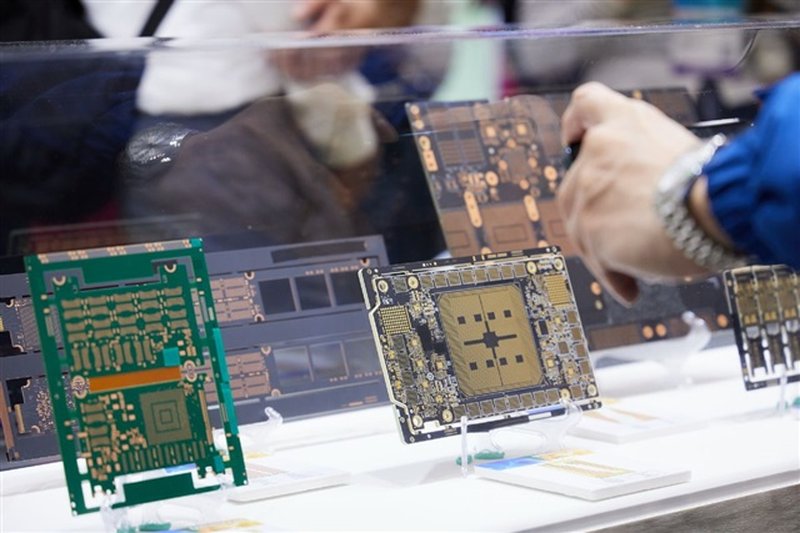
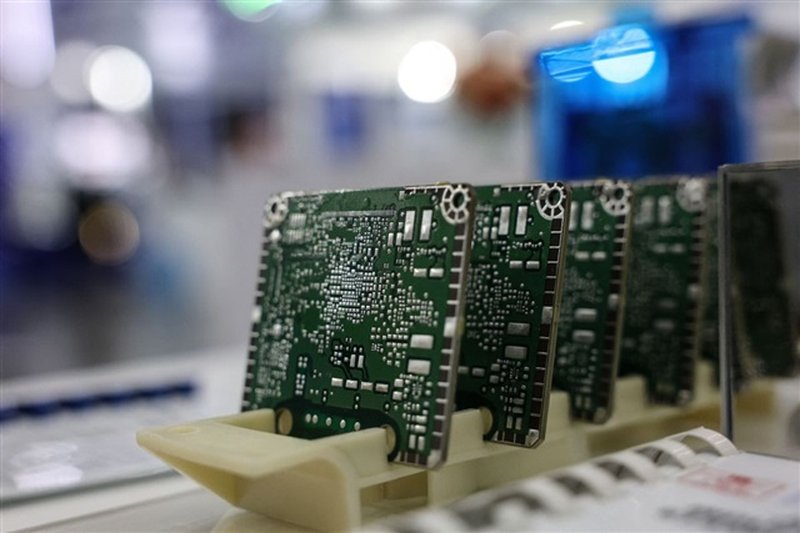
Printed circuit boards (PCBs) represent the backbone of every modern computing system. In AI-dedicated architectures, such as GPU-based accelerator cards, PCBs must meet extremely stringent requirements in terms of density, heat dissipation, signal integrity, and high power handling capabilities. The evolution of LLMs and the need to process enormous amounts of data demand GPUs with ever-increasing VRAM and high-speed interconnections, which translates into more complex and sophisticated PCBs.
The production of these advanced PCBs depends on specific materials, often with superior dielectric and thermal properties, whose availability is limited. When the demand for final products (like latest-generation GPUs) outstrips the supply of these basic materials, a bottleneck is created that propagates throughout the entire chain. This scenario directly impacts companies evaluating the deployment of on-premise AI infrastructures, where hardware procurement is a critical component of TCO and planning.
Implications for On-Premise Deployments and Data Sovereignty
For organizations choosing a self-hosted approach for their AI workloads, the tightening of the PCB material supply chain translates into concrete challenges. Longer hardware delivery times, potential price increases, and the need for extensive advance planning become critical factors. This can significantly influence the Total Cost of Ownership (TCO) of an on-premise AI infrastructure, making inventory management and procurement strategy even more complex.
The choice of on-premise deployment is often driven by data sovereignty requirements, regulatory compliance, or the need to operate in air-gapped environments. However, reliance on a global supply chain for hardware components introduces an element of vulnerability that must be carefully managed. The ability to acquire and maintain the necessary hardware becomes a critical factor in ensuring operational continuity and the evolution of internal AI capabilities.
Future Outlook and Mitigation Strategies
Pressure on the PCB material supply chain is likely to persist as AI demand continues its exponential growth. For businesses, this means that hardware procurement strategy can no longer be a reactive activity but must become a proactive and strategic component of AI planning. Evaluating alternative suppliers, exploring modular design options, or considering optimization of existing hardware through techniques like Quantization to reduce VRAM requirements are all strategies that can help mitigate risks.
In this context, a deep understanding of the trade-offs between different hardware architectures and their supply chain implications becomes fundamental. AI-RADAR, for instance, offers analytical frameworks on /llm-onpremise to support strategic decisions related to on-premise deployments, helping companies navigate an increasingly volatile and competitive hardware market. Supply chain resilience will be a key factor for the long-term success of AI initiatives.






💬 Comments (0)
🔒 Log in or register to comment on articles.
No comments yet. Be the first to comment!