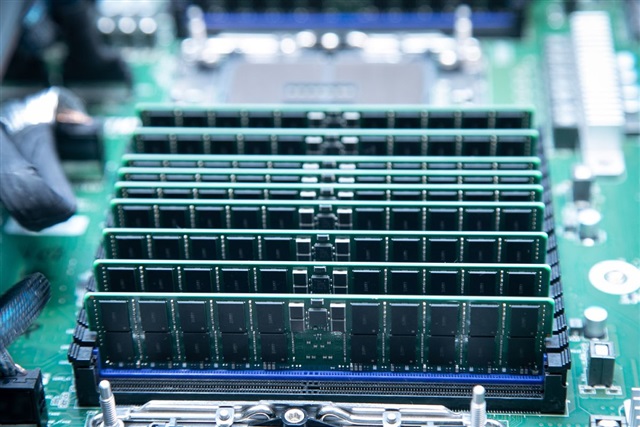
AI as the Driver of the Memory Market
The memory supplier sector has achieved a significant milestone, reporting record revenues in the first quarter of 2026. This outcome, as reported by DIGITIMES, is largely attributable to the unstoppable demand stemming from the artificial intelligence segment. A particularly notable aspect of this growth is its ability to defy traditional seasonal slowdowns that often characterize the semiconductor market, indicating a robust and lasting underlying trend.
This dynamic underscores how AI is no longer an emerging niche but a consolidated economic engine, capable of profoundly influencing global supply chains. The increased demand for high-performance memory reflects the expansion and maturation of AI applications, which require increasingly sophisticated hardware resources to support complex workloads, from training to Large Language Model (LLM) Inference.
The Memory Requirements of Large Language Models
Large Language Models, in particular, are known for their insatiable hunger for memory. Both during the training phase, where massive datasets are processed, and during Inference, when the model generates responses, the availability of VRAM (Video Random Access Memory) on GPUs is a critical factor. Increasingly larger models, with extended context windows and complex architectures, demand growing amounts of high-bandwidth memory, such as High Bandwidth Memory (HBM) or the latest generations of GDDR, to operate efficiently and with low latency.
The choice of memory directly impacts the performance and scalability of AI infrastructures. For example, a GPU's ability to host an LLM of a certain size, or to handle a high batch size, directly depends on its available VRAM. This makes memory not just a component, but a strategic bottleneck for companies aiming to develop or deploy advanced AI solutions, especially in contexts where data sovereignty and control over infrastructure are paramount.
Implications for On-Premise Deployments and TCO
For organizations evaluating on-premise or self-hosted deployments for their AI workloads, the strong demand for memory has direct implications. The increase in revenue for suppliers could translate into greater supply chain stability in the long term, but also into potential price and availability fluctuations in the short to medium term. This directly impacts the Total Cost of Ownership (TCO) of AI infrastructures, influencing CapEx and OpEx decisions.
The need to ensure data sovereignty and regulatory compliance drives many companies towards on-premise or air-gapped solutions, where control over hardware and data is maximized. In these scenarios, the procurement of GPUs with sufficient VRAM and high-performance memory modules becomes a strategic priority. Evaluating the trade-offs between performance, cost, and availability is crucial. For those considering on-premise deployments, AI-RADAR offers analytical frameworks on /llm-onpremise to evaluate these trade-offs in a structured manner, considering aspects such as memory density per server and energy efficiency.
A Look at the Future of the AI Market
The growth trajectory of the memory market, driven by AI, suggests that this trend is not ephemeral. Continuous innovation in Large Language Models and their adoption across increasingly broader sectors will ensure sustained demand for advanced hardware components. This scenario compels companies to adopt long-term strategic planning for their AI infrastructures, considering not only computing capabilities but also, and above all, memory requirements.
The ability to access high-quality memory in sufficient quantities will be a distinguishing factor for organizations aiming to maintain a competitive advantage in the age of artificial intelligence. The memory market, therefore, is not just an indicator of the health of the tech sector, but a crucial barometer for the evolution and expansion of AI capabilities globally.








💬 Comments (0)
🔒 Log in or register to comment on articles.
No comments yet. Be the first to comment!