AI Demand Lifts Zhen Ding: Server and Chip Substrate Sales Surge
The escalating and relentless demand for artificial intelligence solutions is significantly impacting the entire technology supply chain. Among the beneficiaries of this trend is Zhen Ding, a key player in the electronics sector, which is reporting a surge in sales of servers and chip substrates. This phenomenon not only underscores the rapid expansion of the AI market but also highlights the critical need for increasingly robust and high-performance hardware infrastructures to support the complex workloads of Large Language Models (LLMs).
The increase in sales of fundamental components such as chip substrates and dedicated AI servers is a direct indicator of the global race to implement advanced computing capabilities. Companies, from tech giants to innovative startups, are investing heavily to develop and deploy LLM-based applications, fueling unprecedented demand for the silicon and hardware that form their backbone.
The Core of AI Infrastructure: Substrates and Servers
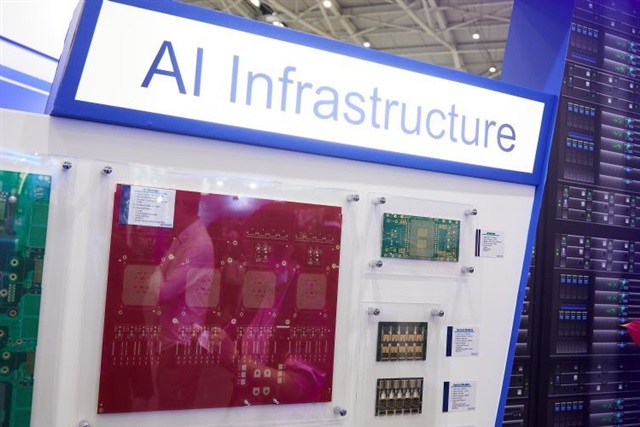
Chip substrates represent a crucial element in the architecture of modern AI accelerators, particularly high-performance GPUs. These components serve as the interface between the chip die and the motherboard, facilitating electrical connections and heat dissipation, which are fundamental aspects for ensuring the efficiency and reliability of processors. With the evolution of LLMs, which demand exponential computing capabilities and large amounts of VRAM, the complexity and technical specifications of these substrates have drastically increased.
Dedicated AI servers, on the other hand, are designed to host and interconnect multiple GPUs, optimizing throughput and reducing latency for training and Inference operations. Their architecture is engineered to maximize bandwidth between computing units and memory, an indispensable requirement for handling the voluminous datasets and complex models typical of artificial intelligence. The quality and availability of these components are therefore directly proportional to an organization's ability to effectively implement its AI strategies.
Implications for On-Premise Deployment
The current scenario of strong AI hardware demand has profound implications for companies evaluating on-premise or hybrid deployment strategies for their LLM workloads. The availability and cost of servers and chip substrates directly influence the Total Cost of Ownership (TCO) of a self-hosted infrastructure. While the initial investment (CapEx) can be significant, an on-premise deployment offers advantages in terms of data sovereignty, regulatory compliance, and complete control over the operating environment—crucial aspects for regulated sectors or applications requiring air-gapped environments.
The choice between cloud and on-premise thus becomes a careful consideration between operational flexibility and strategic control. Companies must consider not only the direct costs of hardware but also indirect costs related to power, cooling, maintenance, and technical expertise. For those evaluating on-premise deployment, significant trade-offs exist between initial costs, scalability, and data control. AI-RADAR offers analytical frameworks on /llm-onpremise to evaluate these choices, providing tools for a detailed analysis of constraints and opportunities.
Future Outlook and the Supply Chain
The acceleration of AI demand shows no signs of slowing down, projecting continuous pressure on the global supply chain. Companies like Zhen Ding, which produce essential components, are strategically positioned to capitalize on this growth but must also address challenges related to production scalability and delivery management. The ability to meet this growing demand will be a determining factor for the evolution of the AI landscape in the coming years.
This trend highlights how innovation in software and algorithms is inextricably linked to the availability of cutting-edge hardware. The robustness and efficiency of the physical infrastructure remain the foundation upon which artificial intelligence capabilities are built, making hardware component suppliers indispensable players in the LLM revolution.







💬 Comments (0)
🔒 Log in or register to comment on articles.
No comments yet. Be the first to comment!