
The AI Wave and the Component Supply Chain
The rapid expansion of artificial intelligence, particularly Large Language Models (LLMs), is generating unprecedented demand for computational infrastructure. This pressure extends far beyond GPUs and servers, reaching the deepest levels of the production supply chain. A concrete example of this trend emerges from data provided by Iteq, a significant player in the electronics materials sector.
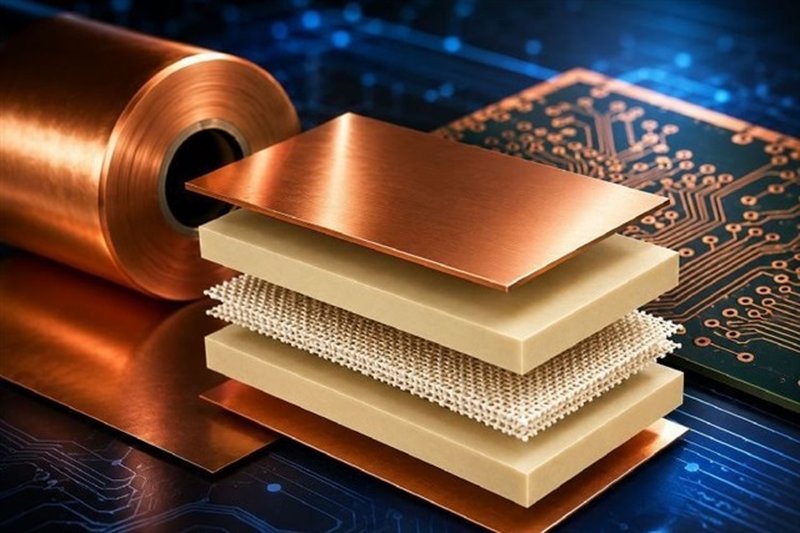
The company has reported an increase in shipments of M7+ CCL (Copper Clad Laminate) laminates, a clear signal of how the demand for AI-dedicated data centers is influencing the production of fundamental components. These laminates are crucial for manufacturing high-performance printed circuit boards (PCBs), which are indispensable for motherboards, expansion cards, and interconnects that form the core of modern AI systems.
The Strategic Role of M7+ CCL Laminates in AI Infrastructure
M7+ CCL laminates are not just simple materials; they represent advanced technology designed to support the high frequencies and signal densities required by contemporary AI architectures. Their ability to ensure signal integrity and low loss is critical for the efficient operation of GPUs and AI accelerators, where even minimal interference can compromise system performance and reliability.
In a context where LLM inference and training demand extreme memory bandwidth and processing speed, the quality of underlying materials becomes a critical factor. The increase in M7+ CCL shipments indicates that hardware manufacturers are intensifying the production of components capable of handling increasingly complex AI workloads, from high-speed VRAM memory modules to GPU interconnect buses.
Implications for On-Premise Deployments
For CTOs, DevOps leads, and infrastructure architects evaluating on-premise LLM deployments, this trend has significant implications. The availability and quality of basic components like M7+ CCL laminates are indicators of the health and production capacity of the entire hardware supply chain. An increase in demand and shipments suggests a robust market, but also potential pressure on prices and procurement times for high-end hardware.
Choosing a self-hosted infrastructure for AI workloads, often driven by data sovereignty, compliance, or long-term TCO requirements, demands careful hardware planning. Understanding supply chain dynamics, from chip manufacturing to PCB materials, is essential for accurately estimating initial (CapEx) and operational (OpEx) costs, as well as ensuring infrastructure resilience. AI-RADAR offers analytical frameworks on /llm-onpremise to evaluate these trade-offs, providing tools for informed decisions.
Future Prospects and Infrastructure Control
The increased demand for advanced materials like M7+ CCL laminates is a clear sign that investment in AI infrastructure is set to grow. This scenario strengthens the position of companies choosing to maintain direct control over their computational assets through on-premise or hybrid deployments. The ability to select specific hardware, optimized for their workload and security needs, becomes a strategic differentiator.
In a constantly evolving technological landscape, where performance and energy efficiency are key parameters, the quality of basic components is more important than ever. The trend observed by Iteq underscores the importance of a solid and innovative supply chain, capable of supporting the ambitions of increasingly pervasive artificial intelligence and the data control and sovereignty requirements that drive many enterprise deployment decisions.




💬 Comments (0)
🔒 Log in or register to comment on articles.
No comments yet. Be the first to comment!