
Introduction
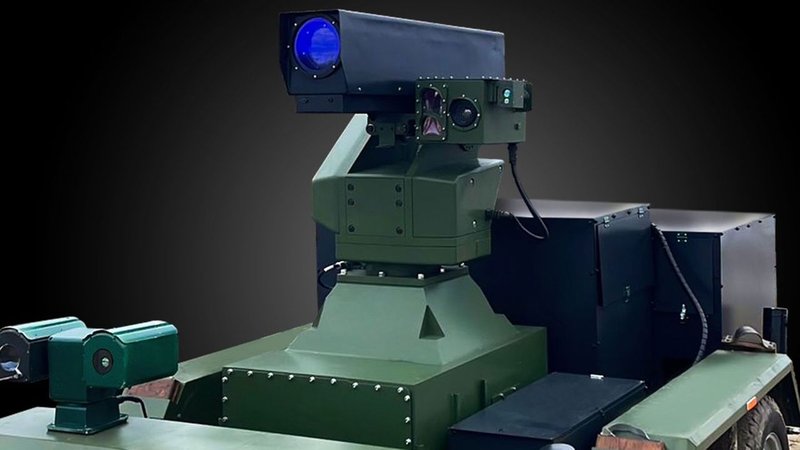
The Federal Aviation Administration (FAA) recently announced a significant approval, authorizing the military use of laser weapons designed to neutralize drones within United States airspace. This decision follows a careful evaluation, which concluded that such systems do not present an increased risk to the flying public or civil flight operations.
The context of this authorization is linked to defense and security needs, with a specific reference to El Paso Airport, although the exact scope of this mention was not detailed in the initial communication. The approval marks a step forward in the integration of advanced technologies for airspace protection, introducing new dynamics in managing threats posed by unauthorized drones.
Technology and Operational Context
Drone-killing laser weapons represent a technological frontier in the field of defense. These systems are designed to intercept and disable drones by emitting high-energy laser beams, offering an alternative or complement to traditional kinetic methods. Their effectiveness depends on a range of factors, including targeting precision, laser power, and target tracking capabilities.
In complex operational scenarios, such as the protection of critical infrastructure or sensitive airspace, the integration of artificial intelligence and machine learning components is increasingly common. Advanced systems of this type could employ Large Language Models (LLMs) or other predictive models for autonomous threat identification, analysis of drone flight patterns, and optimization of engagement strategies. The Inference of these models requires significant computing power, often in environments with stringent latency constraints.
Deployment and Sovereignty Implications
The adoption of advanced military technologies, especially those that might incorporate artificial intelligence, raises crucial questions regarding their Deployment. For defense applications, data sovereignty and operational control are paramount. This drives towards Self-hosted and, in many cases, Air-gapped solutions, where the infrastructure is completely isolated from external networks to prevent unauthorized access and cyberattacks.
On-premise Deployment of Inference systems for LLMs or other AI models in military contexts requires specialized hardware, such as GPUs with high VRAM and Throughput, to ensure adequate real-time performance. Total Cost of Ownership (TCO) management becomes a key factor, balancing the initial investment in Bare metal and infrastructure with long-term operational costs. For those evaluating on-premise Deployment in critical sectors, AI-RADAR offers analytical frameworks on /llm-onpremise to assess the trade-offs between control, security, and costs.
Future Prospects and Considerations
The FAA's approval for the use of drone-killing laser weapons marks an evolution in the landscape of air safety and defense. As technology continues to advance, the ability to integrate and manage complex systems, potentially equipped with artificial intelligence, will become increasingly critical. Deployment decisions that prioritize control, security, and data sovereignty will be fundamental to ensuring the reliability and resilience of these infrastructures.
The defense sector, like many others, faces the need to balance technological innovation with stringent compliance and security requirements. The choice between cloud architectures and Self-hosted solutions for AI/ML workloads is never trivial, and for military applications, the trend is clear towards more direct control over hardware and data, even in the face of higher initial CapEx.








💬 Comments (0)
🔒 Log in or register to comment on articles.
No comments yet. Be the first to comment!