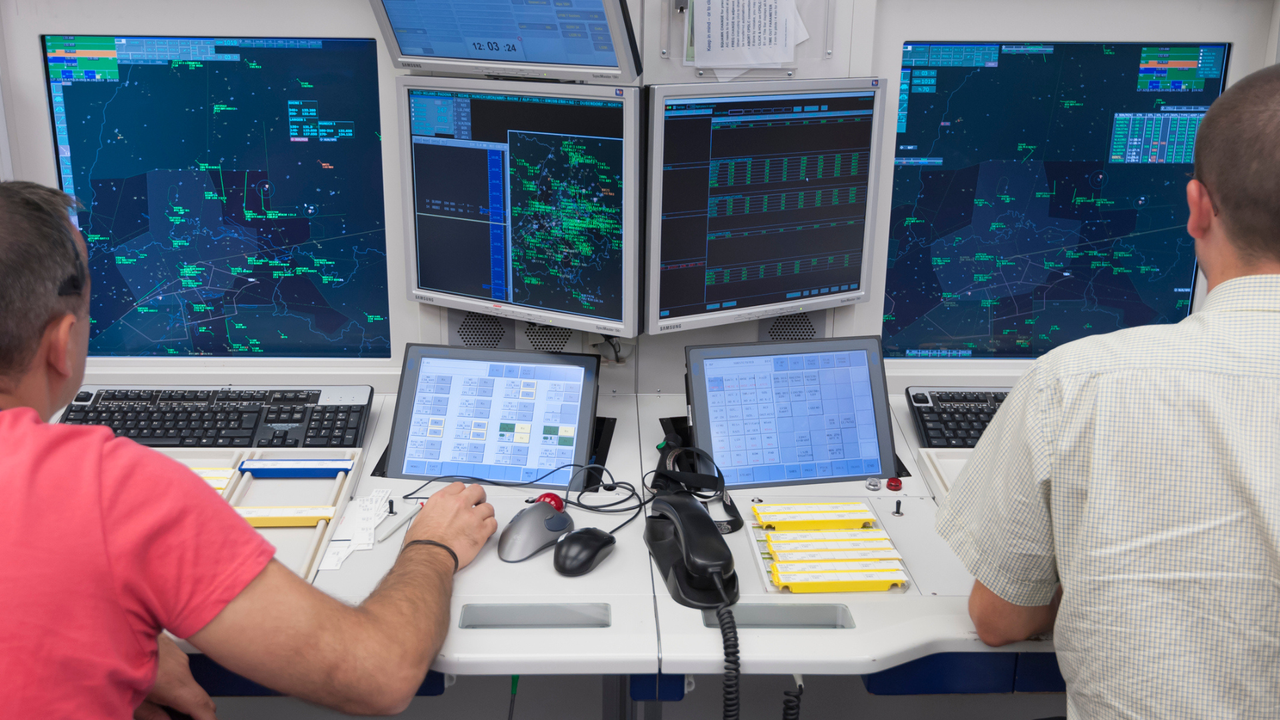
The FAA Targets Gamers for Air Traffic Control
The U.S. Federal Aviation Administration (FAA) has initiated a significant recruitment campaign to bolster its ranks of air traffic controllers. This initiative stands out for its targeted approach: the agency is actively seeking candidates from the gaming community, recognizing an untapped potential for one of the most critical and stressful professions. This strategy aims not only to fill vacant positions but also to inject new energy and perspectives into a sector vital for the safety and efficiency of transportation.
The primary appeal of this offer is a substantial remuneration package. The FAA has announced that new hires can expect to reach an average annual salary of $155,000 after just three years of service. This figure underscores the importance and complexity of the role, as well as positioning the air traffic controller career as a highly lucrative option in today's job market. The agency is preparing to manage a massive influx of interest, anticipating around 8,000 applications.
Why Gamers? An Unexpected Profile for a Critical Role
The choice to focus on gamers is not coincidental. The skills developed in the world of video games, particularly those requiring real-time strategy, complex resource management, and quick decisions under pressure, align surprisingly well with the demands of air traffic control. Gamers are often accustomed to processing large amounts of visual and auditory information simultaneously, maintaining concentration for extended periods, and coordinating multiple elements in dynamic and unpredictable environments.
These transferable skills, which include multitasking, complex problem-solving, and remarkable mental agility, are fundamental for an air traffic controller. Managing aircraft in congested airspace requires millimeter precision, clear communication, and the ability to anticipate potentially critical scenarios. The FAA appears to recognize that the informal "training" offered by video games can provide a solid foundation upon which to build the specialized training required for this profession.
The Context of Demand and the Role's Importance
The need for new air traffic controllers reflects a growing demand in the aviation sector and the necessity to replace personnel approaching retirement. Air traffic control is an irreplaceable component of the global transportation infrastructure, ensuring the safety of millions of passengers daily. Every decision made by a controller has direct implications for human life and the economy, making the training and selection of personnel an extremely rigorous process.
The investment in new human resources and the FAA's innovative recruitment strategy highlight the agency's commitment to maintaining high operational standards. The training of an air traffic controller is long and intensive, and identifying candidates with an already predisposed cognitive profile can help optimize this process, reducing the time and costs associated with the initial learning curve.
Future Prospects and the Intersection with Technology
While the FAA focuses on recruiting human talent, the air traffic control sector, like many other critical areas, is constantly under scrutiny for the integration of new technologies. Automation and AI-powered decision support systems are frequent topics of discussion, aimed at improving efficiency and safety. However, the inherent complexity and safety implications of air traffic control make the adoption of fully automated solutions a significant challenge, requiring careful evaluation of the trade-offs between efficiency, resilience, and the irreplaceable role of human oversight.
Human experience, with its capacity for judgment, adaptation to unforeseen situations, and exception handling, remains at the core of such delicate operations. The FAA's campaign underscores how, even in the era of AI, specialized human capital is fundamental, and how unconventional skills can be valued for high-responsibility roles. For those evaluating on-premise deployment of AI systems in critical contexts, the lesson is clear: the integration between artificial intelligence and human capabilities requires careful planning and a robust infrastructure that ensures data sovereignty and operational control, elements that AI-RADAR explores with its analytical frameworks on /llm-onpremise.









💬 Comments (0)
🔒 Log in or register to comment on articles.
No comments yet. Be the first to comment!