
Taiwan's Orbital Ambition
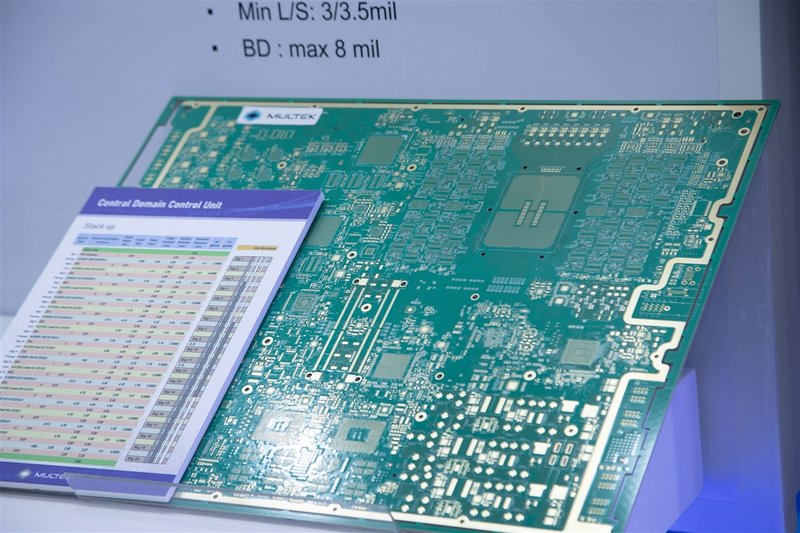
Taiwan's technology supply chain, a key player in the global semiconductor and hardware industry, is turning its attention towards an unexplored frontier: orbital data centers. This vision, reported by DIGITIMES, suggests a radical expansion of computing infrastructure, projecting the concept of "edge computing" to literally extra-terrestrial levels. The interest in such avant-garde solutions underscores the constant search for new capabilities and environments to support the growing demand for computing power, particularly for intensive workloads like Large Language Models (LLM).
The idea of positioning computing infrastructure in space is not new, but the commitment of a consolidated supply chain like Taiwan's gives it unprecedented tangibility. This approach could redefine the landscape of computational resource deployment, potentially offering unique advantages that terrestrial solutions, whether on-premise or cloud-based, cannot replicate.
Why Space? Technical Advantages and Challenges
The motivation behind exploring orbital data centers lies in several factors, although accompanied by immense technical and logistical challenges. Among the potential advantages, an operating environment with extreme temperatures and vacuum is hypothesized, which could simplify cooling systems compared to complex terrestrial requirements, especially for high-density hardware like GPUs with high VRAM. Furthermore, the availability of constant solar energy could offer a sustainable and low-operational-cost power source, positively influencing long-term TCO once initial launch costs are amortized.
However, the challenges are considerable. The costs of launching and maintaining space infrastructure are prohibitive. Data transmission latency between orbit and Earth would represent a significant constraint for applications requiring real-time responses. Protecting hardware from space radiation and orbital debris would require robust designs and advanced shielding. Finally, maintenance and upgrades, routine activities for terrestrial data centers, would become extremely complex and costly operations, making component resilience and reliability critical from the design phase.
Implications for AI and Data Sovereignty
For the artificial intelligence sector, and particularly for the deployment of LLM, orbital data centers could offer a unique context. Although latency is a limiting factor for many AI applications, specific scenarios such as training models on massive datasets or inference for non-real-time applications could benefit from an environment with stable and potentially unlimited energy. The possibility of operating in an "air-gapped" environment by definition, far from terrestrial physical and cyber threats, could also strengthen data sovereignty and compliance for highly regulated sectors.
This extreme scenario fits into the broader debate on deployment strategies for AI workloads. While many companies evaluate the trade-offs between cloud and on-premise solutions to optimize costs, performance, and data control, the orbital option pushes the boundaries of this discussion. For those evaluating on-premise deployment, analytical frameworks are available on AI-RADAR (/llm-onpremise) to compare the constraints and benefits of different architectures, and the orbital approach, however futuristic, highlights the diversity of solutions that might emerge for specific needs.
Future Prospects and the Supply Chain's Role
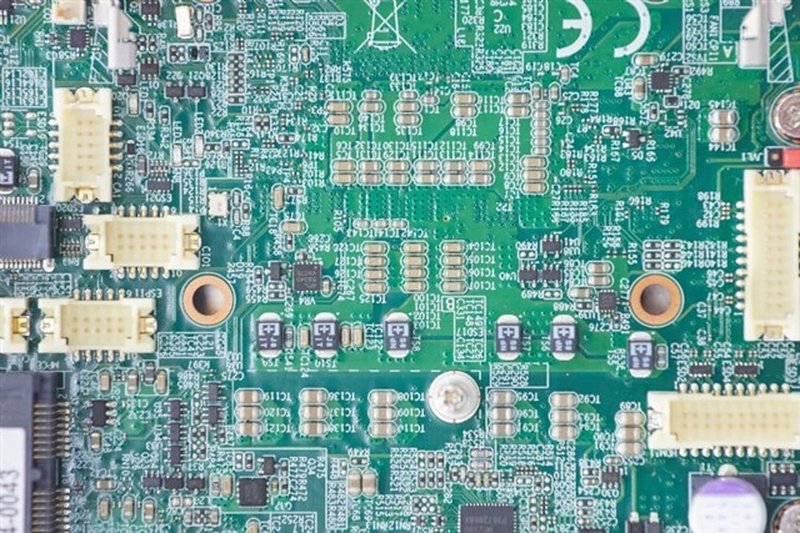
Taiwan's supply chain's exploration of orbital data centers signals the long-term vision that characterizes the technology industry. Although the realization of such infrastructure is still distant and requires colossal investments in research and development, Taiwan's interest is significant. Its expertise in the production of semiconductors, electronic components, and advanced cooling systems positions it as a key player for the development of the specialized hardware that would be necessary to operate in orbit.
This type of project highlights how the search for optimal computing environments is a constant. The trade-offs between cost, performance, security, and control remain central, regardless of the physical location of the data center. The challenge will be to transform an ambitious vision into an economically and technically sustainable reality, overcoming current constraints to open new possibilities for the future of AI computing.






💬 Comments (0)
🔒 Log in or register to comment on articles.
No comments yet. Be the first to comment!