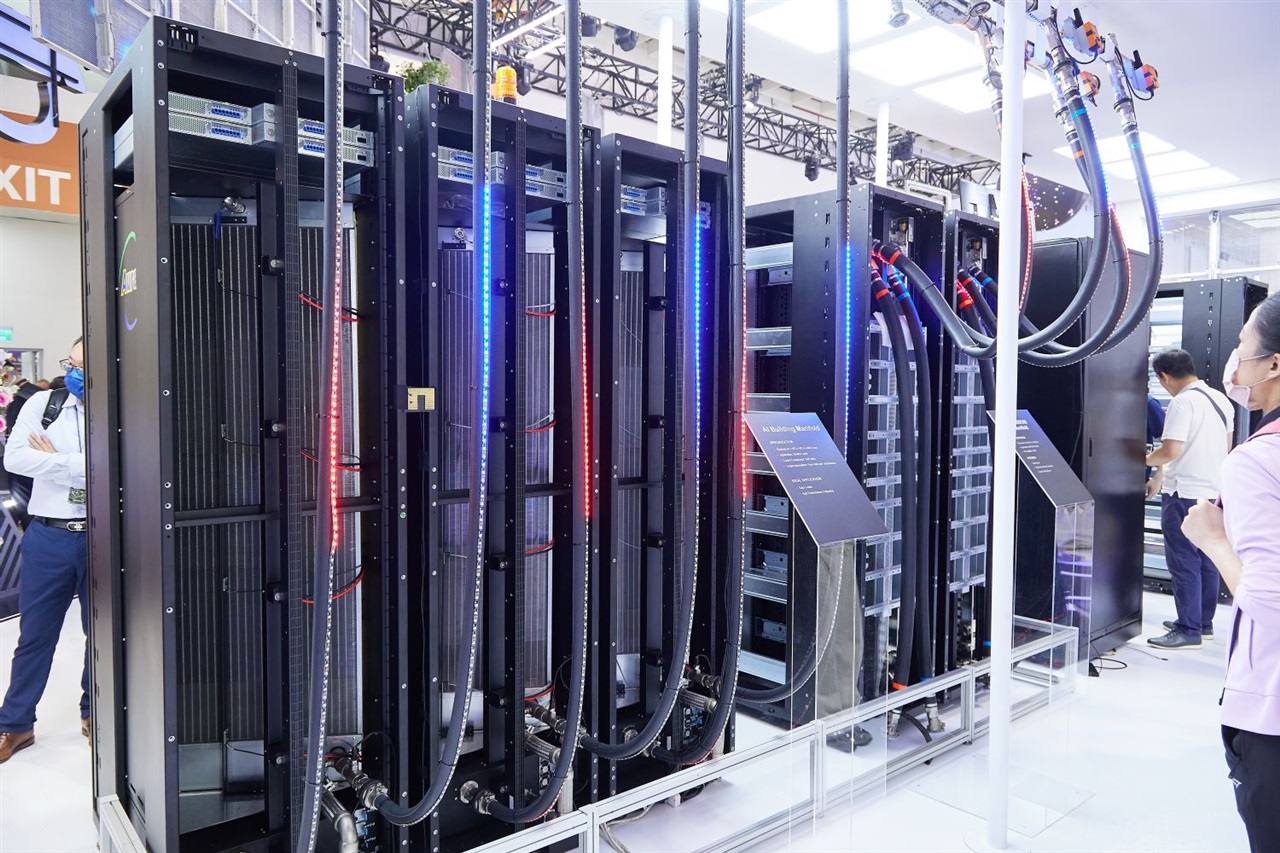
The AI Server Market Slowdown: A Trend to Monitor
The sector for artificial intelligence-dedicated servers has experienced unprecedented expansion in recent years, fueled by the growing demand for computing power for Large Language Model (LLM) training and inference. This "boom" has prompted Original Design Manufacturers (ODMs) to increase production to meet the needs of a rapidly evolving market. However, recent analyses indicate that this dizzying growth is beginning to show its first signs of slowing down.
This potential slowdown in the AI server ODM market represents a significant turning point. For organizations evaluating or implementing large-scale AI solutions, particularly those oriented towards on-premise deployments, understanding these market dynamics is crucial for strategic planning and investment optimization.
Implications for Self-Hosted LLM Infrastructures
For companies choosing to maintain control over their data and AI workloads through self-hosted or air-gapped infrastructures, hardware supply chain stability is a critical factor. A slowdown in AI server production or demand could have cascading effects, influencing the availability of key components like high-performance GPUs – essential for LLM inference and fine-tuning.
The ability to acquire specific hardware, such as GPUs with high VRAM, has been a constant challenge in a market characterized by strong demand and limited supply. While a slowdown could theoretically alleviate some pressure on availability, it might also signal a phase of consolidation or realignment of manufacturers' priorities, with potential impacts on long-term pricing and delivery times. Evaluating the Total Cost of Ownership (TCO) for an on-premise deployment becomes even more complex in a fluctuating market scenario.
Between Supply and Demand: Deployment Challenges
The decision to deploy LLMs on-premise is often driven by data sovereignty requirements, regulatory compliance, and direct control over the operational environment. These choices demand careful infrastructure planning, which includes not only the purchase of servers and GPUs but also the management of aspects like cooling, power, and network connectivity. Volatility in the AI server market can further complicate these decisions.
Infrastructure architects and CTOs must balance the need for scalability and performance with the reality of a hardware market that can change rapidly. The choice between investing in proprietary bare metal infrastructure and adopting hybrid or cloud solutions depends on a multitude of factors, including the predictability of hardware availability. A less "booming" ODM market could offer new opportunities for negotiations or, conversely, introduce uncertainties regarding suppliers' technological roadmaps.
Future Prospects and Acquisition Strategies
In this scenario, organizations must adopt a proactive and flexible approach to hardware acquisition strategies. Diversifying suppliers, exploring leasing options or purchasing refurbished hardware (if compatible with performance and reliability needs), and planning well in advance become essential practices. The goal remains to ensure the necessary computing capacity for LLM workloads while maintaining a sustainable TCO.
AI-RADAR offers analytical frameworks on /llm-onpremise to evaluate the trade-offs between different deployment architectures, helping companies navigate these complexities. The ability to adapt to market changes, while upholding the principles of data sovereignty and infrastructural control, will be key to the success of long-term AI deployments.







💬 Comments (0)
🔒 Log in or register to comment on articles.
No comments yet. Be the first to comment!