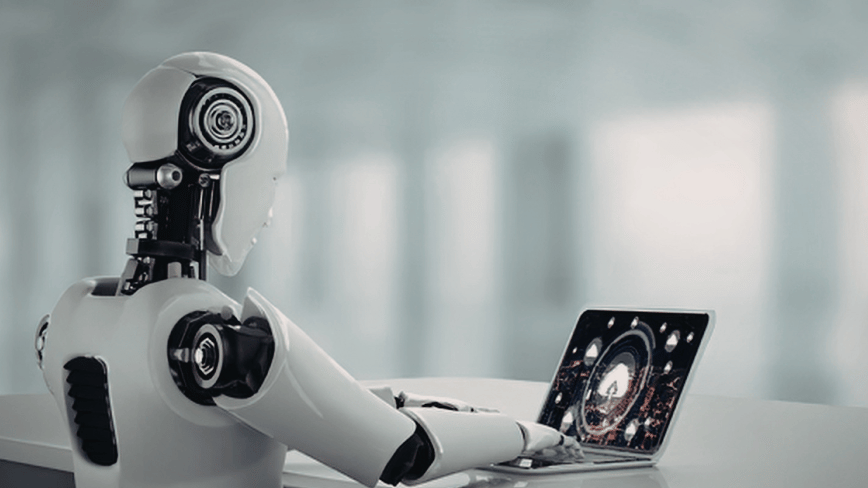
Shanghai Gigafactory at the Core of Tesla's Robotics Strategy
Tesla has recently highlighted the strategic role of its Shanghai Gigafactory, calling it a "golden key" for the mass production of Optimus humanoid robots. This statement, made by Wang Hao, President of Tesla China, marks the first time a company executive has publicly linked the important production facility to robotics manufacturing. This announcement underscores Tesla's ambition to replicate its success in the electric vehicle sector within the field of humanoid robotics.
The Shanghai Gigafactory is a fundamental pillar for Tesla's global operations, having delivered 851,000 electric vehicles in 2025 alone. Its production capacity and operational efficiency make it a natural candidate to host the production line for Optimus robots. The experience gained in large-scale manufacturing of complex vehicles could be a significant advantage in addressing the inherent challenges of fabricating humanoid robots, which require precision, integration of advanced systems, and rigorous quality control.
Implications of Mass-Producing Humanoid Robots
The transition or expansion of an EV factory to include humanoid robot production involves a series of technical and logistical considerations. Mass production of complex systems like Optimus requires not only advanced assembly lines but also a robust testing and calibration pipeline. Each robot integrates a wide range of sensors, actuators, and processing systems that must function in perfect harmony. This scenario highlights the importance of a highly automated production infrastructure and AI-driven quality control systems, capable of ensuring the reliability and safety of each unit.
Tesla's deployment of over 1,000 Gen 3 Optimus units for internal use suggests that the company is already testing and refining production processes and operational capabilities of the robots in controlled environments. This approach, where robots are "self-hosted" within their own facilities, allows for the collection of valuable data for fine-tuning control models and optimizing hardware. For companies evaluating the deployment of physical AI solutions, such as robots, the ability to manage the entire value chain, from production to integration, can represent a competitive advantage in terms of TCO and control over the technology.
Context and Prospects for On-Premise Physical AI Deployment
Tesla's announcement fits into a broader context of growing interest in physical AI and its deployment in real-world environments. Humanoid robots, once mass-produced, will find applications in a variety of sectors, from logistics to manufacturing and assistance. Their effective operation will depend not only on the hardware but also on the sophistication of the Large Language Models (LLMs) and control algorithms that animate them. These LLMs, often run on on-premise or edge infrastructures for reasons of latency, data sovereignty, and cost, are fundamental to the robots' ability to interact with their environment and perform complex tasks.
For organizations considering the adoption of advanced robotics, the choice between cloud-based solutions and on-premise deployment for the intelligence governing them is crucial. While robots themselves are by definition "on-premise" in their operational environment, their "mind" can partly reside in the cloud. However, for critical applications requiring low latency, high security, or sensitive data management, local processing (on-premise or edge) becomes indispensable. AI-RADAR, for example, offers analytical frameworks on /llm-onpremise to evaluate the trade-offs between these different deployment architectures, considering factors such as TCO, VRAM requirements, and throughput.
The Future of Humanoid Robotics and Tesla's Strategy
Tesla's vision of using the Shanghai Gigafactory as a hub for Optimus mass production marks a significant step towards the large-scale commercialization of humanoid robots. If the company succeeds in replicating the production efficiency of electric vehicles, it could significantly accelerate the adoption of these technologies. Challenges remain considerable, from perfecting the hardware to the continuous evolution of the AI models that drive robot behavior.
Nevertheless, Tesla's strategy highlights a trend where the production and deployment of physical AI systems become increasingly integrated and scalable. This approach could redefine not only the robotics sector but also expectations regarding automation and the interaction between humans and intelligent machines in work and non-work environments. The "golden key" of Shanghai could, in fact, open the doors to a future where humanoid robots are a common presence, with profound implications for technological infrastructure and deployment strategies globally.









💬 Comments (0)
🔒 Log in or register to comment on articles.
No comments yet. Be the first to comment!