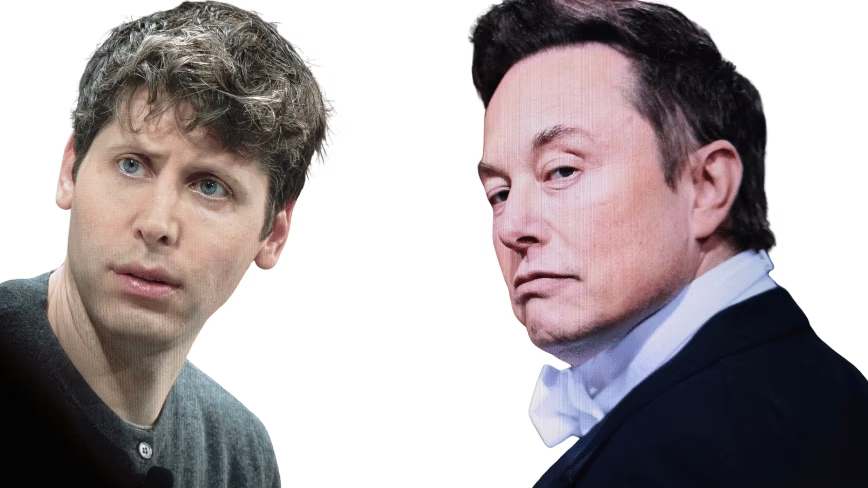
The weekend began with a legal defeat for Elon Musk and ended with a flood of insults on X. In between, the artificial intelligence industry witnessed a rare spectacle: the two co-founders of OpenAI accusing each other of fraud, live and in front of millions.
Musk’s lawsuit against Sam Altman and OpenAI had originated from the accusation of betraying the original mission: a non-profit devoted to safe and open AI development, later turned into a commercial entity tightly linked to Microsoft. The judge dismissed the claims, but Musk did not relent. He simply changed arenas, moving the fight to the platform he controls. On X, Musk called Altman a “scam,” while Altman fired back accusing Musk of similar maneuvering with his own companies. A back-and-forth that entertained the public but, for those working with LLMs in enterprise contexts, signals something far more structural.
This is not just a billionaire brawl. It is the symptom of a fracture that is redefining the entire generative AI ecosystem. On one side, OpenAI’s approach: increasingly powerful models, accessible almost exclusively via API, with centralized control and growing dependence on Microsoft’s cloud infrastructure. On the other, the push – embodied by Musk though not always with operational consistency – toward open, inspectable, and locally deployable models. It is this second vision that matters to those who must decide how to train, fine-tune, or serve models in production without sending their data outside the company perimeter.
Why the conflict impacts those evaluating self-hosting
The legal and media battle doesn’t directly change software licenses, but it shapes risk perception. A market dominated by a single API provider, with opaque governance and a track record of pivoting like OpenAI’s, drives away enterprises seeking predictability and control. In these scenarios, on-prem deployment frameworks – from vLLM to Ollama, up to bare metal stacks with high-VRAM GPUs – become levers of independence. It is no coincidence that many CIOs watch Musk’s moves not out of personal sympathy, but because his activism makes an ecosystem where open models proliferate more likely.
Yet there is a paradox. So far, Musk’s own xAI has not released fully open-source models. Grok is available but with restrictions that do not make it immediately integrable into local inference pipelines without going through APIs. This gap between rhetoric and practice has not gone unnoticed by technical decision-makers, who pragmatically evaluate real alternatives.
Hardware, TCO, and the invisible stakes
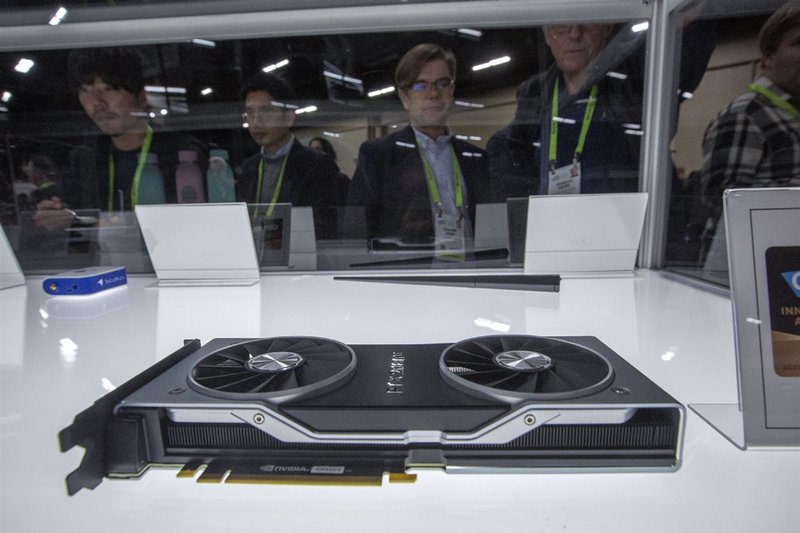
The true stakes, rarely made explicit, are who will sell the hardware on which next decade’s AI will run. If the cloud-centric paradigm wins, hyperscalers will continue to buy GPU and TPU in bulk to offer inference services, crushing margins for anyone attempting to self-serve models. If, on the other hand, the pressure for transparency and model modifiability leads to a more fragmented market, demand for on-prem solutions – multi-GPU servers with NVLink, systems with hundreds of GB of VRAM, storage optimized for LLMs – could grow much faster than current forecasts. In this scenario, the skirmishes on X are not just spectacle: they are the thermometer of a conflict that will determine the very architecture of the next wave of AI adoption. And enterprises evaluating the TCO of local deployment would do well to read beyond the tweets.




💬 Comments (0)
🔒 Log in or register to comment on articles.
No comments yet. Be the first to comment!