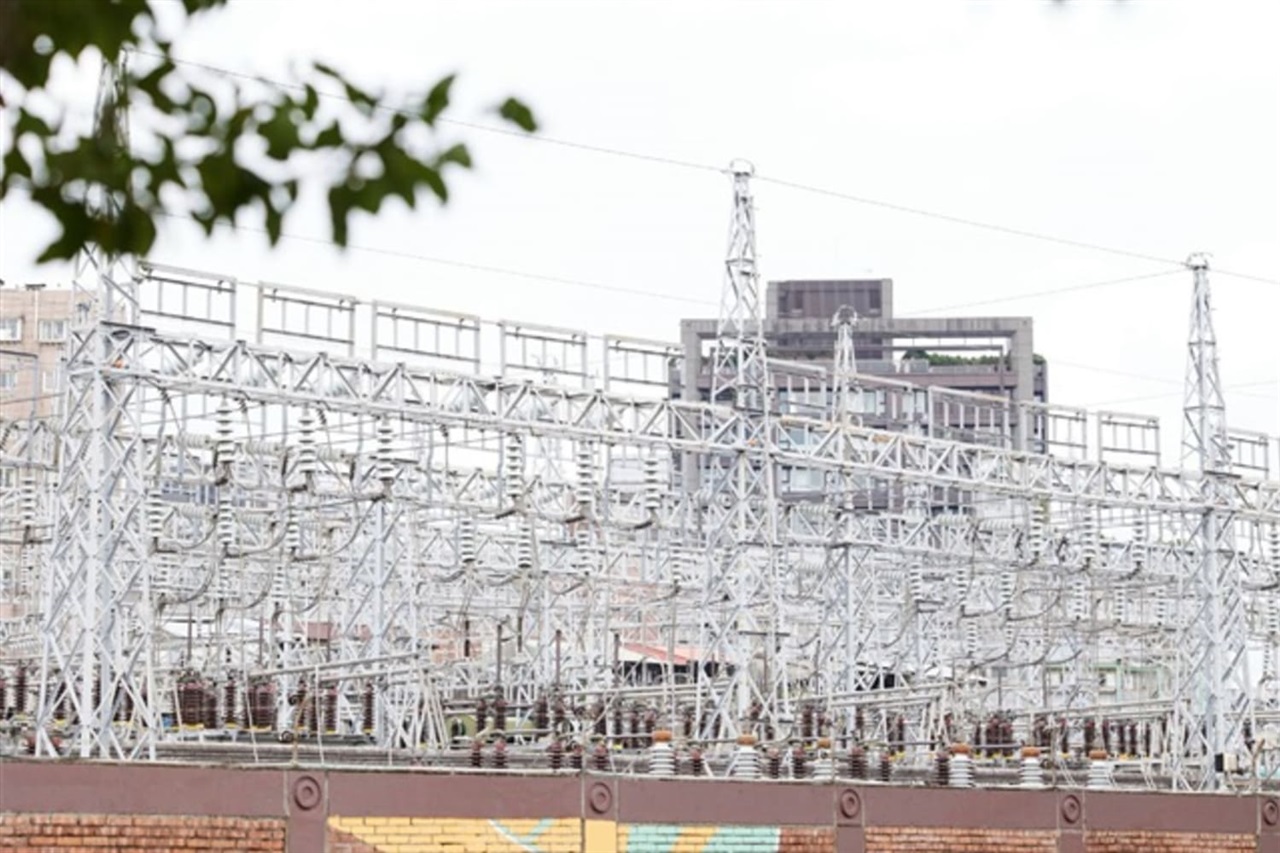
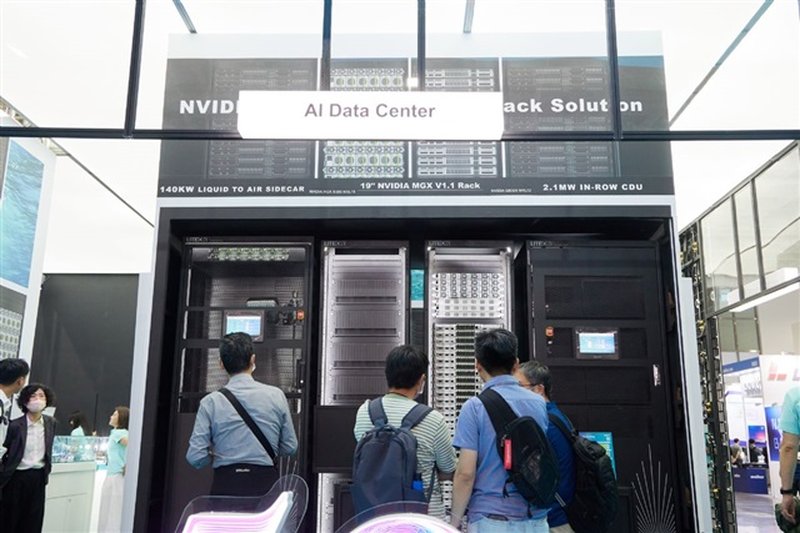
Taiwanese manufacturers of power supplies, UPS systems, and cooling equipment are not just enjoying a golden moment: they are pricing the hidden cost of the centralized AI race. The surge in orders, driven by the stress American data centers are inflicting on already fragile power grids, is not a sign of cloud market strength but a structural alarm bell.
Those deploying clusters of thousands of GPUs for training or large-scale inference today are not only fighting chip availability—they face an even more stubborn opponent in the distribution grid. In Virginia, the epicenter of US data centers, local utilities have already frozen new connections in some counties, unable to guarantee the energy those projects would require. That is not an isolated case: Taiwanese transformer and switchgear suppliers see their order backlogs lengthening precisely because every new campus demands bespoke infrastructure, and the supply chain struggles to keep up.
This short-circuit between computational ambition and grid capacity has an immediate and under-reported effect: it pushes up the total cost of ownership (TCO) of cloud deployment, makes it less predictable, and shifts delay risk directly onto companies that depend on those data centers. The substantial cash flow captured today by equipment makers is, in essence, a hidden tax on the infinite scalability of the cloud, paid upfront through logistical bottlenecks and rising energy costs.
However, the most important signal is a second-order one, and it concerns those currently evaluating on-premise deployment for their LLM workloads. Grid saturation rewards efficiency, and efficiency lives where loads are proportional to actual consumption, not where redundant switches and UPS units reign supreme. A single server with four H100 GPUs can easily draw over 10 kW per rack; multiplied by hundreds of racks, the campus becomes a public utility problem long before it becomes a data science one. The alternative is to move inference and fine-tuning onto modest, internally managed machines, where power sits under the organization’s direct control and TCO is measured in certain kilowatt-hours, not connection queues.
From a sovereignty standpoint, grid fragility adds an extra layer of dependency: a company training models in the cloud ties itself not only to the provider but also to the capacity of a specific region’s network, which is subject to regulations that could tighten (think of European directives on data center efficiency). On-premise, by contrast, turns energy consumption into an internal governance variable, negotiable on a local scale and far less exposed to others’ demand spikes.
Taiwan’s boom is unlikely to fizzle out soon, but its duration will depend on how quickly enterprises realize that the real competitive advantage lies not in renting ever more cloud megawatts, but in doing more with less power, closer to the user. The open question this news leaves on the table is not whether AI will hit grid limits, but when companies will stop paying for someone else’s energy uncertainty and start seeing their own server room not as an archaic cost, but as the first true asset of computational freedom.





💬 Comments (0)
🔒 Log in or register to comment on articles.
No comments yet. Be the first to comment!