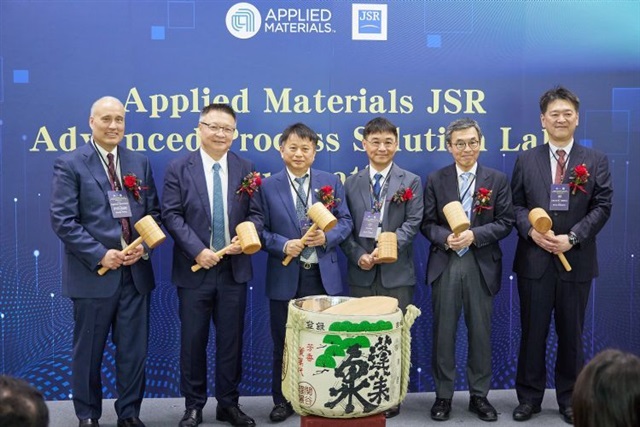
The Chip Production Landscape and JSR's Restart
The news of JSR's production restart in Taiwan represents a significant piece in the complex puzzle of the global semiconductor supply chain. In an industry where stability and production capacity are critical parameters, every move by a key player can have cascading repercussions. Taiwan, in particular, remains a strategic epicenter for chip manufacturing, hosting industry giants and essential suppliers.
This event occurs in a scenario where Taiwan Semiconductor Manufacturing Company (TSMC) holds an undisputed leadership position in advanced node production. TSMC's ability to produce chips with increasingly smaller and more complex geometries is fundamental for technological innovation, especially in the field of artificial intelligence and Large Language Models (LLM), which demand ever-greater computing power and transistor density.
The Dominance of Advanced Nodes and Challenges for AI
"Advanced nodes" are not merely a technical term; they represent the frontier of miniaturization and energy efficiency in the semiconductor world. Chips produced with these technologies are the beating heart of latest-generation GPUs, AI accelerators, and high-performance processors, indispensable for training and Inference of complex LLM. The demand for high VRAM, massive throughput, and low latency is a constant for those operating with intensive AI workloads.
TSMC's dominant position in this segment means that much of the critical hardware for AI, from GPUs for distributed training to chips for large-scale Inference, directly depends on its production capacity and technological roadmap. While this concentration ensures high quality standards, it also introduces an element of risk to the supply chain, making every production variation a potential stress factor for the global market.
Implications for On-Premise Deployments and TCO
For organizations evaluating on-premise LLM deployments, the stability and predictability of the semiconductor supply chain are crucial aspects. The acquisition of specific hardware, such as GPUs with high VRAM or bare metal solutions for Inference, represents a significant capital investment. The availability of these components, influenced by events like JSR's production restart or TSMC's capacity, directly impacts implementation timelines and initial costs (CapEx).
Furthermore, the evaluation of the Total Cost of Ownership (TCO) for a self-hosted AI infrastructure must consider not only the purchase price but also long-term supply resilience, ease of upgrades, and risk management related to potential disruptions. Data sovereignty and the need for air-gapped environments drive many companies towards on-premise solutions, but these choices are intrinsically linked to the availability of advanced silicio. For companies evaluating on-premise deployments, AI-RADAR offers analytical frameworks on /llm-onpremise to assess the trade-offs between costs, performance, and data control.
Future Outlook and Supply Chain Resilience
The semiconductor sector is constantly evolving, with massive investments aimed at diversifying production and strengthening global supply chain resilience. Events like JSR's restart, though specific, are indicators of the vitality and complexity of this ecosystem. The ability to meet the growing demand for AI chips while maintaining supply stability and security remains a strategic priority for governments and businesses.
In this scenario, understanding the production dynamics and interdependencies among various actors becomes essential for CTOs, DevOps leads, and infrastructure architects. Decisions regarding the adoption of LLM and their implementation, whether on-premise or hybrid, cannot disregard a careful analysis of the semiconductor market and its future prospects.









💬 Comments (0)
🔒 Log in or register to comment on articles.
No comments yet. Be the first to comment!