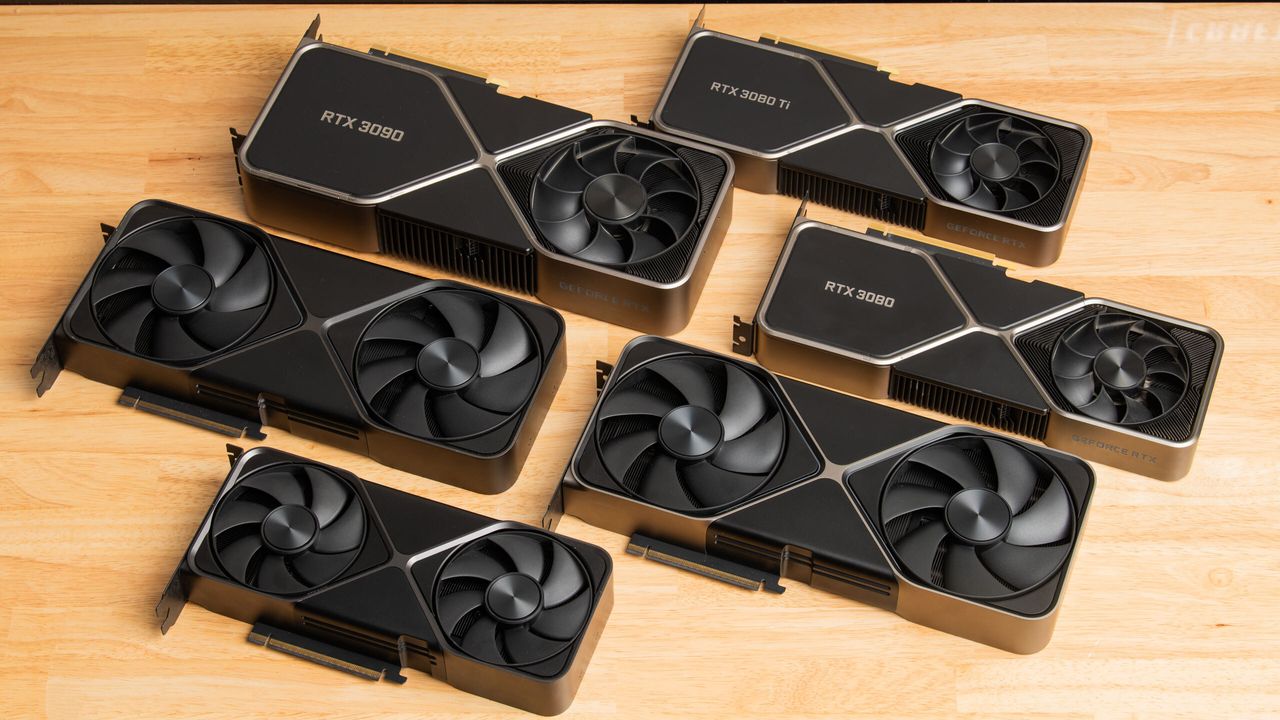
The GeForce RTX 30-series: An AI Upgrade Necessary by 2026?
Introduction
The exponential evolution of artificial intelligence, and particularly Large Language Models (LLM), is redefining hardware requirements for IT infrastructures. For companies considering or already implementing on-premise deployments, the longevity and adequacy of existing GPUs represent a strategic question. In this context, the inquiry into the necessity of an upgrade for GeForce RTX 30-series cards, based on the Ampere architecture, by 2026, becomes increasingly urgent.
The rapid technological obsolescence in the AI sector necessitates careful planning, especially for those seeking to balance performance, costs, and control over their data. The transition from traditional workloads to intensive LLM workloads requires a critical review of current and future hardware capabilities.
The Challenges of Ampere Architecture for LLM Workloads
While GeForce RTX 30-series GPUs were cutting-edge for gaming and certain general computing applications upon their release, they present inherent limitations when it comes to handling the specific requirements of modern LLMs in enterprise environments. The most critical factor is often the amount of VRAM available. Many large language models require tens, if not hundreds, of gigabytes of video memory for efficient inference or fine-tuning, especially with high batch sizes or extended context windows.
Furthermore, consumer cards like the RTX 30-series lack high-speed interconnects, such as NVLink, which are standard in professional GPUs (e.g., NVIDIA A100 or H100). This absence severely limits the ability to scale performance in multi-GPU configurations, where rapid communication between cards is fundamental for tensor parallelism or pipeline parallelism. This translates into lower throughput and higher latency, factors that can compromise user experience and operational efficiency in an LLM deployment.
Implications for On-Premise Deployments and TCO
For CTOs, DevOps leads, and infrastructure architects evaluating on-premise deployments, the decision to upgrade hardware by 2026 for Ampere GPUs is closely tied to the Total Cost of Ownership (TCO). While the initial investment in consumer cards might seem lower, long-term operational costs can increase significantly. These include higher power consumption to achieve comparable performance, the need for more robust cooling systems, and the potential requirement for more frequent hardware replacements due to a shorter lifespan for intensive AI workloads.
Data sovereignty, regulatory compliance (such as GDPR), and the need to operate in air-gapped environments are absolute priorities for many organizations. In these scenarios, the reliability and processing capacity of self-hosted hardware are crucial. The limitations of Ampere GPUs could not only hinder the adoption of more advanced models but also create bottlenecks that prevent full utilization of LLM potential, making the initial investment less advantageous over time.
Future Outlook and Trade-off Evaluation
The choice to maintain or upgrade GeForce RTX 30-series GPUs by 2026 ultimately depends on the specific requirements of the LLM workloads an organization intends to support. It is essential to carefully balance desired performance, acquisition and operational costs, and the future-proofing capability of the infrastructure. Adopting newer generations of GPUs, specifically designed for AI, could offer a better long-term TCO due to greater efficiency, superior VRAM, and advanced scalability capabilities.
AI-RADAR is committed to providing in-depth analysis of the trade-offs between different hardware solutions and deployment strategies. For those evaluating on-premise deployments, analytical frameworks are available at /llm-onpremise that can assist in making informed decisions, presenting constraints and opportunities without direct recommendations. Understanding concrete hardware specifications and their implications is fundamental for building resilient and high-performing AI infrastructures.





💬 Comments (0)
🔒 Log in or register to comment on articles.
No comments yet. Be the first to comment!