Taiwan's Race for Energy Security and its Implications for AI
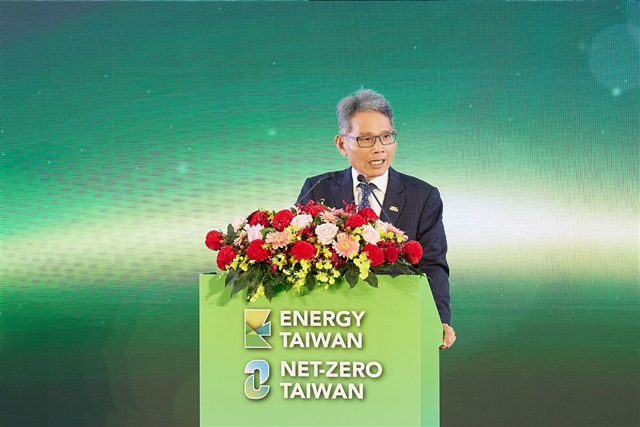
Taiwan, a pivotal player in the global technology ecosystem, is accelerating its efforts to bolster energy security. This initiative, as reported by DIGITIMES, emerges within a complex geopolitical landscape, including dynamics related to the Strait of Hormuz and the role of the United States. While primarily a geopolitical and energy matter, its repercussions extend deeply into the technology sector, directly influencing the planning and deployment of critical infrastructure, particularly that dedicated to artificial intelligence and Large Language Models (LLMs).
For companies operating or intending to establish advanced computing capabilities on the island, the availability and stability of energy are not merely an operational cost but a strategic pillar. Energy dependence can translate into vulnerabilities for supply chains and operational continuity, fundamental aspects for a capital and energy-intensive industry like AI.
Energy as a Key TCO Component for On-Premise Deployments
AI workloads, both for training and Inference of LLMs, are notoriously energy-intensive. Dedicated hardware, such as high-performance GPUs (e.g., NVIDIA A100 or H100), requires considerable power consumption to operate at full capacity. For organizations opting for an on-premise deployment, the energy bill becomes a significant cost item in the Total Cost of Ownership (TCO).
A region's energy security directly translates into the predictability and stability of these costs. Fluctuations or interruptions in energy supply can not only increase operational expenses but also compromise the availability of AI services, data integrity, and the ability to meet SLAs. In a self-hosted environment, where the company is responsible for the entire infrastructure, managing energy consumption and accessing reliable sources become absolute priorities to ensure long-term sustainability.
Data Sovereignty and Infrastructure Resilience
The issue of energy security also intertwines with themes of data sovereignty and infrastructure resilience. An on-premise AI infrastructure, often chosen to ensure data control, regulatory compliance, and security in air-gapped environments, requires a robust supporting ecosystem. Energy is a fundamental element of this ecosystem. Without a stable and controlled energy supply, the ability to maintain data sovereignty and operate independently can be compromised.
For CTOs and infrastructure architects, evaluating an on-premise deployment must therefore extend beyond hardware and software specifications, including an in-depth analysis of the local energy context. This includes not only the cost per kWh but also grid stability, the availability of renewable sources, and the overall resilience of the national energy infrastructure. These factors are particularly relevant in regions that are crucial nodes in the global silicio supply chain, such as Taiwan.
Future Prospects and Strategic Planning
Taiwan's "race" to strengthen its energy security underscores a broader trend: energy is increasingly recognized as a strategic factor for technological competitiveness. For companies investing in advanced AI capabilities, strategic planning must carefully consider the energy landscape. This means evaluating not only the energy efficiency of hardware and software Frameworks but also the resilience of power sources and the long-term energy policies of deployment regions.
AI-RADAR has often highlighted how the choice between on-premise deployment and cloud solutions involves a complex analysis of TCO and operational constraints. Energy security emerges as a fundamental constraint, directly influencing the feasibility and sustainability of any AI deployment strategy. Understanding and mitigating energy-related risks is essential to ensure that investments in LLMs and AI infrastructure generate the expected value while maintaining data control and sovereignty.










💬 Comments (0)
🔒 Log in or register to comment on articles.
No comments yet. Be the first to comment!