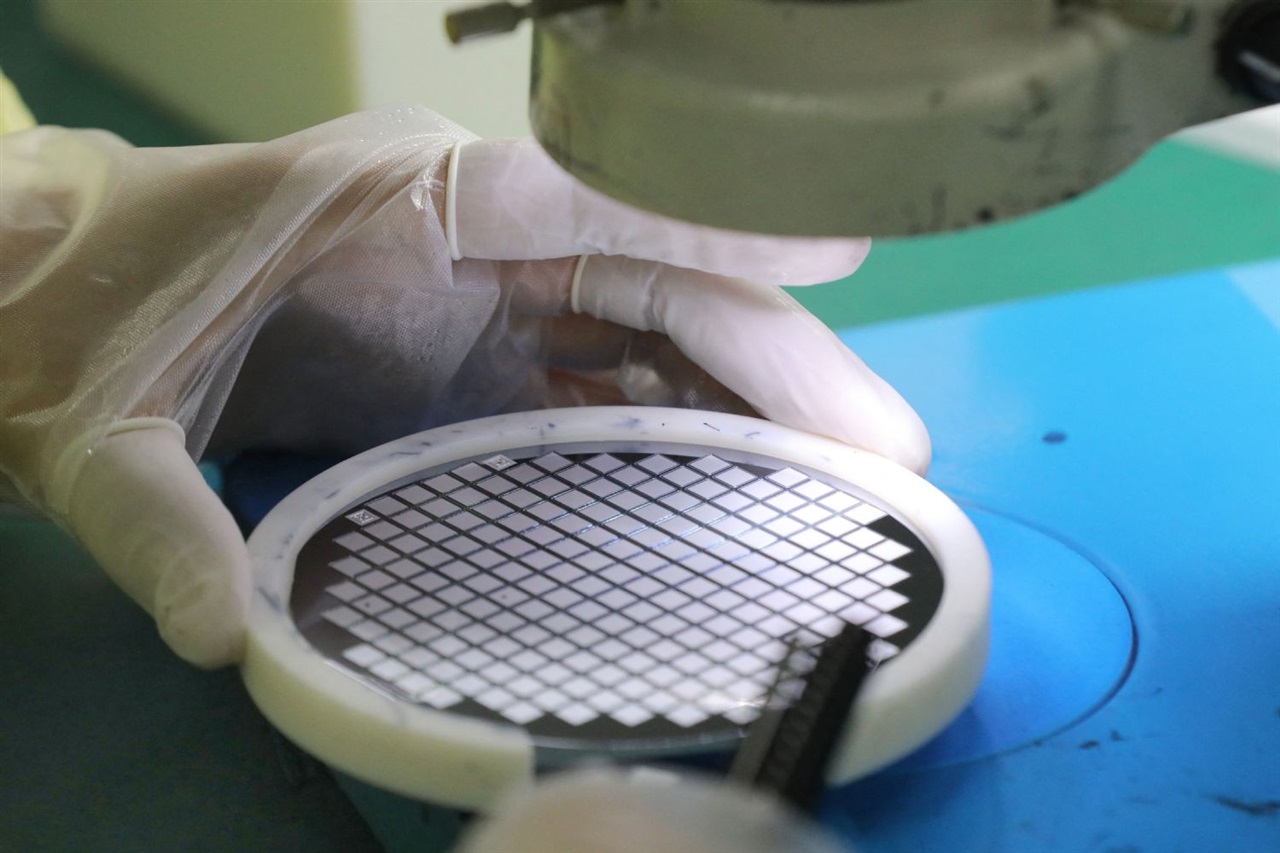
Hua Hong Semiconductor: A Strategy Focused on AI Demand and Innovation
Hua Hong Semiconductor, a key player in the global semiconductor landscape, has announced a strategic evolution centered on the growing demand for artificial intelligence and the expansion of its specialized technological capabilities. This direction reflects a macroeconomic and technological trend where AI serves as a primary driver for innovation and growth in the silicon sector. The move underscores the importance of adapting chip offerings to the increasingly complex requirements of AI workloads.
The company is positioning itself to capitalize on a rapidly expanding market where the need for specific hardware components for AI acceleration has become a priority. This strategic approach not only aims to strengthen Hua Hong's competitiveness but also to support the development of more efficient and high-performing AI solutions, essential for enterprises seeking to implement these technologies in various contexts.
The Driving Force of AI Demand
The demand for artificial intelligence, particularly for Large Language Models (LLMs), is redefining the requirements for silicon. Companies need processors with high computing capabilities, abundant VRAM, and optimized throughput to manage the Inference and Fine-tuning of complex models. This is especially true for organizations choosing self-hosted or on-premise deployment, where direct control over hardware and data sovereignty are priorities.
Implementing on-premise AI infrastructures presents significant challenges, including TCO management, energy consumption, and the need for advanced cooling systems. The availability of optimized chips, capable of offering a good balance between performance and efficiency, becomes crucial. A company like Hua Hong focusing on this demand can contribute to providing the necessary hardware foundations to build robust and scalable local AI stacks, reducing reliance on cloud solutions and ensuring air-gapped environments when required.
The Expansion of Specialty Technology and Its Implications
Hua Hong Semiconductor's expansion of specialty technology implies an investment in advanced manufacturing processes and the ability to produce chips with specific functionalities. This can include the development of smaller technological nodes, the integration of customized IP (Intellectual Property), or optimization for particular types of memory or interconnections. For enterprises, this translates into the possibility of accessing silicon better suited to their unique needs, whether related to specific AI algorithms, Quantization requirements, or low-latency processing needs.
This focus on specialty technology is particularly relevant for organizations evaluating on-premise deployment. The ability to obtain customized or highly optimized hardware can significantly improve performance, reduce long-term TCO, and ensure greater compliance with data sovereignty regulations. In a market dominated by a few large providers, the diversification of specialized silicon offerings is an enabling factor for innovation and competitiveness.
Outlook for the AI Landscape and Deployment Choices
Hua Hong Semiconductor's strategy highlights a broader trend in the semiconductor industry: increasing specialization to meet AI demands. For CTOs, DevOps leads, and infrastructure architects, the availability of a diverse silicon offering is fundamental for making informed deployment decisions. Whether choosing between Bare metal, containerized, or virtualized solutions, the quality and efficiency of the underlying hardware directly determine the success and sustainability of AI projects.
Companies considering self-hosted alternatives to the cloud for AI/LLM workloads can benefit from a broader and more competitive ecosystem of silicon providers. This allows for a better balance of trade-offs between initial (CapEx) and operational (OpEx) costs, performance, and security requirements. AI-RADAR offers analytical frameworks on /llm-onpremise to evaluate these trade-offs, providing useful tools for navigating the complexities of deployment choices in the AI era.






💬 Comments (0)
🔒 Log in or register to comment on articles.
No comments yet. Be the first to comment!