Huawei's Innovation for AI Chips
The semiconductor landscape for artificial intelligence is constantly evolving, driven by the increasing demand for computing power for increasingly complex workloads, such as Large Language Models (LLM). In this context, Huawei has announced its 'Tau Law,' an initiative that marks a potential turning point in the design and production of AI chips. The focus shifts towards the adoption of innovative materials and techniques, particularly glass substrates and advanced packaging, to overcome the physical limitations of current architectures.
This drive for innovation is crucial for companies evaluating on-premise deployments, where efficiency and computational density are critical parameters. The ability to integrate more power into a reduced physical footprint, while maintaining high energy efficiency, is a decisive factor for the Total Cost of Ownership (TCO) of local AI infrastructures. The promises of the 'Tau Law' suggest a path towards hardware solutions that can better meet these needs.
The Role of Glass Substrates and Advanced Packaging
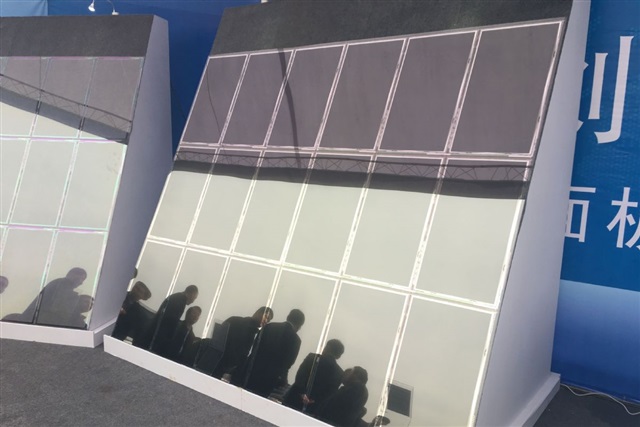
Glass substrates represent a promising technological frontier in the semiconductor industry. Compared to traditional organic silicon substrates, glass offers significant advantages in terms of planarity, thermal stability, and the ability to integrate a greater number of high-density interconnections. This translates into higher memory bandwidth and lower latency for communication between various chip components, crucial aspects for LLM Inference and training performance.
In parallel, advanced packaging, such as 3D stacking or chiplet technologies, allows overcoming the limitations of a single monolithic die. By combining multiple specialized chiplets on a single interposer (which could be glass), it is possible to create more powerful and flexible processors, optimized for specific AI functions. This approach not only improves overall throughput but also paves the way for greater modularity and more efficient VRAM management, essential elements for handling large models in self-hosted environments.
Implications for On-Premise Deployments
For CTOs, DevOps leads, and infrastructure architects, the evolution towards glass substrates and advanced packaging has direct and significant implications. More powerful and denser AI hardware means the ability to run complex LLM workloads directly in-house, reducing reliance on external cloud services. This strengthens data sovereignty, an increasingly critical aspect for regulated sectors or air-gapped environments that require maximum control over information location and security.
Furthermore, greater energy efficiency, resulting from more compact and optimized architectures, can help reduce operational TCO, balancing potentially higher initial CapEx for cutting-edge hardware. The ability to scale on-premise AI resources with a contained physical footprint and energy consumption becomes a key competitive factor. For those evaluating on-premise deployments, AI-RADAR offers analytical frameworks on /llm-onpremise to assess the trade-offs between performance, costs, and data sovereignty requirements.
Future Prospects and Technological Challenges
The widespread adoption of glass substrates and advanced packaging is not without challenges. It requires significant investments in research and development, new supply chains, and complex manufacturing processes. However, the direction taken by players like Huawei with its 'Tau Law' highlights a clear industry trend towards increasingly sophisticated hardware solutions to meet the exponential demands of AI.
These innovations are crucial for unlocking the full potential of LLMs and other AI applications, especially in scenarios where control, privacy, and local performance are priorities. The race for silicon innovation continues, and today's technological choices will determine companies' ability to build resilient and competitive AI infrastructures for the future.



💬 Comments (0)
🔒 Log in or register to comment on articles.
No comments yet. Be the first to comment!