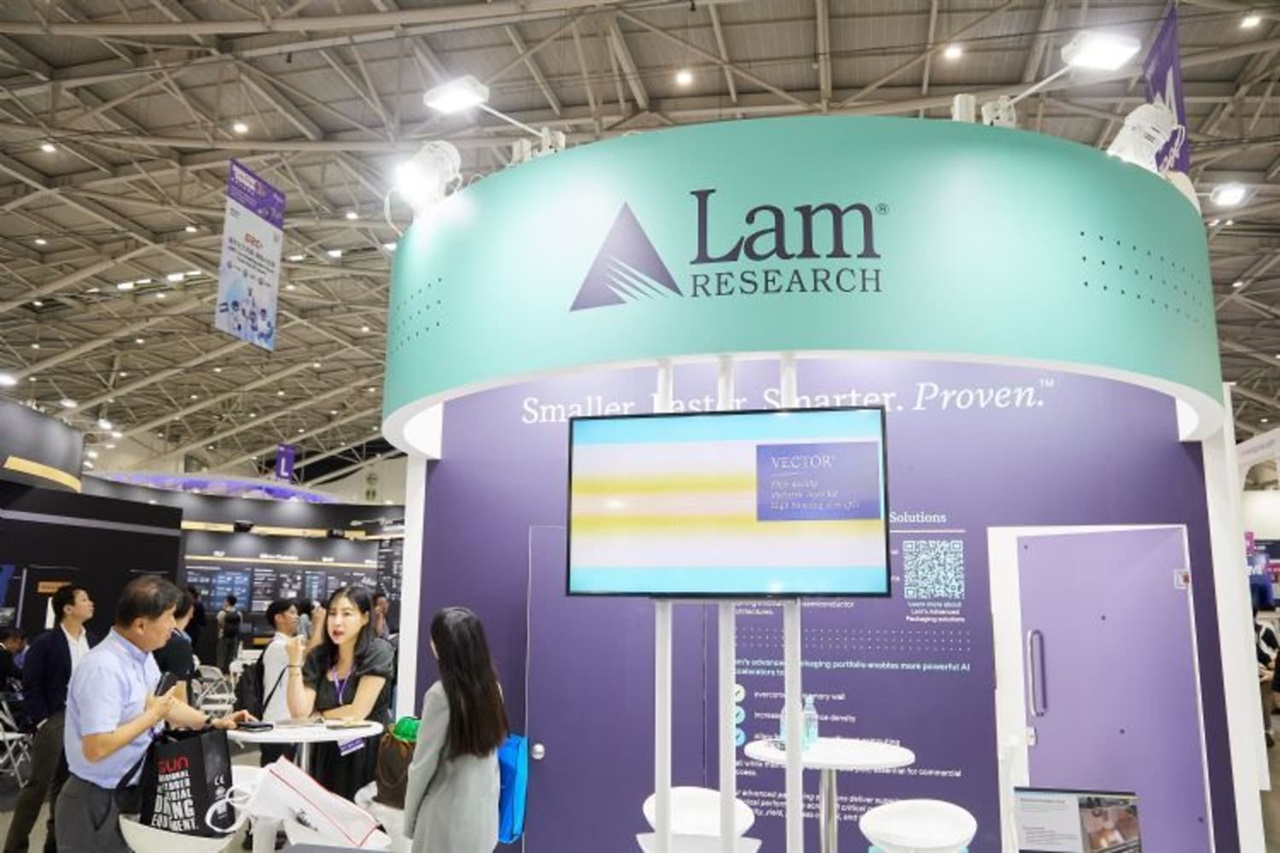
Lam Research Strengthens Taiwan Presence for AI Chips
Lam Research, a leading player in the semiconductor manufacturing equipment sector, has announced a significant expansion of its operations in Taiwan. The company plans to hire over 1,000 engineers, a move that underscores the increasing pressure and acceleration in the global supply chain, driven by the exponential demand for artificial intelligence chips. This initiative not only strengthens Taiwan's position as a strategic hub for semiconductor technology but also highlights the market dynamics directly influencing the deployment decisions for Large Language Models and AI workloads.
Lam Research's decision reflects a broader trend in the industry, where manufacturing capacity and innovation in "silicon" have become critical factors. The surge in demand for AI chips, particularly high-performance GPUs and specific accelerators, is putting pressure on the entire supply chain, from equipment manufacturers like Lam Research to foundries, and ultimately to the final hardware providers for Large Language Model inference and training.
Taiwan's Crucial Role in the Supply Chain
Taiwan continues to be a crucial epicenter for the semiconductor industry, hosting production giants and essential equipment suppliers. Lam Research's investment in skilled human resources on the island is a direct testament to this centrality. The availability of engineering talent and a mature industrial ecosystem are decisive factors for companies seeking to scale production and innovation in the field of AI chips.
For organizations evaluating on-premise LLM deployments, the stability and capacity of the semiconductor supply chain are fundamental aspects. The availability of specific hardware, such as GPUs with high VRAM and throughput, largely depends on manufacturers' ability to meet demand. Any bottlenecks in equipment production or chip fabrication can directly impact delivery times and costs, influencing the overall TCO of self-hosted AI infrastructures.
Implications for On-Premise AI Deployments
Lam Research's expansion, while focused on equipment manufacturing, has significant implications for those designing and managing AI infrastructures. The growing demand for AI chips translates into a greater need for production capacity, which in turn can lead to better hardware availability in the market in the medium to long term. However, in the short term, the scramble for resources can create scarcity and price fluctuations, a factor to consider carefully in TCO analysis for on-premise deployments.
Companies focused on data sovereignty and air-gapped environments for their LLMs must plan hardware acquisition well in advance. Understanding the dynamics of the supply chain and ongoing investments by key players like Lam Research can offer valuable insights into the future availability of advanced "silicon." The ability to procure GPUs with adequate specifications (e.g., A100 80GB or H100 SXM5) is often a critical constraint for the efficient execution of complex models. For those evaluating on-premise deployments, AI-RADAR offers analytical frameworks on /llm-onpremise to assess specific trade-offs and constraints.
Future Prospects and Innovation in "Silicon"
Lam Research's investment in engineering talent is not limited to meeting current demand but also aims to support future innovation. The development of new technologies for chip fabrication is essential to enable the next generation of AI accelerators, which will require ever-increasing computational density, lower power consumption, and higher memory capacities. These advancements will be crucial for the evolution of Large Language Models and the expansion of their applications in sensitive sectors.
In a rapidly evolving technological landscape, the ability to attract and train specialized engineers is an indicator of a sector's vitality. Lam Research's commitment in Taiwan highlights how the competition for talent is as intense as that for "silicon" itself, outlining a future where innovation in chip production will continue to be a fundamental pillar for the advancement of artificial intelligence and global deployment strategies.








💬 Comments (0)
🔒 Log in or register to comment on articles.
No comments yet. Be the first to comment!