
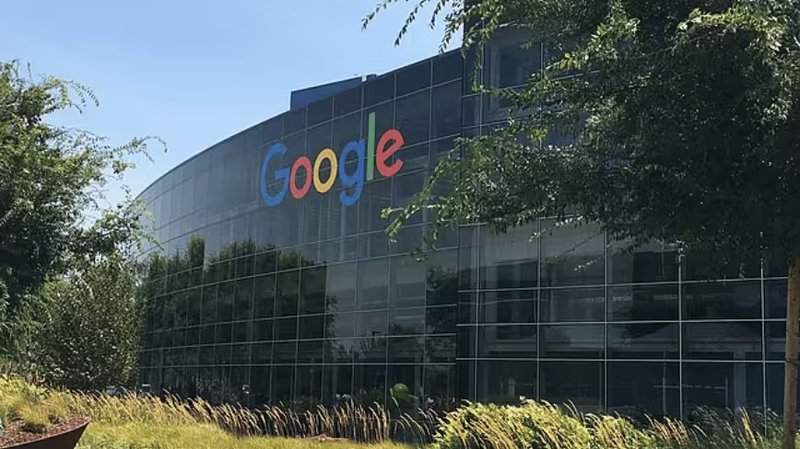
On Thursday morning, shortly after 9 a.m., around a hundred Google workers gathered outside the company's Mountain View headquarters, holding placards that bore a demand as simple as it was telling: protect our jobs. The rally, organized by the Alphabet Workers Union, ended with the delivery of a petition signed by more than 4,500 employees. At first glance, this might seem like an internal matter for a single tech giant, but it actually casts a harsh light on a raw nerve within the entire artificial intelligence ecosystem: the fragility of the cloud model when the human capital that sustains it begins to crack.
Google is not just a company that develops LLMs like Gemini; it is also the infrastructure provider on which thousands of enterprises rely for cloud-based inference and model training. This protest – and the tensions it reveals – cannot be dismissed as an isolated labor episode. It signals a structural risk: if employee discontent leads to operational slowdowns, strikes, or a talent drain, the reliability of AI services hosted on Google Cloud would suffer. For companies that have embraced the convenience of the cloud, this is a warning: dependency on a single vendor is not only a technical or contractual lock-in problem, but also an exposure to organizational and political variables that are hard to price into a conventional TCO analysis.
The symbolic content of the protest sharpens the picture. The workers are demanding a “floor” under their jobs – guarantees against indiscriminate layoffs – at a time when AI-driven automation threatens to reshape tech company workforces. Here lies a paradox: the very technologies Google sells to enterprise customers risk fueling internal instability within the provider. This vicious circle goes straight to the heart of deployment decisions. For those evaluating on-premise AI workloads, the Mountain View protest becomes a tangible argument: owning the entire stack, from GPU-equipped hardware to serving frameworks, means insulating yourself not only from downtime risks but also from the social and strategic upheavals that can hit an external vendor.
To be sure, self-hosted deployment is no magic wand. It demands infrastructure investment, in-house expertise, and ongoing maintenance. Yet the ecosystem of open-source tools – from runtimes like vLLM to quantization techniques that allow LLMs to run on more modest hardware – is lowering the entry barrier. Added to this is the growing regulatory pressure around data residency, which makes on-premise almost mandatory in regulated industries. In this context, the Google protest acts as a catalyst: it shifts the discourse from mere economic convenience to operational resilience in the broadest sense. The question is no longer just “how much does cloud cost,” but “how much does it cost when you lose it at the worst possible moment.”
The structural signal is clear: AI is entering a maturity phase in which service continuity cannot hinge on the industrial relations health of a single supplier. For enterprises with a long-term view, on-premise is not a relic of the past but an architecture that restores control in an increasingly uncertain present. The Mountain View square, with those placards and signatures, staged a risk that no service-level agreement can truly cover.






💬 Comments (0)
🔒 Log in or register to comment on articles.
No comments yet. Be the first to comment!