
The Post-Traditional SEO Era: A Paradigm Shift
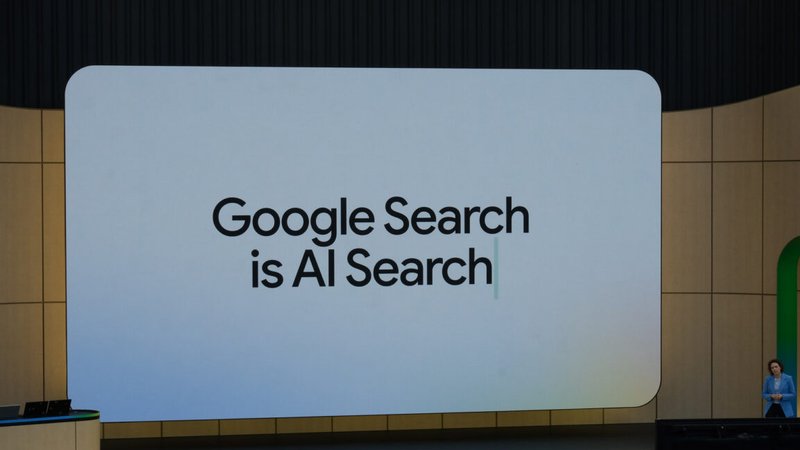
The recent Google I/O marked a significant turning point in the online search landscape, officially integrating AI-generated answers directly into the core of search results. This move radically redefines how search engines operate, shifting focus from traditional "ten blue links" to content synthesized and presented directly by AI.
For companies and professionals who have invested years in building Search Engine Optimization (SEO) strategies based on that model, the rules have changed profoundly. The value of organic ranking, once measured by visibility among the top results, now competes with a new form of information presentation, where AI acts as the primary intermediary between the user's query and the final answer.
The New AI-Driven Search Paradigm
The introduction of AI-generated answers implies that users may no longer interact directly with websites as they once did. Instead of clicking a link to find information, they will receive a summary curated by artificial intelligence. This raises crucial questions for businesses: most brands have almost no visibility into how AI describes their products, services, or identity to customers.
This lack of control and transparency over automated narration presents an unprecedented challenge. If AI summarizes or interprets a company's content, how can one ensure that the message is accurate, complete, and aligned with the brand's communication strategy? This scenario highlights the growing importance of data sovereignty and control over one's digital footprint, central themes for those evaluating on-premise LLM deployments to manage and present their internal and external information.
Implications for Businesses and Decision-Makers
For CTOs, DevOps leads, and infrastructure architects, this change is not just a marketing issue, but a strategic problem touching data management and information governance. Dependence on external platforms for brand presentation, without visibility into the underlying mechanisms, can entail significant risks in terms of reputation and compliance.
Companies may need to explore new methodologies to influence how AI interprets and presents their content. This could include optimizing structured data, creating curated internal knowledge bases, and adopting "AI-friendly" content strategies designed to be easily digestible and summarizable by Large Language Models. The ability to control and validate the information sources feeding these systems becomes fundamental.
Future Prospects and Strategic Adaptation
The search landscape is constantly evolving, and the Google I/O announcement is the latest proof. Companies must now face the need to rapidly adapt their digital strategies to remain relevant. This means not only rethinking the approach to SEO but also considering how their data infrastructure and internal processes can support greater agility and control over their digital narrative.
For those evaluating on-premise deployments, this context strengthens the argument for maintaining direct control over their data and the models that process it. The ability to train or Fine-tune LLMs with proprietary data, in air-gapped or self-hosted environments, could become a crucial competitive advantage to ensure that one's voice is not lost or distorted in the era of AI-powered search. The trade-offs between cost, control, and performance will be at the heart of future strategic decisions.





💬 Comments (0)
🔒 Log in or register to comment on articles.
No comments yet. Be the first to comment!