
Google's TPUs Tackle Increasingly Demanding AI Workloads
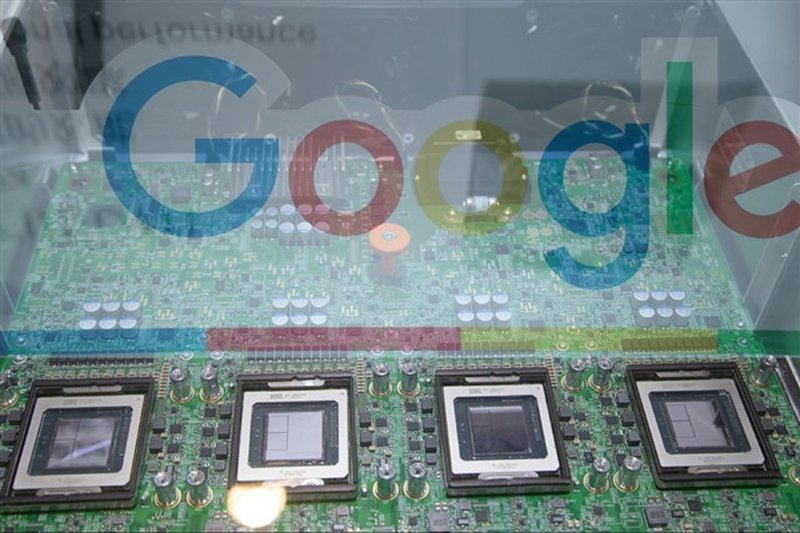
Artificial intelligence continues to evolve at a rapid pace, bringing with it increasingly complex and intensive workloads. To meet these growing demands, cloud providers and companies are developing dedicated hardware solutions. Google, in particular, has invested in its Tensor Processing Units (TPUs), processors specifically designed to accelerate machine learning workloads. A new video illustrates how these units are fundamental for managing the ever-increasing demands of the AI landscape.
The need for specialized hardware becomes clear when considering Large Language Models (LLMs) and other next-generation AI models. These require enormous computing capabilities for both the training phase, where models learn from vast datasets, and for inference, which is the practical application of the model to generate predictions or responses. TPUs position themselves as one answer to this challenge, offering an alternative to more general-purpose GPUs for specific types of operations.
The Architecture of TPUs and AI Requirements
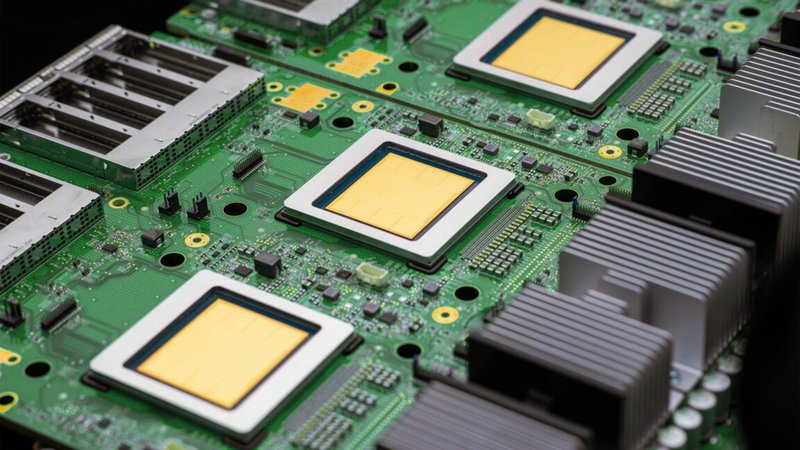
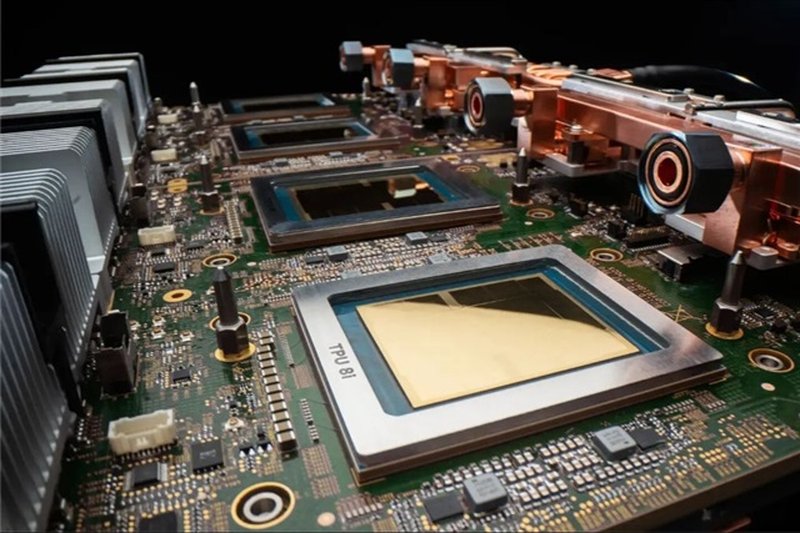
TPUs are Application-Specific Integrated Circuits (ASICs), meaning integrated circuits designed with a very specific goal: to optimize linear algebra operations, particularly matrix multiplications, which are the computational core of neural networks. Unlike GPUs, which are more versatile and programmable processors for a wide range of parallel tasks, TPUs are engineered to maximize throughput and energy efficiency for AI workloads. This specialization allows them to perform specific calculations with a speed and efficiency that can surpass more generalist solutions in certain contexts.
The evolution of AI workloads, with models featuring billions of parameters and requiring ever-larger context windows, drives the demand for VRAM and computational power. TPUs were developed to address precisely these challenges, integrating architectures that facilitate massive parallelism and efficient data management. This makes them particularly suitable for scenarios where fine-tuning LLMs or executing large-scale inference requires dedicated and optimized resources.
Cloud vs. On-Premise: The Deployment Context
Google's TPU offering is intrinsically linked to its cloud ecosystem. This deployment model offers significant advantages in terms of scalability and management, allowing companies to access massive computing resources on demand, without the need for initial CapEx investments in purchasing and maintaining physical hardware. However, for organizations evaluating alternatives, important considerations arise related to control, data sovereignty, and long-term Total Cost of Ownership (TCO).
For companies with stringent compliance or security requirements, or those operating in air-gapped environments, the on-premise deployment of AI solutions based on GPUs or other accelerators can represent a strategic choice. While the initial investment may be higher, direct infrastructure management offers complete control over data and the execution environment. AI-RADAR specifically focuses on these trade-offs, providing analytical frameworks on /llm-onpremise to help decision-makers evaluate the cost, performance, and governance implications between self-hosted and cloud-based solutions. The choice often depends on a balance between flexibility, operational costs, and the need to keep data within one's own infrastructural boundaries.
Future Prospects and Strategic Decisions
The artificial intelligence landscape is constantly evolving, with models becoming increasingly larger and more complex. This trend will only increase the pressure on computing infrastructures, making hardware and deployment decisions even more critical. Whether leveraging the power of TPUs in the cloud or opting for a self-hosted infrastructure with high-end GPUs, the ability to effectively manage AI workloads is fundamental for innovation and competitiveness.
Companies must carefully consider not only raw performance but also factors such as TCO, ease of integration with existing pipelines, security requirements, and data sovereignty. The choice between a cloud-based approach, offering scalability and managed services, and an on-premise deployment, ensuring control and customization, is a strategic decision that defines an organization's ability to fully exploit the potential of AI.



💬 Comments (0)
🔒 Log in or register to comment on articles.
No comments yet. Be the first to comment!