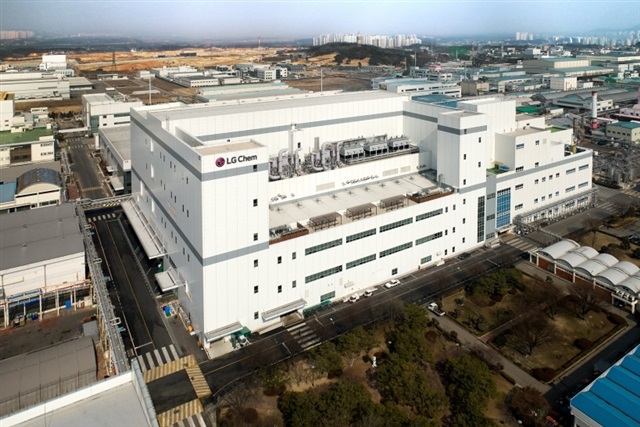
When we talk about hardware bottlenecks in AI, our minds go straight to GPUs, 3-nanometer wafers, or HBM memory. But the chain is longer, and any link can snap. The latest signal comes from Seoul: LG Chem is evaluating an expansion of its copper clad laminate production – the laminated material that forms the backbone of printed circuit boards – in response to an AI chip demand that is “straining supply.”
CCL: the material holding AI hardware together
Copper clad laminate is no ordinary substrate. In accelerators for Large Language Models, where frequencies and interconnect densities are extreme, low-loss, high-thermal-stability laminates are required. These are materials with a controlled dielectric constant, often reinforced with glass fibers or ceramic fillers, capable of handling hundreds of watts without warping. Every multilayer PCB in an enterprise-grade GPU – think NVIDIA H100 or custom hyperscaler solutions – contains layers of advanced CCL.
The hidden traffic jam slowing down on-premise infrastructure
For those building local inference stacks, the problem isn’t just getting the card or the compute node. Server and embedded system suppliers report longer lead times precisely upstream, on passive components and laminates. A CCL shortfall today translates, six to nine months later, into fewer boards ready for assembly. LG Chem’s decision – still under evaluation but already publicly discussed – suggests that the industry is bracing for structural demand, not a temporary spike. For IT managers planning on-premise LLM deployments, this means factoring into their TCO calculations not only GPU costs but also the premium tied to second-tier component scarcity.
What LG Chem’s move tells us about the AI hardware market
Expanding CCL production is no quick fix: it requires investment in chemical capacity and pressing lines that take years to mature. The interest of a player like LG Chem reflects a belief that AI workload growth is not cyclical but a regime change. In this landscape, on-premise setups – often chosen for data sovereignty or latency control – must contend with an ever more contested supply ecosystem. Analytical frameworks such as those offered on AI-RADAR for on-premise deployment help evaluate trade-offs between costs, timelines, and technological autonomy, but the raw materials variable shows that the game is played well before the rack.
Outlook: planning infrastructure in a world of strained chains
The focus on base PCB materials confirms that the AI race is not just about model architectures or quantization bit widths. It’s also industrial chemistry and global logistics. Those designing a lab or data center with self-hosted LLMs today would be wise to include a buffer for lead times and supplier diversification in their scenarios. LG Chem’s eventual move might ease the pressure, but for now the signal is clear: the next frontier of on-premise AI could hinge on how much laminate can be produced.









💬 Comments (0)
🔒 Log in or register to comment on articles.
No comments yet. Be the first to comment!