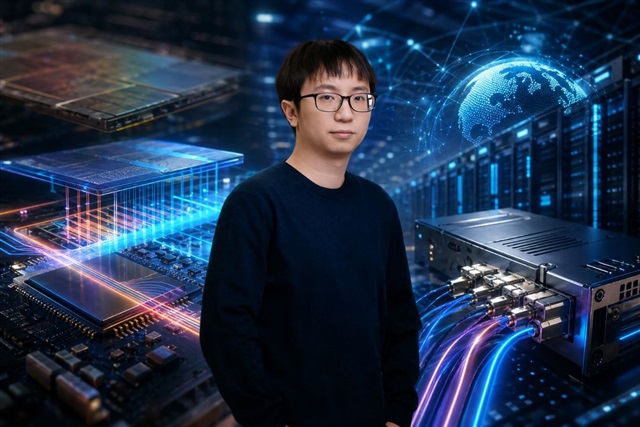
The Rise of Lightelligence in the AI Landscape
Yichen Shen, an MIT physicist and a prominent figure in the sector, is the founder of Lightelligence, a company establishing itself as a key player in the field of photonics chips dedicated to artificial intelligence. The news of its upcoming initial public offering (IPO) in Hong Kong underscores the growing interest and market potential for innovative hardware solutions capable of supporting the evolution of Large Language Models (LLM) and other AI workloads. This initiative positions Lightelligence at the center of a technological transformation where hardware is a crucial enabling factor for the future of AI.
Lightelligence's approach, based on the use of photonics, represents a promising direction to overcome the limitations of traditional electronic architectures. The integration of AI at the core of their technology suggests a focus on optimizing performance for specific tasks, such as inference and training of complex models. The pursuit of capital through an IPO reflects the need for significant investments to bring these technologies from the laboratory to large-scale market, a typical path for companies aiming to revolutionize high-tech sectors.
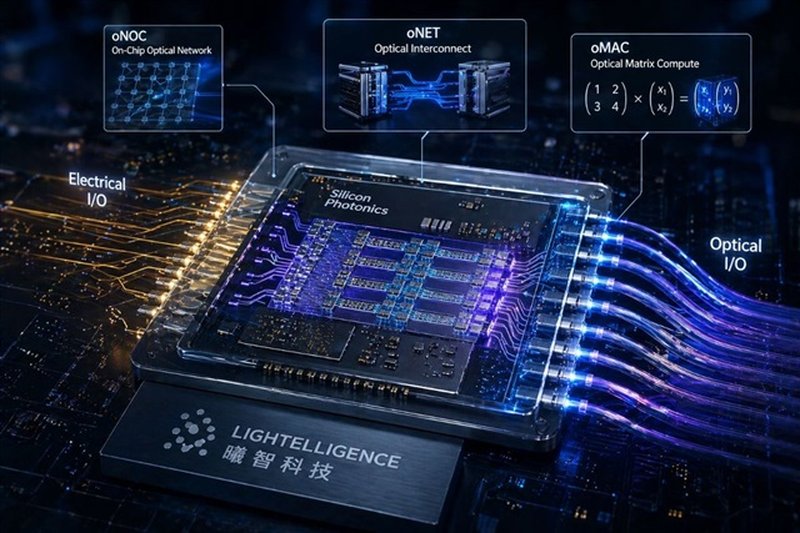
The Innovation of Photonics Chips for AI
Photonics chips, like those developed by Lightelligence, utilize light instead of electrons to process data. This approach offers several intrinsic advantages, including higher transmission speeds, significantly lower power consumption, and less heat generation compared to traditional silicio-based electronic chips. For AI workloads, which are notoriously compute and energy-intensive, these characteristics can translate into higher throughput and reduced latency, critical elements for the efficiency and responsiveness of AI systems.
The adoption of this technology can have a profound impact on data center architecture and deployment strategies. The ability to perform AI computations with greater energy efficiency not only reduces the long-term Total Cost of Ownership (TCO) but also addresses growing environmental concerns related to AI's energy consumption. While the transition from research to mass production involves complex challenges, the potential of these chips to accelerate LLM inference and training, along with other models, is a powerful driver for innovation.
Implications for On-Premise Deployments
For organizations evaluating on-premise deployment strategies for their AI workloads, the emergence of specialized hardware like Lightelligence's photonics chips is a factor to consider carefully. The availability of locally optimized hardware solutions can offer unprecedented control over data sovereignty, regulatory compliance, and security—fundamental aspects for sectors such as finance, healthcare, or public administration. Self-hosted deployments, often in air-gapped environments, directly benefit from hardware that maximizes efficiency and minimizes footprint.
However, the choice between general-purpose hardware (like traditional GPUs) and specialized solutions involves trade-offs. While GPUs offer flexibility and a mature software ecosystem, photonics chips promise specific efficiencies for certain AI workloads. Evaluating these constraints and opportunities is crucial for CTOs and infrastructure architects. Platforms like AI-RADAR offer analytical frameworks on /llm-onpremise to help assess these trade-offs, considering factors such as TCO, expected performance, and integration requirements with the existing local stack.
Future Prospects and the AI Hardware Market
Lightelligence's move towards a public listing in Hong Kong is part of a highly dynamic AI hardware market. The demand for AI computing capacity continues to grow exponentially, driving innovation in various directions, from next-generation graphics processors to ASIC chips and, indeed, photonics solutions. This competitive landscape stimulates research and development of new architectures that can offer distinct advantages in terms of performance, energy efficiency, and cost.
The success of companies like Lightelligence will depend not only on the technological superiority of their chips but also on their ability to effectively integrate them into existing software and hardware ecosystems. Standardization and interoperability will be key for large-scale adoption. The IPO represents a strategic step for Lightelligence to finance this expansion and consolidate its position in a rapidly evolving market, where the ability to provide efficient and scalable hardware solutions is increasingly a competitive differentiator.






💬 Comments (0)
🔒 Log in or register to comment on articles.
No comments yet. Be the first to comment!