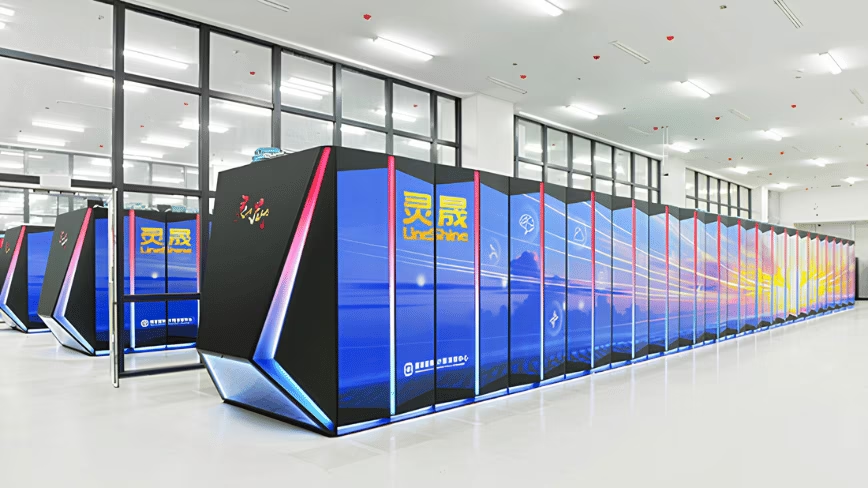
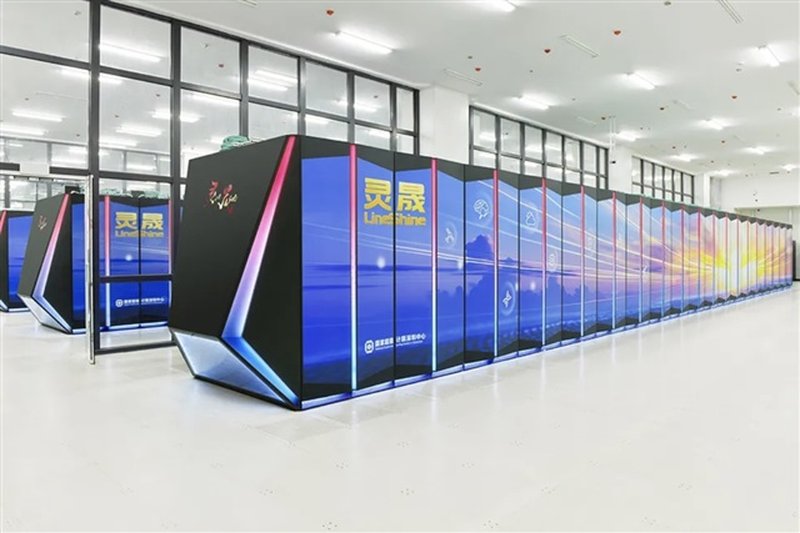
The news marks a before and after. On Tuesday, the organizers of the TOP500 ranking declared that LineShine, a supercomputer built in Shenzhen, is now the most powerful machine on the planet. The headline isn't just the computational speed—it's the silicon inside: for the first time, a Chinese system reaches the top without a single chip made by Nvidia, AMD, or Intel.
A milestone long in the making
China hasn't held the top spot in supercomputing since 2017. In the intervening years, the United States dominated with machines like Frontier and Summit, all built on American architectures. Export restrictions from Washington, limiting the sale of advanced semiconductors to Chinese entities, forced Beijing to chart a different course. LineShine is the result of that gamble: a fully independent system, designed and built around domestically developed processors.
Sovereign silicon and the on-prem lesson
The implications stretch far beyond national lab rivalries. For anyone running private data centers or evaluating on-premise deployment of Large Language Models, the question is stark: what happens when the chip supply chain fragments along geopolitical lines? High-performance GPUs remain the bottleneck for inference and fine-tuning of ever-larger models. Relying on a single dominant supplier—or a handful concentrated in one country—exposes you to cost and availability risks. LineShine's example shows that technological autonomy is possible, but requires colossal investment and long timelines.
What changes for artificial intelligence
The arrival of a top-tier supercomputer without US chips won't rewrite enterprise market dynamics overnight. But it signals a trend: the ability to build massive compute infrastructure without Nvidia dependency could, over the medium term, widen options for those seeking hardware for LLM training and inference in self-hosted environments. Today, the choice almost always falls on GPUs tied to US vendor licensing and support. Should the Chinese ecosystem mature and offer competitive alternatives, the landscape of costs and lock-in risks would shift significantly.
Beyond the record: what's at stake
We don't know which specific chips LineShine uses, nor its performance on typical machine learning workloads. The statement merely confirms the absence of American components and the top spot in operations per second. But the message is both political and industrial: digital sovereignty isn't an abstract concept—it's a concrete capability measured in silicon. For organizations considering on-premise architectures, the advice isn't to chase every new entrant, but to realistically map their own supply chain constraints. On AI-RADAR, we offer a framework to evaluate these trade-offs without shortcuts.



💬 Comments (0)
🔒 Log in or register to comment on articles.
No comments yet. Be the first to comment!