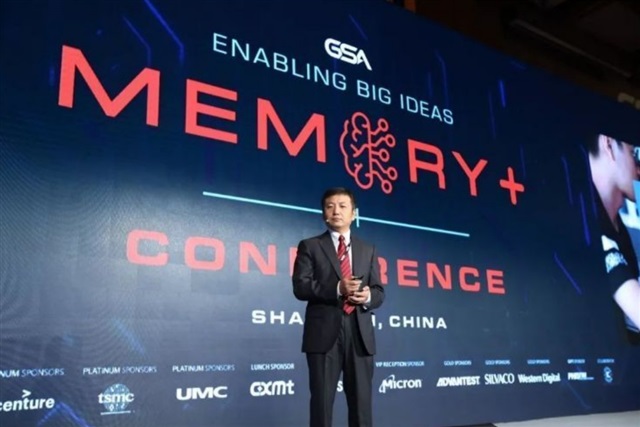
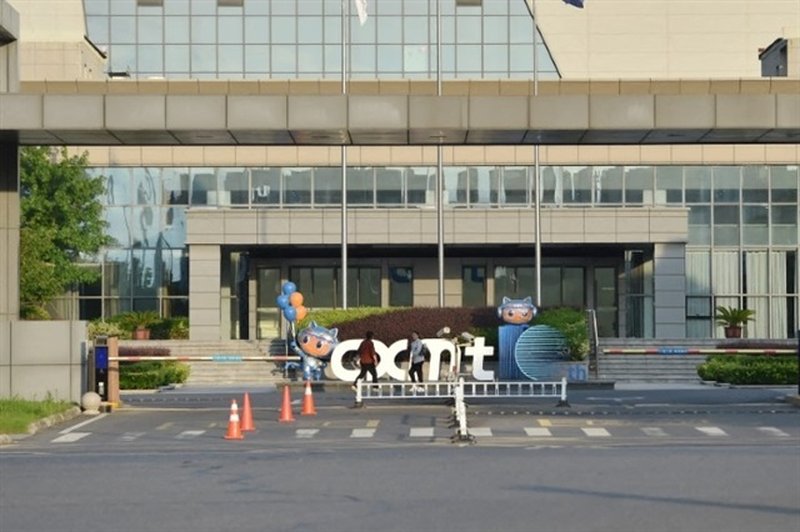
In the semiconductor memory world, dominated by a three-name oligopoly, every tectonic shift usually has a familiar face. Yet the most interesting one might belong to a low-profile engineer: Zhu Yiming, founder of GigaDevice and chairman of CXMT, the company trying to turn China into a top-tier DRAM producer.
CXMT (ChangXin Memory Technologies) is a name that circulates among insiders but remains almost invisible to the general public. Its quiet, methodical rise echoes that of other Chinese national champions in the chip sector. Zhu embodies that strategy: a technical profile, far from the loudspeakers of major conferences, who first built GigaDevice in NOR flash memory and now leads the assault on DRAM, the toughest segment due to colossal investments and technological barriers.
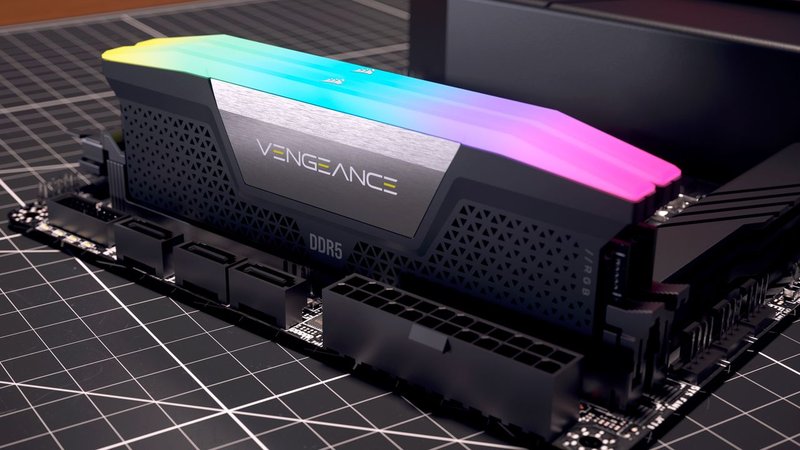
The real stakes are not just commercial but systemic. DRAM is the lifeblood of machines used for training and inference of language models. Every GPU, every on-premise server, every compute cluster depends on high-speed memory banks. A new player capable of producing significant volumes would alter the cost geometries for those setting up dedicated infrastructure, from private data centers to air-gapped installations. And in a context where U.S. sanctions push Beijing toward self-sufficiency, CXMT is a long-term strategic piece.
Anyone who has faced the choice between cloud and on-prem knows that memory cost weighs heavily on the Total Cost of Ownership, especially when scaling to hundreds of terabytes of VRAM. The prospect of an alternative supplier, even if initially limited to less advanced nodes, loosens the grip of Samsung, SK hynix, and Micron. It’s not science fiction: China has already shown with solar panels and batteries its ability to compress global prices once it reaches critical mass. If CXMT follows a similar path, the equilibrium of the DRAM market would be upended.
There is a geopolitical angle that directly touches data sovereignty. For European organizations, on-prem infrastructure is often an answer to GDPR requirements and the need to keep data under direct control. Having hardware with components from diversified supply chains is not just a cost concern but a resilience imperative: reducing dependence on a narrow set of Asian suppliers already concentrated in high-tension areas is a stated goal for many IT leaders.
Zhu Yiming, described by industry sources as a leader obsessed with engineering details rather than public relations, perhaps represents the most ambitious bet of Chinese semiconductor nationalism. His professional biography, intertwined with the birth of GigaDevice and the subsequent move to CXMT, tells of a country aiming to break free from strategic technology imports. For those watching the LLM sector and on-premise infrastructure, tracking CXMT’s progress is not an academic exercise. It is a signal that could herald a decade of more accessible memory and, consequently, an acceleration in locally distributable computing capacity.





💬 Comments (0)
🔒 Log in or register to comment on articles.
No comments yet. Be the first to comment!