The Gap in Fundamental LLM Innovation
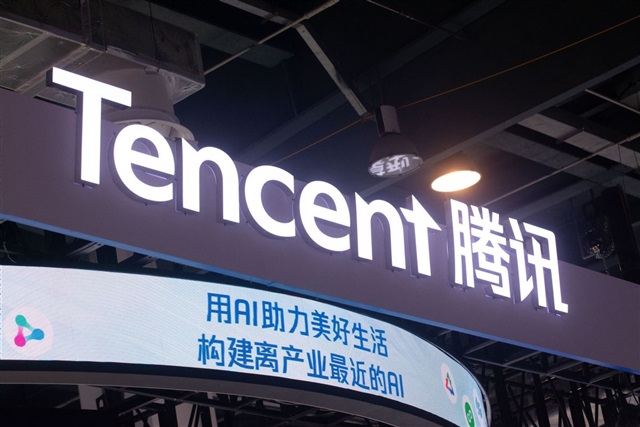
The global artificial intelligence landscape is constantly evolving, marked by intense competition among leading technological powers. In this context, a significant observation has come from a former Tencent AI leader, who stated that Chinese companies are currently at a disadvantage compared to their US counterparts concerning fundamental innovation in Large Language Models (LLMs). This declaration, reported by AFP, highlights a crucial dynamic in the sector, suggesting that the primary focus of core innovation might be concentrated elsewhere.
The distinction between "fundamental innovation" and application development is essential. While Chinese companies have demonstrated remarkable capability in implementing and scaling LLM-based applications, the statement suggests a gap in the research and development that leads to the creation of radically new model architectures, more efficient training algorithms, or revolutionary optimization techniques. This aspect is particularly relevant for industry practitioners, as core innovation is the driving force behind the entire technological supply chain.
The Context of LLM Innovation and Its Implications
Fundamental innovation in LLMs manifests in several critical areas. This includes the ability to conceive and develop models with emergent capabilities, to improve the efficiency of large-scale training, to optimize inference for reduced latency and increased throughput, or to explore new architectures that overcome current limitations, such as managing extremely large context windows or reducing VRAM requirements. These advancements demand massive investments in research, access to cutting-edge computing infrastructure (like latest-generation GPUs with high VRAM), and an ecosystem of specialized talent.
For companies evaluating LLM deployment, whether in self-hosted or hybrid environments, the origin of core innovation has a direct impact. If the most performant architectures and efficient training methods predominantly emerge from one region, this can influence the availability of leading Open Source models, the quality of fine-tuning tools, and quantization strategies. The ability to leverage these advancements often requires robust on-premise infrastructure, capable of handling intensive workloads and ensuring data sovereignty.
Deployment Decisions and Data Sovereignty
The concentration of innovation in a specific geographical area raises important questions for deployment decisions. Companies aiming to maintain full control over their data and operations, opting for self-hosted or air-gapped solutions, must consider access to models and frameworks that are both cutting-edge and compatible with their compliance and security requirements. A gap in fundamental innovation could mean greater reliance on technologies developed elsewhere, with potential implications for the supply chain and technological resilience.
Evaluating the Total Cost of Ownership (TCO) for an on-premise LLM deployment becomes even more complex in this scenario. It's not just about the cost of hardware (GPUs, storage, networking) or energy, but also the ability to attract and retain talent capable of managing and optimizing complex models, often derived from specific research ecosystems. Choosing an on-premise approach offers advantages in terms of data sovereignty and control but requires careful planning to ensure access to the most innovative technologies.
Future Prospects and the Importance of Continuous Analysis
The AI landscape is notoriously dynamic, and leadership positions can change rapidly. The statement from the former Tencent executive offers a snapshot of the current moment but is not a definitive judgment. Competition stimulates innovation globally, and investments in research and development continue to be substantial across multiple regions.
For CTOs, DevOps leads, and infrastructure architects, it is crucial to maintain an updated view of the global LLM innovation landscape. The ability to identify trade-offs between adopting cutting-edge models and ensuring data sovereignty, compliance, and cost control is paramount. AI-RADAR focuses precisely on these aspects, offering analytical frameworks on /llm-onpremise to support strategic decisions regarding on-premise, hybrid, or air-gapped deployments, regardless of the geographical origin of core innovation.







💬 Comments (0)
🔒 Log in or register to comment on articles.
No comments yet. Be the first to comment!