The Emergence of a Complex Conflict
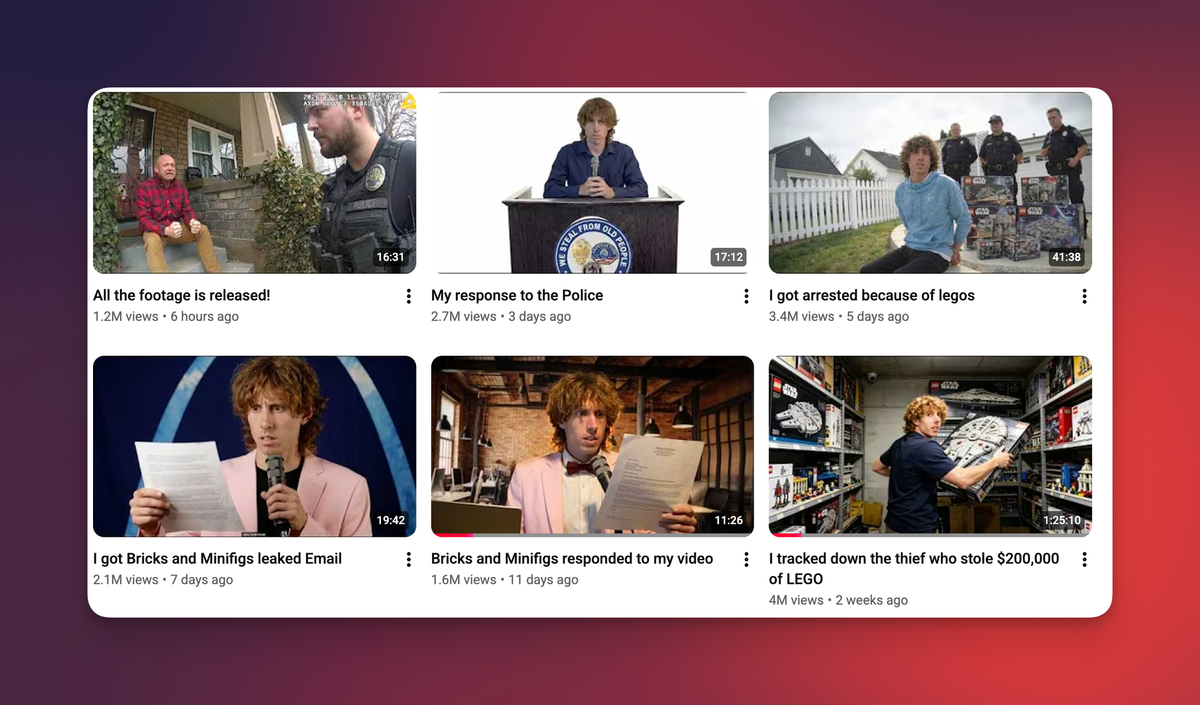
In recent weeks, an intricate affair has begun to dominate online conversations, extending far beyond digital boundaries to affect the reality of a small community in Utah. What has been dubbed the "LEGO drama" or the "Bricks & Minifigs scandal" has emerged as a deep and branched conflict, literally dividing the vast and passionate community of LEGO collectors and creators on YouTube. Its complexity is such that a comprehensive and concise understanding is almost impossible for anyone attempting to approach it for the first time.
The events, centered around a specialized LEGO store, "Bricks & Minifigs," and the town of American Fork, quickly transformed from a series of internal disputes into a phenomenon of local and global resonance. This drama, initially perceived as a niche "bubble," has broken containment, attracting the attention of an increasingly wider audience and becoming a focal point for local news, highlighting how online dynamics can have significant real-world repercussions.
The Fragmentation of Sources and Digital Narrative
The difficulty in tracking and fully understanding the scandal lies in its intrinsically fragmented nature. Information is not contained in a single report or a summary article but is scattered across dozens of YouTube videos, many of which are hours long, presenting different perspectives and testimonies. Added to these are official police reports, local news articles, police body camera footage, cease and desist letters, and even "hostage-style" vertical video statements, all contributing to a disorganized and often contradictory informational mosaic.
This dispersion makes it extremely challenging for an external observer to discern the truth or even reconstruct an impartial timeline of events. Each source, in fact, tends to push a specific angle or defend a particular party involved, making the narrative a minefield of partial and often emotionally charged information. The lack of a single, neutral reference point further complicates the situation, requiring considerable effort for anyone wishing to delve into the matter.
Media Echo and Community Resonance
Despite its complexity, or perhaps precisely because of it, the "LEGO drama" has generated widespread media and community resonance. Beyond the original YouTube channels, the affair has given rise to a dedicated Wikipedia page, titled "Bricks & Minifigs—Reckless Ben Controversy," and numerous posts and "megathreads" on Reddit, particularly on the LEGO subreddit. Local Utah press has also begun covering the story, with headlines highlighting the controversies and investigations involving local agencies.
As observed by TechDirt's Mike Masnick, who described the saga as "genuinely difficult to track," coverage is often influenced by specific angles. This phenomenon underscores how online disputes, even those originating in specific niches, can rapidly expand and capture the attention of a much wider audience, becoming a case study on the dynamics of digital communities and the spread of information in the social media era.
Reflections on the Impact of Online Dynamics
The YouTube LEGO scandal offers significant food for thought on the impact that online controversies, even seemingly niche ones, can have on the real lives of people and local communities. What begins as a series of disputes between individuals or entities on a digital platform can quickly transform into a major local news story, with tangible legal, reputational, and personal consequences.
This episode serves as a reminder of the power of digital platforms in shaping narratives and amplifying tensions. The difficulty in navigating multiple sources and often conflicting narratives highlights the need for a critical approach to consuming information in an increasingly complex and fragmented media ecosystem. The "LEGO drama" is a striking example of how the boundary between the digital and physical worlds is increasingly blurred, with implications that extend far beyond simple online entertainment.











💬 Comments (0)
🔒 Log in or register to comment on articles.
No comments yet. Be the first to comment!