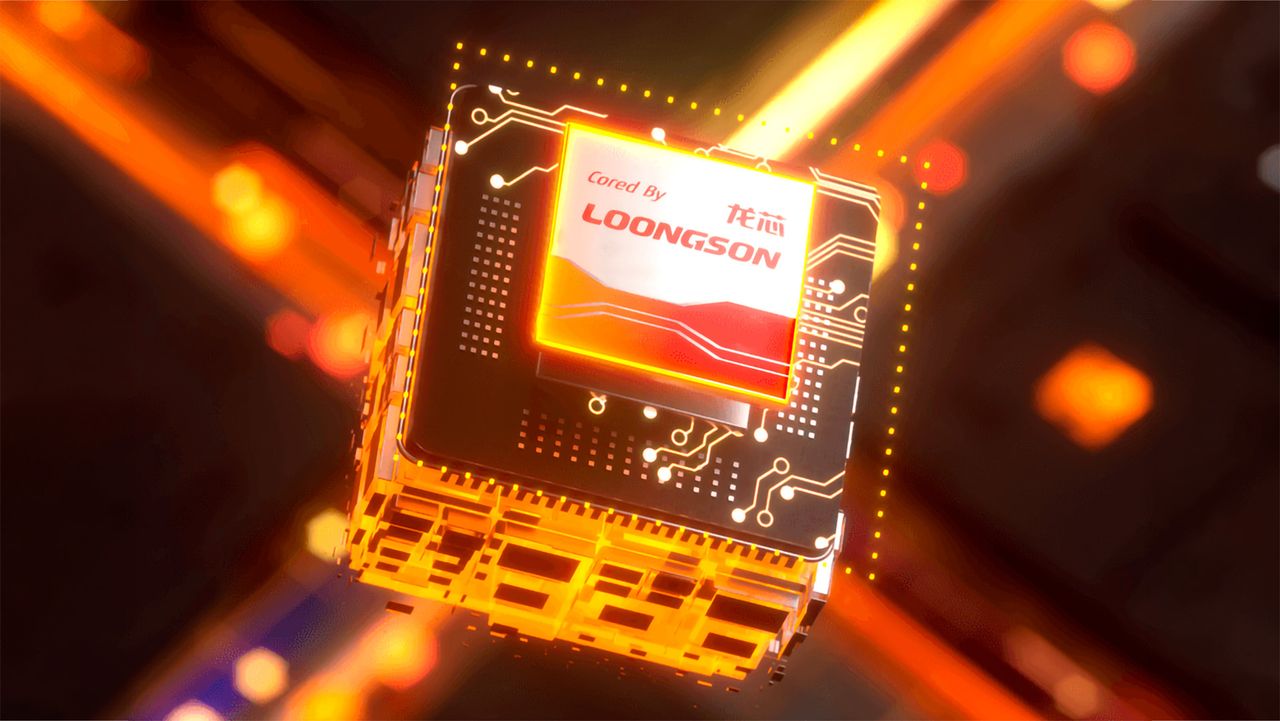
Loongson: China's Push Towards Silicon Autonomy
China is intensifying its efforts to achieve greater technological autonomy, particularly in the semiconductor sector. A key element of this strategy is the development of domestic processors and graphics cards. Loongson, a prominent player in this landscape, has announced ambitious plans for its next-generation chips, aiming to compete with previous-generation hardware from giants like Intel and AMD by 2027.
This commitment reflects a clear desire to reduce dependence on foreign suppliers, a crucial factor for data sovereignty and national security. For organizations evaluating on-premise deployment strategies, the availability of local hardware can represent a strategic alternative, albeit with specific trade-offs in terms of performance and ecosystem maturity.
Performance Targets and Key Models
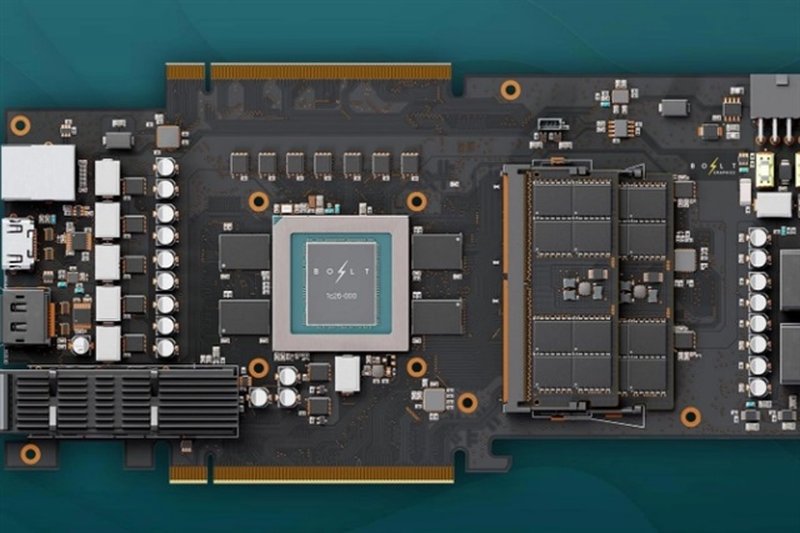
The models at the heart of this initiative are the Loongson 3B6600 CPU and the Loongson 9A1000 GPU. The stated goal for the 3B6600 CPU is to match the performance of Intel's 12th generation processors, a series that includes architectures like Alder Lake and Raptor Lake. These processors, while not the latest on the market, represent a solid benchmark for a wide range of workloads, from general processing to more intensive tasks.
In parallel, the Loongson 9A1000 GPU aims to achieve a performance level comparable to that of the AMD Radeon RX 550. The latter is an entry-level discrete graphics card, often used for desktop applications and light gaming. Reaching this benchmark for a domestic GPU would mark a significant step for China, paving the way for more advanced graphics and computing solutions in the future, potentially even for small-scale or edge LLM inference workloads.
Implications for On-Premise Deployment and Data Sovereignty
For companies and institutions operating in contexts with stringent data sovereignty and compliance requirements, the emergence of domestic hardware like Loongson offers new perspectives. The ability to deploy entirely controlled and locally produced technology stacks can strengthen security and compliance, reducing risks associated with the global supply chain. This is particularly relevant for air-gapped deployments or critical infrastructures.
However, it is essential to consider the trade-offs. While autonomy is a strategic advantage, the expected performance by 2027 aligns with that of previous-generation hardware. This implies that for computationally intensive workloads, such as training or large-scale inference of Large Language Models, more powerful architectures or a greater number of units might be necessary. Evaluating the Total Cost of Ownership (TCO) for such solutions will require a careful analysis of initial costs, energy efficiency, and scalability compared to cloud alternatives or self-hosted solutions based on more performant hardware.
Future Outlook and Market Challenges
2027 represents an ambitious deadline for Loongson. By that time, the global semiconductor landscape will have further evolved, with Intel and AMD having introduced several new generations of CPUs and GPUs. The challenge for Loongson will not only be to meet the stated benchmarks but also to build a robust software ecosystem and ensure sufficient production volumes.
Loongson's initiative underscores the complexity and strategic importance of semiconductor manufacturing. While the performance targets may seem modest compared to current high-end hardware, the significance of this development lies in a nation's ability to forge its technological independence. This path, though fraught with obstacles, is crucial for shaping the future of IT infrastructure and deployment decisions globally.






💬 Comments (0)
🔒 Log in or register to comment on articles.
No comments yet. Be the first to comment!