
It's not a technical review, yet Lorde's words carry more weight than many a benchmark. During her concert, the musician stated: "Increasingly in our world, it gets harder and harder to know what is real." The context was a critique of AI-powered glasses, dismissed as "not sexy." A quip which, beneath the surface, shines a light on three unresolved knots in wearable technology: design, privacy, and the accelerating erosion of the boundary between authentic perception and algorithmic mediation.
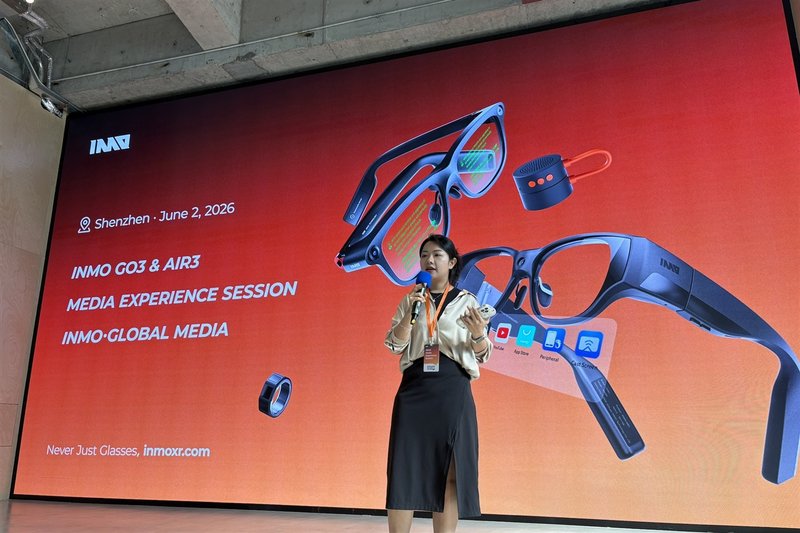
Aesthetics remain a primary obstacle. AI wearables struggle to shed their prototype look, and when a style icon finds them off-putting, it's a wake-up call for the mass market. Yet aesthetic discomfort is merely a symptom of a more radical issue. Those same glasses are always-on cameras, listening microphones, displays overlaying information onto reality. The user isn't just wearing an accessory: they're entering a pact where their sensory experience can be recorded, analysed, and potentially altered by models running in a remote data centre.
That's why Lorde's remark intersects with concerns central to those evaluating sovereign, on-premise AI deployments. The promise of smart glasses is real-time contextual assistance, but to achieve that, captured audio and video must travel to the cloud. In a world where we already struggle to distinguish a genuine photograph from a deepfake generated by an LLM, entrusting our daily visual stream to third-party servers magnifies the trust problem. If the device blends reality and synthesis without my being able to verify where one ends and the other begins, the grip on what's "real" crumbles further.
Technically, the way out is local processing. Neuromorphic chips, dedicated NPUs, and quantised models (INT8, FP16) are making it possible to run inference directly on the frame, without exporting data. This would shift the center of gravity from cloud to edge, reducing latency and, crucially, giving the individual sovereignty over their perceptual stream. It's a shift that echoes self-hosted architectures: less dependence on external providers, more control over what is shared.
Read against the light, Lorde's comment exposes a raw cultural nerve. It's not enough to make glasses more elegant or miniaturised: we need to design systems that don't further undermine our ability to distinguish the real from the constructed. "Sexiness," then, isn't just a matter of lines and materials, but of radical transparency about how and where AI processes our gazes. Those who manage to combine form and data autonomy could turn an off-putting accessory into an acceptable tool. The rest will keep selling prototypes that, however intelligent, the public will perceive as alien.






💬 Comments (0)
🔒 Log in or register to comment on articles.
No comments yet. Be the first to comment!