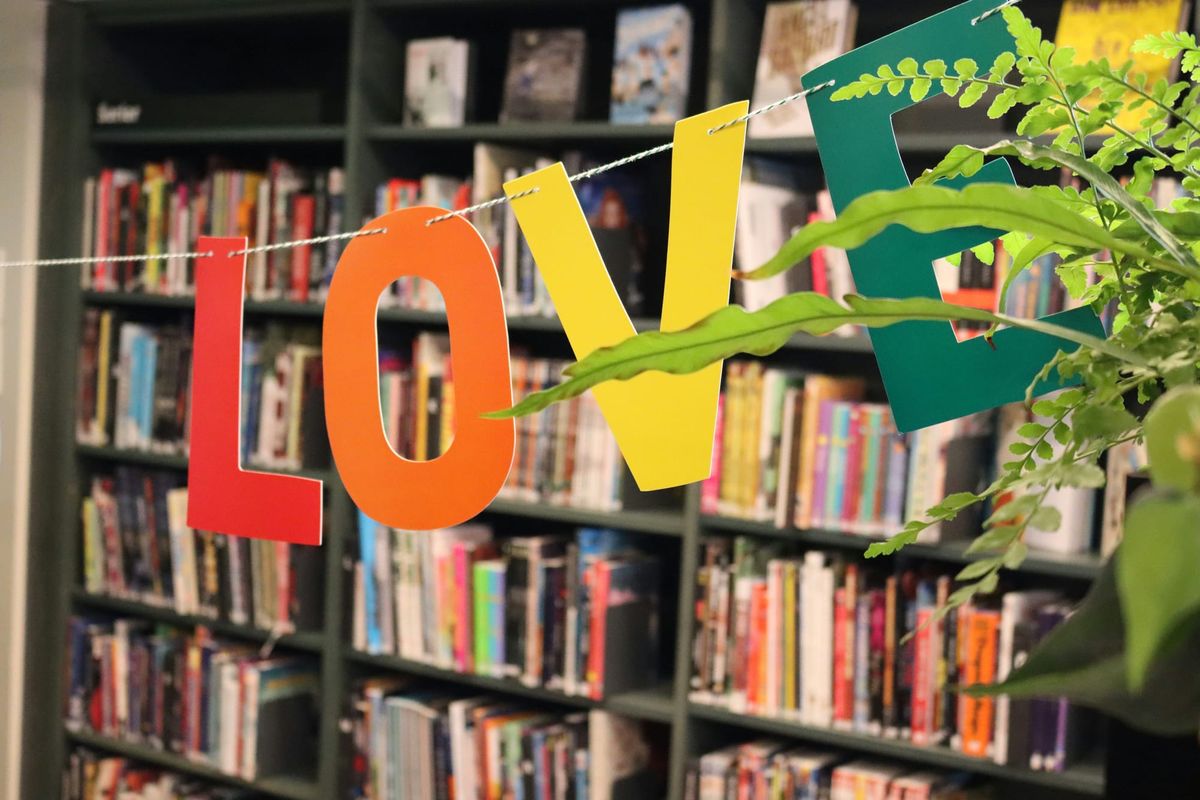
In late June 2025, Rachel Rodman, a library clerk in rural Missouri, was fired. Her offense: setting up a five-day display of LGBTQ+ books for Pride month. She had full autonomy to curate exhibits and never expected the gesture to cost her job. Yet the branch manager left a handwritten note asking her to remove it. Rodman refused, posting on Facebook that she would not deny visibility to a marginalized community out of fear of backlash. The next day she was out.
The story, pieced together from hundreds of public records requests filed by 404 Media with support from MuckRock, is not an isolated incident. Email exchanges among library directors in the region reveal a troubling trend of self-censorship. “We are not discriminating,” wrote the Crawford County district director, “but protecting employees and patrons.” The situation “does look bad,” she admitted, then accused the employee of playing the victim. Another director, Steven Campbell, spelled it out: “We’re in rural Missouri, an extremely challenging political and social environment. Not everyone can afford to lose their job or receive death threats over a display.” The implicit message: those who decide not to take that risk should not be judged.
The price of fear
Censorship experts disagree. Kate Laughlin, executive director of the National Association for Rural and Small Libraries, warns: “When a library chooses to engage in censorship-lite out of fear, it is the patrons who pay the price, not the librarians. The community is the victim.” Numbers from the American Library Association’s Office for Intellectual Freedom show that in 2025 over 90 percent of book challenges were tied to pressure groups, public officials, or library administrators – not isolated individuals, but coordinated campaigns, often backed by religious organizations like CatholicVote, which has run “Hide the Pride” initiatives since 2022 and donated to library defunding efforts.
The records obtained by 404 Media capture a litany of unease: “I am not calling attention to Pride Month online,” “each time I promote this part of the collection I get pushback from a parent,” “I changed the wording on the sign to satisfy a complainant,” “I’ll keep the Pride display up for ten more business days, then take it down.” Such phrases reveal a habit of preemptive compromise, a daily recalibration of the library’s mission to avoid conflict.
Censorship by omission and artificial intelligence
The phenomenon librarians describe as “censorship-lite” or self-censorship has a precise label, coined by one of the directors involved: “censorship by omission.” Tom Taylor, a library director in Kansas, explains that if you don’t order a book because you’re afraid of controversy, “that’s not how professional libraries work.” It is the exact same mechanism creeping into the world of large language models.
When an AI company decides not to include certain topics during LLM training, or fine-tunes a model to refuse answers that might attract criticism, it is engaging in an analogous censorship by omission. Alignment techniques – RLHF, output filters, precautionary blocks – are often framed as safety tools, but they can morph into a form of self-censorship when the primary goal is reputational risk avoidance rather than concrete harm prevention. The line between removing content because it is dangerous and removing it because it is uncomfortable becomes razor-thin.
Sovereignty and control: a lesson for on-premise deployment
For those analyzing AI from a data sovereignty and infrastructure-control perspective, libraries offer a powerful analogy. In a self-censoring library, the community loses not just a book but the chance to see itself represented in the public space. Likewise, organizations that choose to run LLMs on-premise often do so to retain full control over inputs, outputs, and the inference process, without delegating to third parties the decisions about what the model may or may not generate. But technical control does not eliminate social pressure: an entity that self-hosts an LLM could still be tempted to silence entire topics to avoid backlash, just like small rural library systems.
On-premise infrastructure enables transparent, adaptable governance, but it also demands ethical reflection on moderation policies. The choice to never have a thematic display, as ALA Office for Intellectual Freedom’s Sarah Lamdan notes, is different from having always done it and then stopping under external pressure. In AI, this translates into the distinction between a model designed from scratch with certain limits and one progressively neutered to align with a climate of fear. The American library story reminds us that giving up representation for the sake of a quiet life always hits those with the least voice. And that technological sovereignty, without a culture of responsibility, can become the perfect instrument for silent self-censorship.








💬 Comments (0)
🔒 Log in or register to comment on articles.
No comments yet. Be the first to comment!