
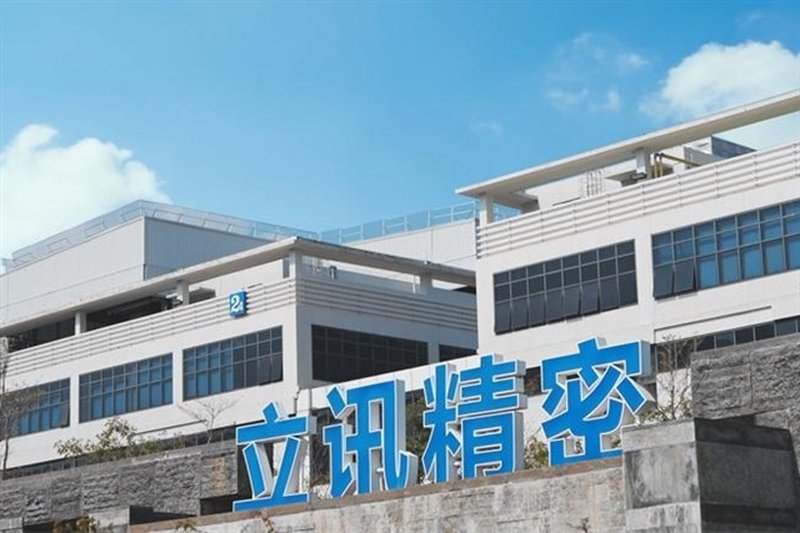
Luxshare’s debut on the Hong Kong stock exchange ended on a weak note, with shares sliding despite the company’s attempt to sell investors on an artificial intelligence transition story. The cold reception goes beyond this single case and feeds into a growing friction between tech narrative and fundamentals. Luxshare, best known as a key Apple supplier for connectors and cables, has gradually expanded into server components, optical modules and cooling solutions, betting on AI-driven demand. But the market didn’t buy the story without a discount.
The divergence is telling. On one side, the company is trying to latch onto the compute infrastructure race that supports LLM inference and training, a segment where high-speed cabling, interconnects and thermal management matter as much as processors. On the other, investors appear increasingly immune to the AI halo effect and are scrutinizing hardware companies that fail to demonstrate a clear competitive moat.
The impact for those operating in the on-premise ecosystem is twofold. First, a contraction of patient capital for less specialized suppliers can slow the development of lower-cost components that are crucial for anyone designing self-hosted infrastructure and trying to keep TCO under control without sacrificing throughput and reliability. Second, episodes like this accelerate the Darwinian selection within the supply chain: they reward players that vertically integrate AI expertise, from silicon co-design to firmware, and penalize those merely repositioning existing production lines.
This is not a rejection of AI as an investment driver, but a demand for precision. Capital is being allocated where it sees second-order benefits: custom chiplets, optical networks with dedicated bandwidth, cooling systems for sustained workloads. Luxshare might have the credentials, but its case signals that the window for vague justifications has slammed shut. For decision-makers evaluating on-premise deployments, the message is clear: supply chain sustainability is not measured in press releases, but in solid engineering roadmaps and documented scalability. And it is on this ridge that the credibility of the next hardware wave is being decided.







💬 Comments (0)
🔒 Log in or register to comment on articles.
No comments yet. Be the first to comment!