
The Race for Local AI and Mac mini Scarcity
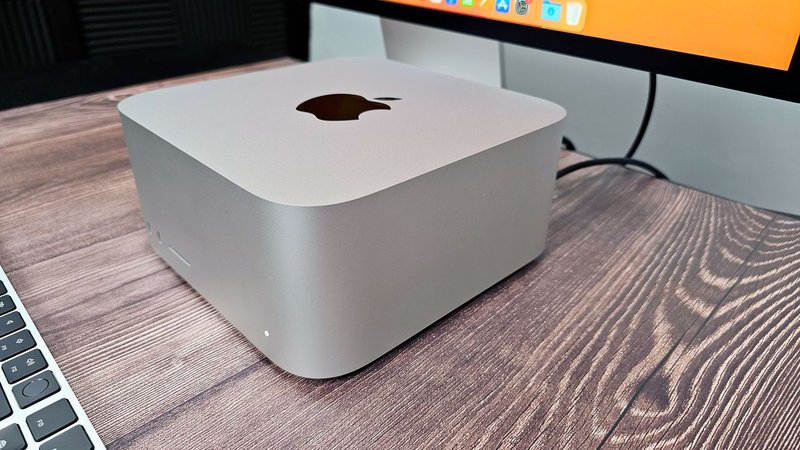
The market for compact devices capable of local artificial intelligence processing is experiencing an unexpected surge, with Apple's Mac mini at the center of this trend. Currently, the popular compact desktop is sold out through official sales channels, a situation that has quickly generated a thriving secondary market. On platforms like eBay, Mac minis are being offered at significantly marked-up prices compared to their retail cost, a clear indicator of demand far exceeding available supply.
This market dynamic is directly linked to the growing adoption of AI models and tools that can be run locally. Companies and tech professionals are exploring solutions that allow them to maintain control over their data and operations, reducing reliance on external cloud infrastructures for specific workloads. The Mac mini, with its hardware characteristics and small footprint, has proven to be an attractive choice for this emerging niche.
The Mac mini as a Platform for On-Premise AI Inference
The preference for the Mac mini in running local AI models is not accidental. Recent Apple Silicio processors, such as the M-series, offer an integrated architecture combining CPU, GPU, and Neural Engine, optimized for machine learning workloads. This integration allows for remarkable energy efficiency and competitive performance for Large Language Models (LLM) Inference and other AI models, especially when considering quantized or smaller-sized models.
For organizations that need to process sensitive data or operate in environments with stringent data sovereignty requirements, running AI models on self-hosted hardware like the Mac mini represents an appealing solution. It allows data to remain within the corporate perimeter, avoiding the risks associated with transferring and processing on third-party servers. While not a solution for large-scale model training, the Mac mini is well-positioned for Edge AI scenarios or for local development and testing.
Implications for On-Premise Deployment and TCO
The scarcity of the Mac mini and the rise in prices on the secondary market highlight a broader trend in the tech sector: the increasing evaluation of on-premise AI deployment options. Many companies are reconsidering the Total Cost of Ownership (TCO) of cloud solutions, especially for Inference workloads that can become expensive at scale. The initial investment in on-premise hardware, while significant, can offer a lower TCO in the long run, in addition to benefits in terms of latency and control.
However, the choice between cloud and on-premise always presents trade-offs. On-premise solutions require greater infrastructure management, maintenance, and hardware upgrades. The availability of specific hardware, as demonstrated by the Mac mini situation, can become a critical factor. For those evaluating on-premise deployment, AI-RADAR offers analytical frameworks on /llm-onpremise to assess these trade-offs, considering aspects such as scalability, security, and regulatory compliance.
Future Prospects and the Supply Chain Challenge
The current Mac mini situation is a microcosm of the challenges the artificial intelligence sector faces in terms of supply chain and hardware availability. The demand for chips and devices optimized for AI is constantly growing, putting pressure on manufacturers and distribution channels. This phenomenon is not limited to compact desktops but extends to high-end GPUs and dedicated servers, essential for training and Inference of complex LLMs.
In the future, it will be crucial for companies to carefully plan their AI deployment strategies, balancing performance, cost, security, and hardware availability needs. The ability to adapt to a rapidly evolving market, where demand for local AI solutions can quickly deplete the stock of specific products, will be a determining factor for the success of AI initiatives. Platform diversification and architectural flexibility will become increasingly important to mitigate risks associated with component scarcity.






💬 Comments (0)
🔒 Log in or register to comment on articles.
No comments yet. Be the first to comment!