
Rapid Ascent in the Defence Sector
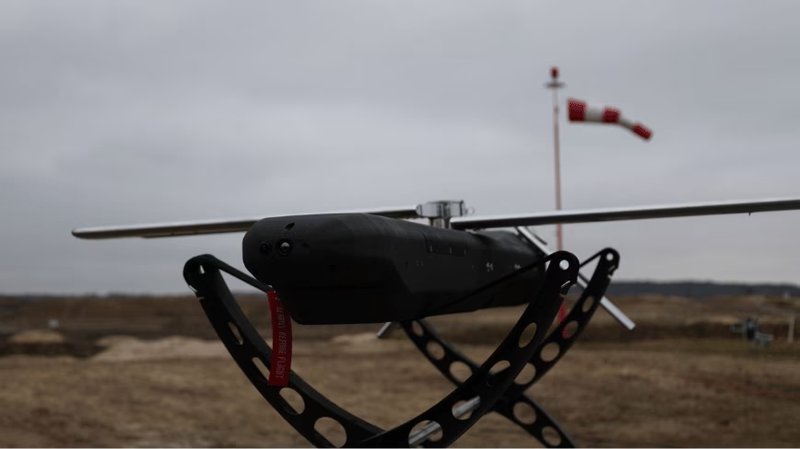
Mach Industries, a startup headquartered in Huntington Beach, California, has announced a significant financial milestone, concluding a $300 million Series C funding round. This investment boosts the company's valuation to $1.8 billion, marking an impressive nearly fourfold increase from its valuation recorded in June 2025. Founded just three years ago by Ethan Thornton, a 22-year-old MIT dropout, Mach Industries is positioning itself as a key player in the defence technology landscape.
This funding round occurs during a period of robust expansion for the sector, fueled by the Pentagon's strategic interest in the development and deployment of unmanned aerial systems. The drive for “drone-dominance” is catalyzing investment and innovation, elevating the valuations of companies operating within this segment.
Implications for Technological Sovereignty and On-Premise Deployment
The defence sector, particularly concerning drones and autonomous systems, presents stringent requirements for security, data sovereignty, and operational resilience. For companies like Mach Industries, the choice of deployment infrastructure for their artificial intelligence and control systems can be critical. The necessity to operate in air-gapped environments or under strict regulatory compliance often drives the adoption of self-hosted and on-premise solutions.
These infrastructural choices allow for granular control over hardware, software, and data—fundamental elements for ensuring operational security and the protection of sensitive information. The ability to manage LLMs and other AI models directly on bare metal servers or in private data centers offers significant advantages in terms of latency, throughput, and customization, all vital aspects for critical applications in the defence field.
The Trade-offs of Infrastructural Control
Adopting a fully controlled technology stack, from silicon to software, involves a series of trade-offs. While it provides maximum data sovereignty and security, it also entails higher initial costs (CapEx) and increased complexity in infrastructure management. Evaluating the Total Cost of Ownership (TCO) therefore becomes a fundamental exercise for CTOs and system architects operating in this domain.
The choice between an on-premise deployment and cloud-based solutions is never trivial, especially when dealing with AI/LLM workloads that demand intensive computational resources. Factors such as VRAM availability, memory bandwidth, and GPU compute capacity are crucial for model efficiency and performance. For those evaluating on-premise deployment, AI-RADAR offers analytical frameworks on /llm-onpremise to understand and balance these trade-offs.
Future Prospects in the Defence Tech Landscape
The capital injection into Mach Industries underscores the growing importance of emerging technologies in the defence sector. Innovation in areas such as artificial intelligence, robotics, and autonomous systems is redefining operational and strategic capabilities. The success of startups led by young founders highlights a dynamism that attracts significant investment, aiming for solutions that can ensure a competitive advantage.
The future will likely see a continued convergence between national security needs and the capabilities offered by new generations of AI technologies. The ability to rapidly develop and deploy cutting-edge solutions, while maintaining high standards of security and control, will be a critical factor for success in this rapidly evolving market.









💬 Comments (0)
🔒 Log in or register to comment on articles.
No comments yet. Be the first to comment!