
The Hidden Cost of AI Expansion: The Maryland Case
Maryland residents are facing a potential $2 billion expenditure for upgrades to the state's electricity grid. This financial burden is directly linked to the need to support new artificial intelligence data centers, even though these facilities are located outside Maryland's borders. The situation has prompted the state to file a complaint with federal energy regulators, arguing that such an additional cost violates ratepayer protection pledges. This episode sheds light on a growing problem: the infrastructural and economic impact of scaling up AI workloads.
Energy infrastructure, often taken for granted, is emerging as a critical and costly factor in the deployment equation for advanced AI systems. While attention typically focuses on GPU specifications, VRAM, and computing capabilities, the grid's ability to provide reliable and sufficient power is a fundamental prerequisite. The Maryland case illustrates how costs associated with adapting electricity transmission infrastructure can fall upon citizens, even when the direct benefits of AI data centers are not local.
The Energy Footprint of AI Data Centers
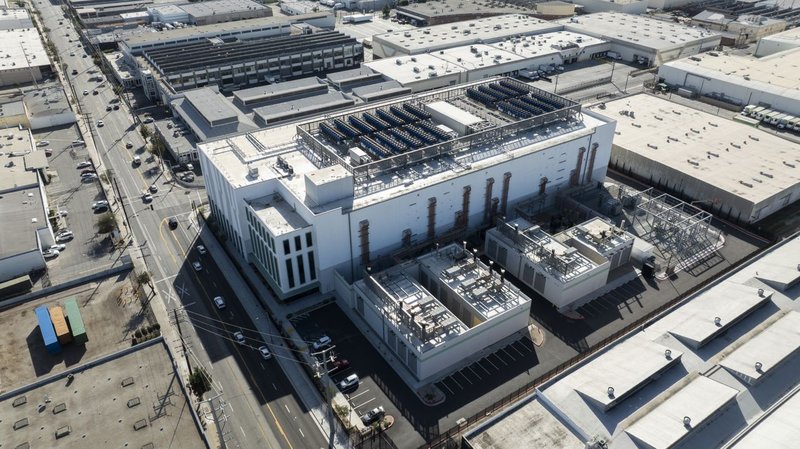
Modern data centers, particularly those optimized for intensive AI workloads such as Large Language Model (LLM) training and inference, are known for their high energy consumption. Each server rack equipped with high-performance GPUs, like A100s or H100s, can demand tens of kilowatts, and an entire data center can draw hundreds of megawatts. This massive energy demand not only impacts operational costs (OpEx) but also requires significant investments in power delivery and cooling infrastructures (CapEx).
For organizations evaluating a self-hosted deployment of LLMs or other AI applications, the Total Cost of Ownership (TCO) must necessarily include a thorough assessment of energy requirements. This goes beyond the simple electricity bill, encompassing the need for adequate distribution infrastructure, efficient cooling systems, and, as the Maryland case demonstrates, potential costs for external grid transmission upgrades imposed by utilities. The choice between a cloud approach and an on-premise deployment thus becomes a matter not only of data sovereignty and control but also of infrastructural capacity and direct and indirect energy costs.
Implications for On-Premise Deployments and Planning
The Maryland situation offers a crucial perspective for CTOs, DevOps leads, and infrastructure architects considering self-hosted alternatives to cloud services for AI/LLM workloads. An on-premise or hybrid deployment offers advantages in terms of data sovereignty, compliance, and the ability to operate in air-gapped environments. However, these benefits come with full responsibility for managing the physical infrastructure, including power supply.
Planning for local AI infrastructure requires an accurate estimation not only of hardware specifications (VRAM, throughput) but also of the impact on the existing electricity grid. The availability of sufficient and reliable power, along with the capacity of local and regional transmission networks, can become a significant constraint. This scenario underscores the importance of a holistic TCO analysis that considers all aspects, from initial hardware and installation costs to long-term operational costs, including energy and any infrastructural upgrades mandated by utilities.
The Growing Challenge of Energy Sustainability for AI
The rapid development and adoption of artificial intelligence are posing unprecedented challenges to global energy infrastructures. The Maryland case is a stark example of how the demand for energy from AI data centers can generate unforeseen costs and controversies at state and federal levels. This dynamic highlights the need for more robust strategic planning by local authorities and companies investing in AI.
For enterprises, the choice of location for a new AI data center or the expansion of an existing one cannot be made without careful evaluation of energy capacity and associated costs. The trade-offs between control, data sovereignty, and overall TCO, which also includes the impact on the electricity grid, are becoming increasingly complex. AI-RADAR, with its emphasis on analyzing on-premise deployments, offers frameworks to evaluate these constraints and trade-offs, helping decision-makers navigate a rapidly evolving and increasingly energy-intensive technological landscape.








💬 Comments (0)
🔒 Log in or register to comment on articles.
No comments yet. Be the first to comment!