
MAtek and the Boost from AI and Silicio Photonics
MAtek recently announced that it achieved record revenues in March, a significant indicator of the dynamic technology market. This exceptional result has been directly attributed to the increased demand for testing services, a crucial sector that ensures the quality and reliability of electronic components. The main drivers of this growth are two of the most strategic technologies of the moment: artificial intelligence (AI) and silicio photonics.
The expansion of AI, particularly with the proliferation of Large Language Models (LLM), is generating an unprecedented need for specialized and high-performance hardware. Simultaneously, silicio photonics is revolutionizing high-speed interconnects, becoming a cornerstone for next-generation computing infrastructures. Both these areas require rigorous and cutting-edge testing processes to ensure that systems meet the required standards.
The Complexity of Testing for AI and Silicio Photonics
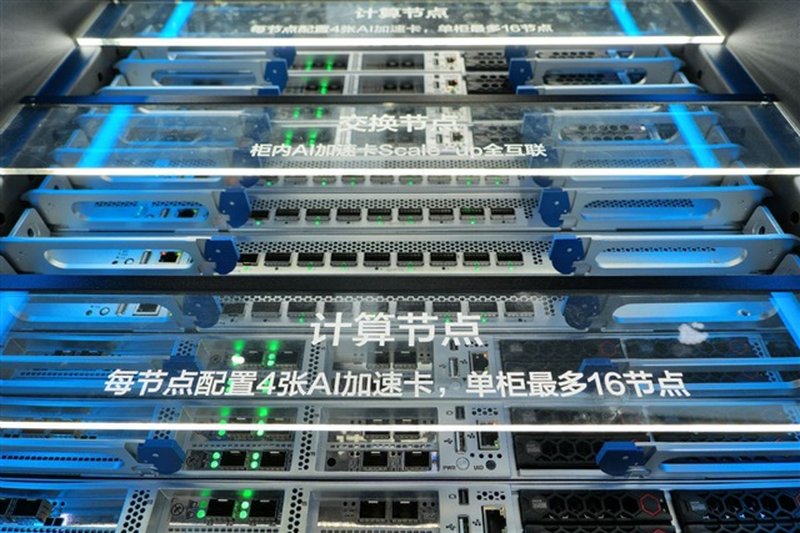
The AI ecosystem, especially for the most intensive workloads like LLM training and inference, relies on increasingly complex hardware components. Modern GPUs and AI accelerators integrate thousands of cores and require high amounts of VRAM, with stringent requirements for throughput and low latency. Testing these systems means not only verifying their basic functionality but also measuring their performance under load, thermal stability, and energy efficiency—all fundamental aspects for those designing on-premise deployments.
Silicio photonics, on the other hand, represents a technological leap in data communications. By integrating optical circuits onto silicio chips, it allows data to be transmitted at much higher speeds than traditional electrical connections, while simultaneously reducing power consumption and latency. This technology is essential for interconnects within data centers and for high-performance computing clusters. Testing in this area is particularly delicate, as it must validate optical signal integrity, alignment precision, and resistance to environmental factors, ensuring the reliability of data pipelines.
Implications for On-Premise Deployments and TCO
The growing demand for AI and silicio photonics testing has direct implications for companies evaluating on-premise deployment strategies for their AI workloads. The choice of thoroughly validated and tested hardware is crucial for optimizing the Total Cost of Ownership (TCO). An inadequately tested component can lead to premature failures, unexpected downtime, and high maintenance costs, negating potential savings compared to cloud solutions.
For CTOs, DevOps leads, and infrastructure architects, the quality assurance offered by advanced testing services translates into greater performance predictability, improved system reliability, and enhanced control over data sovereignty, especially in air-gapped environments or those subject to stringent compliance regulations. A testing provider's ability to address the challenges posed by these emerging technologies becomes a distinguishing factor in selecting technology partners.
Future Outlook and the Importance of Validation
MAtek's success highlights a clear trend: innovation in AI and network infrastructures cannot proceed without robust validation processes. As Large Language Models become more complex and computing architectures evolve, the need to test every aspect, from the individual chip to the entire cluster, will only increase. This is particularly true for organizations seeking to maintain control over their data and computational resources through self-hosted deployments.
Investing in advanced testing capabilities for technologies like silicio photonics and AI accelerators is crucial for unlocking the full potential of these innovations. Ensuring that hardware is reliable, performant, and efficient is the foundation for building resilient and sustainable AI infrastructures capable of supporting future enterprise needs. For those evaluating on-premise deployments, AI-RADAR offers analytical frameworks on /llm-onpremise to assess the trade-offs between different options, emphasizing the importance of hardware quality.







💬 Comments (0)
🔒 Log in or register to comment on articles.
No comments yet. Be the first to comment!