MediaTek and the Rise of ASICs in the AI Landscape
MediaTek, a well-established player in the semiconductor industry, is experiencing significant expansion in its Application-Specific Integrated Circuits (ASIC) business. According to DIGITIMES, this strategic growth is propelling the company towards a potential 60% market share in the ASIC segment. Such a development not only highlights MediaTek's capability to move up the value chain but also underscores the increasing importance of specialized hardware solutions in today's technological landscape.
The evolution of MediaTek's ASIC business suggests a focus on higher-margin, technologically advanced products. This is particularly relevant for the artificial intelligence sector, where the demand for hardware optimized for specific workloads is constantly increasing. For companies evaluating the deployment of Large Language Models (LLM) and other AI applications, the offering of more performant and targeted ASICs represents a crucial factor.
The Role of ASICs in On-Premise AI Acceleration
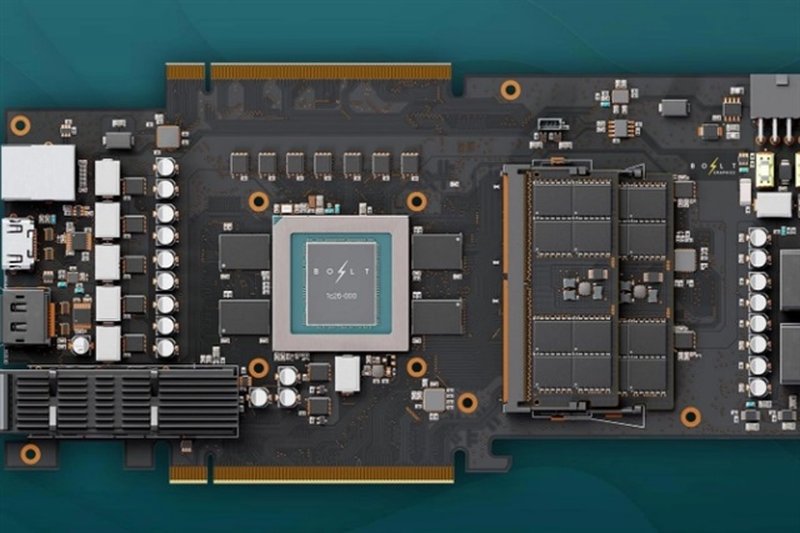
ASICs are chips designed to perform a specific task with maximum efficiency, unlike general-purpose GPUs which offer greater flexibility. In the context of artificial intelligence, and particularly for LLM inference and training, ASICs can offer substantial advantages in terms of throughput, energy efficiency, and latency. These characteristics are fundamental for organizations choosing an on-premise deployment, where control over operational costs (TCO) and data sovereignty are priorities.
The availability of optimized ASICs allows companies to build highly efficient local stacks, reducing dependence on external cloud infrastructures. This is crucial for sectors such as finance, healthcare, or defense, where compliance requirements and the need for air-gapped environments make self-hosting a mandatory choice. ASICs, while potentially requiring a higher initial investment (CapEx) compared to more generic solutions, can generate significant long-term savings due to their operational efficiency.
Implications for Enterprise AI Infrastructures
MediaTek's expansion into the ASIC market has direct implications for CTOs, DevOps leads, and infrastructure architects who must make strategic decisions. A greater supply of specialized ASICs means more options for optimizing the performance and costs of AI workloads. The choice between different hardware architectures – such as high-performance GPUs, dedicated ASICs, or hybrid solutions – becomes a key element in designing a robust and scalable AI pipeline.
For those evaluating on-premise deployments, TCO analysis must consider not only the initial hardware cost but also energy consumption, cooling, and maintenance. ASICs, with their efficiency, can tip the scales in favor of self-hosting, especially for stable and predictable workloads. However, their specificity can also represent a constraint in terms of flexibility for future workloads or models requiring different architectures.
Future Prospects and Strategic Choices
The trend towards specialized hardware is unequivocal in the AI sector. MediaTek's rise in the ASIC segment is a further sign of how companies are seeking increasingly targeted solutions to address the computational challenges posed by LLMs and generative AI. For enterprises, this translates into a broader, but also more complex, landscape of choices.
The decision to invest in ASICs for on-premise inference or training requires careful evaluation of the trade-offs between performance, cost, flexibility, and data sovereignty requirements. AI-RADAR focuses precisely on these aspects, offering analytical frameworks on /llm-onpremise to help decision-makers navigate the various options and build AI infrastructures that meet their specific needs, without recommending one solution over another, but highlighting the constraints and opportunities of each approach.







💬 Comments (0)
🔒 Log in or register to comment on articles.
No comments yet. Be the first to comment!