Rising Demand for Automotive Memory
The automotive sector is undergoing a profound transformation, driven by the increasing integration of advanced technologies such as Advanced Driver-Assistance Systems (ADAS), next-generation infotainment, and, prospectively, autonomous driving. This evolution entails an explosion in the amount of data generated and processed on board vehicles, fueling an unprecedented demand for high-performance memory. In this competitive landscape, Micron has established itself as a leader in the automotive memory segment, while giants like Samsung and SK Hynix are intensifying their efforts to catch up.
The ability to rapidly manage and process enormous volumes of data is crucial for the safety and efficiency of modern vehicles. From high-resolution cameras to LiDAR and radar sensors, every component contributes to a constant stream of information that must be analyzed in real-time. This requires robust, reliable, and high-performance memory modules, capable of operating in extreme environmental conditions and ensuring the longevity necessary for a vehicle's lifecycle.
The Strategic Role of Memory for Onboard AI
The increase in demand for automotive memory is closely linked to the advancement of artificial intelligence and machine learning. AI systems integrated into vehicles, ranging from advanced voice recognition to computer vision for obstacle detection, require significant computing power and, consequently, dedicated and optimized memory. These are DRAM and NAND Flash modules designed to meet specific requirements in terms of latency, throughput, and endurance, which are fundamental for the efficient execution of complex algorithms and predictive models.
These requirements are not dissimilar to those faced by enterprises evaluating the deployment of Large Language Models (LLM) on-premise. In that context too, the availability of sufficient VRAM and high-bandwidth system memory is a critical factor for inference and training performance. A memory chip's ability to handle intensive workloads while maintaining high reliability is a common denominator between the needs of the automotive sector and those of private datacenters.
Implications for the Supply Chain and On-Premise Deployments
Micron's leadership in the automotive segment highlights the importance of deep specialization and a resilient supply chain. For companies considering an on-premise deployment of AI solutions, the availability and quality of hardware components, including memory, are decisive factors for the Total Cost of Ownership (TCO) and the long-term sustainability of the infrastructure. Competitive dynamics among major silicon manufacturers can influence not only prices but also innovation and the availability of new memory generations.
The choice of a hardware architecture for on-premise AI, whether for inference or training, heavily depends on the specifications of the available memory. For example, the amount of VRAM on a GPU, its speed, and its bandwidth determine which LLM models can be run efficiently and with what batch size. For those evaluating on-premise deployments, AI-RADAR offers analytical frameworks on /llm-onpremise to assess the trade-offs between different hardware configurations, considering aspects like data sovereignty and compliance requirements.
Future Outlook for Memory and AI
The evolution of memory for the automotive sector is a clear indicator of broader trends in semiconductors and artificial intelligence. As vehicles become increasingly intelligent and connected platforms, the need for faster, denser, and more energy-efficient memory will only grow. This drive for innovation is also reflected in memory solutions for datacenters, where the demand for extreme performance for AI workloads continues to escalate.
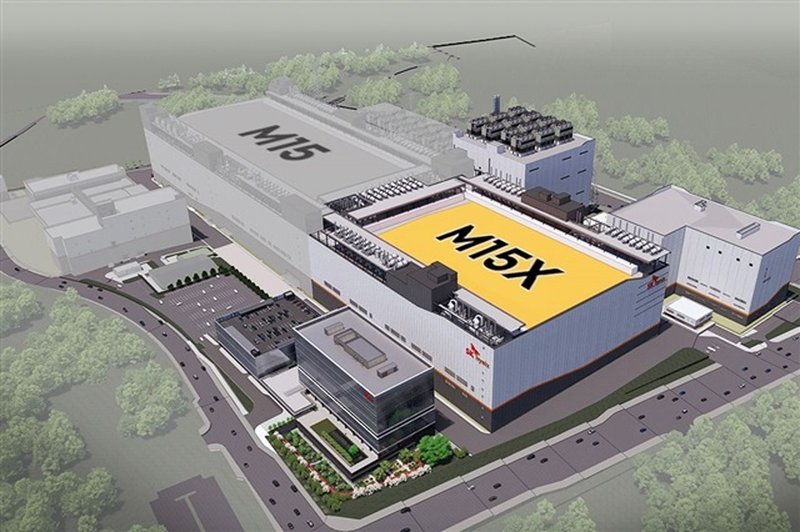
Competition among key industry players, such as Micron, Samsung, and SK Hynix, is a fundamental driver for the development of new memory technologies. These innovations, although initially aimed at specific sectors, often find cross-cutting applications, benefiting the entire technological ecosystem, including LLM deployments on self-hosted infrastructures. The ability of these manufacturers to meet growing demand and push the limits of memory performance will be crucial for the future of AI.




💬 Comments (0)
🔒 Log in or register to comment on articles.
No comments yet. Be the first to comment!