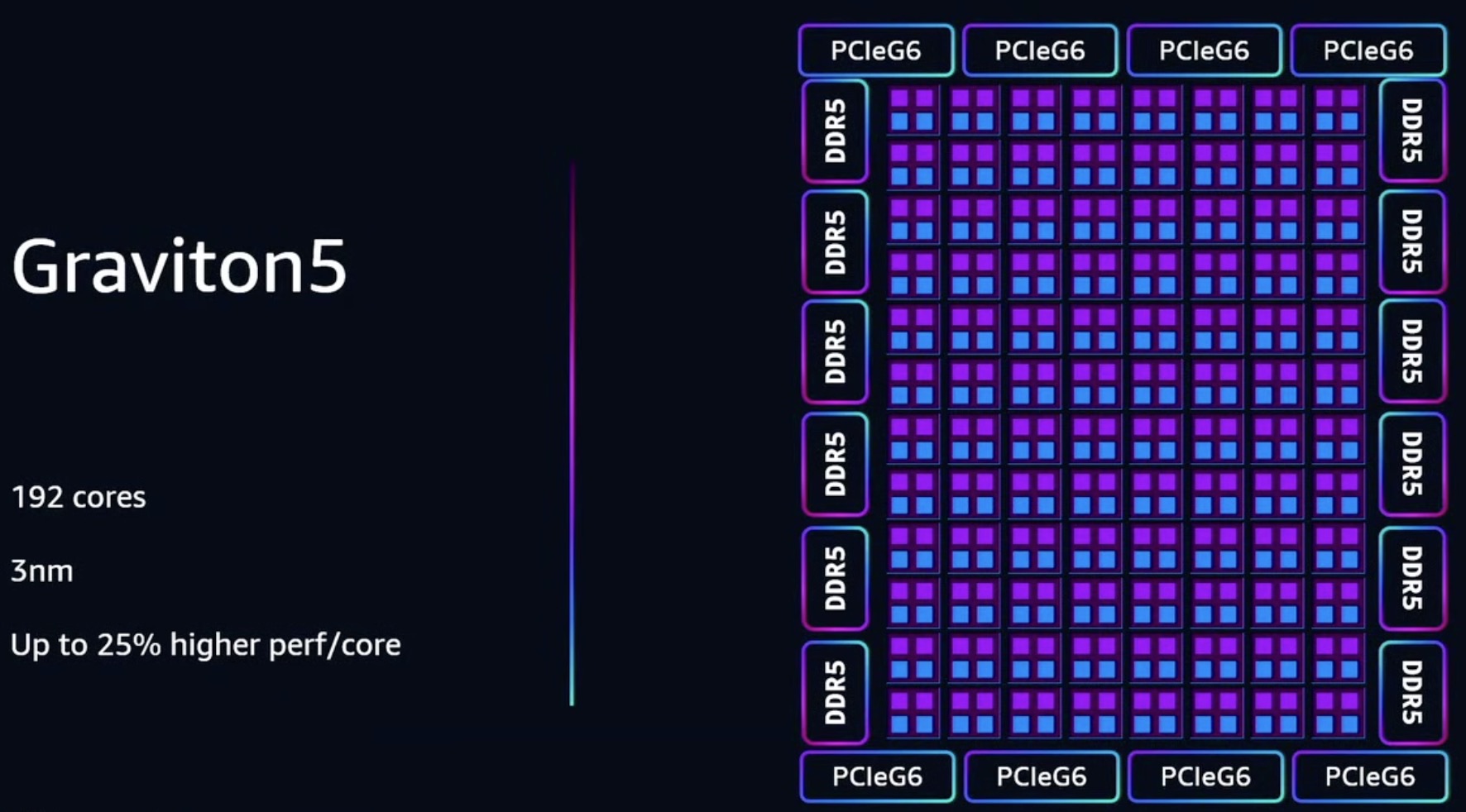
Meta Secures Millions of AWS Graviton Cores for AI
Meta has announced a significant move in the artificial intelligence infrastructure landscape, acquiring tens of millions of AWS Graviton CPU cores. This strategic operation aims to bolster its "agentic AI" compute portfolio, highlighting the growing and pressing demand for specific hardware resources to support advanced AI workloads. The massive investment in these Arm-based processors signals an industry trend towards diversifying computing solutions, moving beyond traditional GPUs to address the computational challenges of modern AI.
Meta's acquisition of such a high volume of Graviton cores is not just a matter of scale, but also of strategy. AWS Graviton processors, developed by Amazon Web Services, are known for their energy efficiency and for offering a competitive price/performance ratio across a wide range of cloud workloads. The Arm architecture they are based on allows for optimized power consumption and, consequently, reduced operational costs, a crucial factor for large-scale operations like Meta's. In the context of AI, while GPUs remain central for training and Inference of complex Large Language Models (LLMs), CPUs play a fundamental role in multiple aspects, including orchestration, data pre-processing, result post-processing, and Inference of smaller or less intensive models. This integration of different hardware types is essential for building resilient and efficient AI pipelines.
The Hardware Race and Implications for AI Infrastructure
Meta's decision to invest so heavily in Graviton cores reflects a broader "hardware race" characterizing the artificial intelligence sector. Leading companies are striving to secure the computing resources needed to develop and deploy their AI solutions, often anticipating future demand and mitigating supply chain risks. This procurement strategy is crucial for maintaining a competitive edge and ensuring the scalability of services. For organizations evaluating on-premise or hybrid Deployments, hardware selection and acquisition strategy are fundamental parameters. Considerations such as Total Cost of Ownership (TCO), silicio availability, compatibility with existing Frameworks, and the ability to manage infrastructure autonomously become central.
The adoption of alternative architectures like Arm, represented by Graviton, offers technical decision-makers the opportunity to explore options that can balance performance, energy efficiency, and costs. This is particularly relevant for AI workloads that do not necessarily require the raw power of high-end GPUs but benefit from high core density and excellent efficiency. Meta's ability to integrate these cores into its AI computing ecosystem suggests a holistic view of infrastructure, where different hardware components work in synergy to optimize the entire pipeline.
Future Perspectives for AI Computing
Meta's investment in AWS Graviton cores underscores a key point: the AI computing ecosystem is continuously evolving and is not solely reliant on GPUs. CPUs, particularly those optimized for efficiency like Graviton, play an increasingly important role in supporting AI infrastructure, especially for scalability and cost-effectiveness needs. This hardware diversification allows companies to build more resilient and adaptable architectures, capable of handling a wide variety of AI workloads, from lightweight model Inference to the management of complex "agentic" systems.
For CTOs, DevOps leads, and infrastructure architects, this move by Meta offers food for thought on the need to evaluate a wide range of hardware options for their AI Deployments. The choice between cloud and self-hosted solutions, TCO analysis, and understanding the trade-offs between different silicio architectures are critical decisions that will influence an organization's ability to innovate and compete in the artificial intelligence landscape. AI-RADAR continues to provide in-depth analysis on these dynamics, offering Frameworks to evaluate the trade-offs of on-premise and hybrid Deployments.






💬 Comments (0)
🔒 Log in or register to comment on articles.
No comments yet. Be the first to comment!