
Meta introduce AI Mode su Facebook
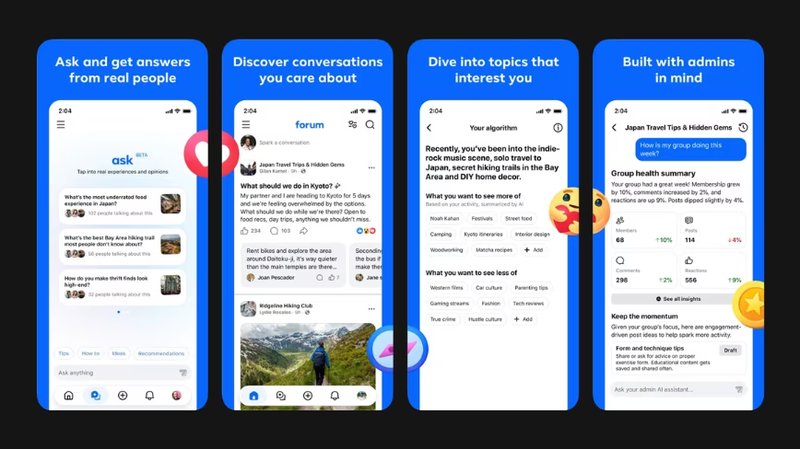
Meta ha annunciato il rilascio di "AI Mode" su Facebook, una significativa evoluzione dell'esperienza di ricerca sulla piattaforma. Questa nuova funzionalità integra Meta AI per estrarre risposte e informazioni direttamente dai vasti archivi di contenuti pubblici.
L'obiettivo è trasformare anni di interazioni, discussioni nei Gruppi, video Reels e inserzioni di Marketplace in una base di conoscenza strutturata e interrogabile. Il rollout iniziale è destinato agli utenti negli Stati Uniti, segnando un passo importante nell'applicazione dell'intelligenza artificiale generativa ai dati utente su larga scala.
Il Funzionamento di AI Mode
AI Mode sfrutta le capacità dei Large Language Models (LLM) di Meta AI per analizzare e sintetizzare informazioni da una varietà di fonti interne a Facebook. Questo include non solo i post pubblici tradizionali, ma anche i contenuti più dinamici e specifici come quelli presenti nei Gruppi, dove spesso si annidano discussioni approfondite e consigli pratici.
La capacità di attingere a Reels e Marketplace aggiunge ulteriori dimensioni, permettendo agli utenti di trovare risposte a domande che potrebbero riguardare prodotti, servizi o tendenze visive. L'approccio mira a superare i limiti della ricerca basata su parole chiave, offrendo risposte più contestualizzate e pertinenti, generate dall'AI.
Per le aziende e gli architetti di infrastrutture che valutano soluzioni AI on-premise, l'implementazione di un sistema di ricerca basato su LLM come quello di Meta evidenzia le sfide legate alla gestione di dataset massivi. Richiede infrastrutture di calcolo robuste per l'inference e il fine-tuning, oltre a strategie efficaci per la gestione e l'indicizzazione dei dati.
Implicazioni e Contesto Tecnico
L'introduzione di AI Mode solleva questioni rilevanti per la sovranità dei dati e la privacy, temi centrali per chi opera con carichi di lavoro AI sensibili. Sebbene il servizio di Meta operi su infrastrutture cloud proprietarie, il principio di trasformare dati utente in una knowledge base accessibile tramite AI è un punto di riflessione.
Per le organizzazioni che necessitano di mantenere il controllo completo sui propri dati, l'adozione di LLM self-hosted diventa una priorità. Questo implica la necessità di valutare attentamente il Total Cost of Ownership (TCO) di un deployment on-premise, che include l'investimento in hardware specifico come GPU con elevata VRAM, la gestione della pipeline di dati e la configurazione di ambienti air-gapped per garantire la compliance.
La scelta tra soluzioni cloud e on-premise per l'inference di LLM dipende da un bilanciamento tra flessibilità operativa, costi e requisiti di sicurezza. Mentre i servizi cloud offrono scalabilità immediata, le soluzioni self-hosted garantiscono maggiore controllo sui dati e sui modelli, aspetto cruciale per settori regolamentati.
Prospettive Future e Trade-off
L'evoluzione della ricerca su piattaforme social tramite AI, come dimostrato da Meta, indica una tendenza chiara verso interfacce utente più intelligenti e contestuali. Questo spinge le aziende a considerare come integrare capacità simili nei propri ecosistemi interni, sia per la gestione della conoscenza che per l'interazione con i clienti.
I trade-off tra l'utilizzo di LLM proprietari e modelli Open Source, la scelta tra diverse architetture hardware per l'inference e le strategie di quantization per ottimizzare l'uso della VRAM, sono decisioni critiche. AI-RADAR fornisce framework analitici su /llm-onpremise per aiutare a valutare questi compromessi, offrendo una guida per chi deve navigare la complessità dei deployment AI.
In definitiva, l'AI Mode di Facebook rappresenta un esempio concreto di come i Large Language Models possano essere impiegati per valorizzare enormi quantità di dati esistenti, aprendo nuove frontiere per la ricerca e l'interazione digitale.




💬 Commenti (0)
🔒 Accedi o registrati per commentare gli articoli.
Nessun commento ancora. Sii il primo a commentare!