
Meta Launches Muse Spark: A Proprietary AI Model Redefining Strategy
The open-source AI landscape has never lacked options, with models like Mistral and Falcon fueling innovation for years. However, Meta's entry into the sector with Llama marked a turning point. A company with billions of users, vast compute resources, and the credibility of a tech giant began developing openly, and the developer community responded with enthusiasm. By early 2026, the Llama ecosystem had reached 1.2 billion downloads, averaging about one million per day.
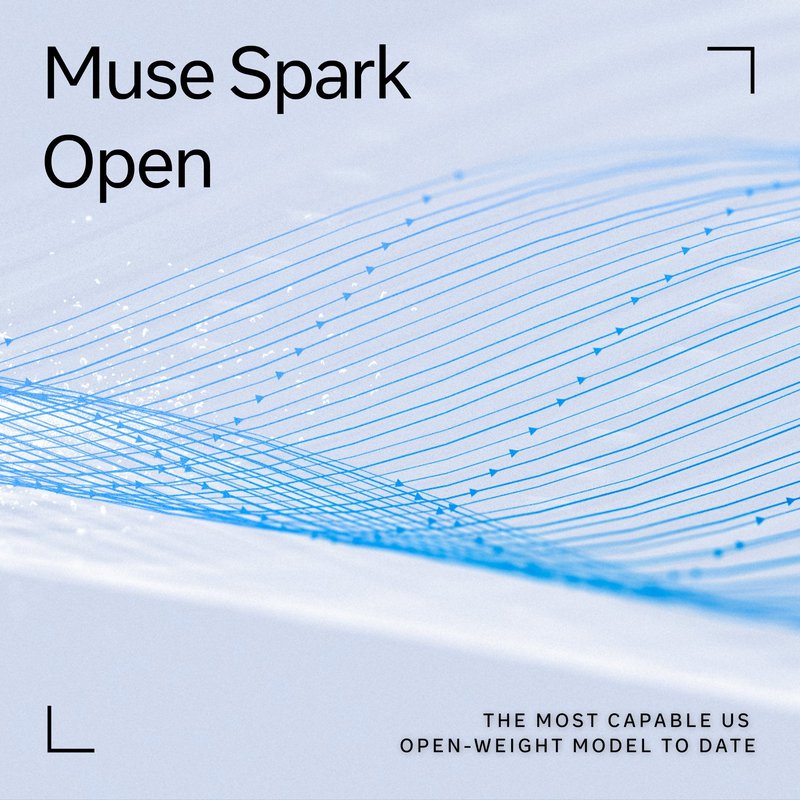
Against this backdrop, on April 8, 2026, Meta unveiled Muse Spark, its first major new AI model in a year and the inaugural product from its newly formed Meta Superintelligence Labs. This release, however, signals a radical shift in Meta's strategy, moving away from the open-source philosophy that characterized its previous LLM endeavors.
Technical Details and Muse Spark's Performance
Muse Spark stands out as a natively multimodal reasoning model, integrating tool-use capabilities, visual chain of thought, and multi-agent orchestration. This model now powers Meta AI, reaching over three billion users across Meta's applications. The company completely rebuilt its technology infrastructure, an investment that allowed it to create a model as capable as the older midsize Llama 4 variant, but with an order of magnitude less compute.
This efficiency is a crucial factor. At Meta's operational scale, compute costs compound rapidly, and running a frontier-class AI model at a fraction of its predecessors' cost profoundly alters the economics of its deployment in billions of daily interactions. On the benchmark front, the results are mixed: Muse Spark scored 52 on the Artificial Intelligence Index v4.0, placing it fourth overall behind Gemini 3.1 Pro, GPT-5.4, and Claude Opus 4.6. Meta has not claimed to have built the "best model in the world," a more measured approach compared to previous over-claiming that had damaged Llama 4's credibility.
Where Muse Spark excels is in the healthcare sector. On HealthBench Hard, a benchmark for open-ended health queries, it achieved a score of 42.8, substantially ahead of Gemini 3.1 Pro (20.6), GPT-5.4 (40.1), and Grok 4.2 (20.3). Health is a stated priority for Meta, which collaborated with over 1,000 physicians to curate the model's training data. Muse Spark also offers three interaction modes: "Instant mode" for quick answers, "Thinking mode" for multi-step reasoning tasks, and "Contemplating mode," which orchestrates the reasoning of multiple agents in parallel to compete with the most demanding reasoning modes from Gemini Deep Think and GPT Pro.
The Retreat to a Proprietary Approach and Implications for the Community
The Muse Spark story is not solely captured by benchmark figures. Unlike Meta's previous models, which were released as open-weight models—allowing anyone to download and run them on their own equipment—Muse Spark is entirely proprietary. The company announced it will offer the model in a private preview to selected partners through an API, making Muse Spark even more exclusive than the paid models offered by its rivals.
Alexandr Wang, who led Meta's AI rebuild, directly addressed this change, stating: "Nine months ago, we rebuilt our AI stack from scratch. New infrastructure, new architecture, new data pipelines. This is step one. Bigger models are already in development with plans to open-source future versions." However, the developer community has met this news with skepticism. Some interpret it as a necessary pivot after Llama 4 failed to gain expected traction. Others view it as Meta "closing the gates" once it has something valuable to protect. This is the same community now being asked to wait, while competitors, without this open-source legacy, continue shipping freely available weights.
Deployment Prospects and Final Considerations
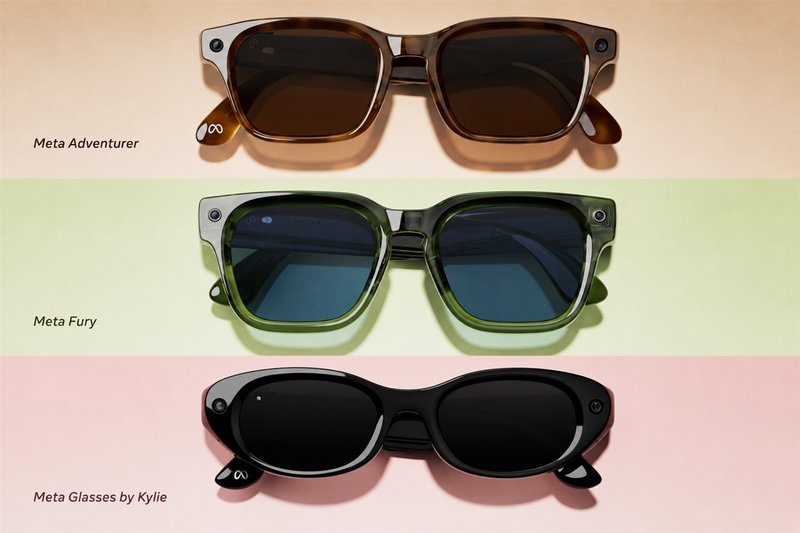
Meanwhile, Meta is not waiting for the developer community to come around. Muse Spark will debut in the coming weeks inside Facebook, Instagram, WhatsApp, and Messenger, as well as in Meta's Ray-Ban AI glasses. This deployment strategy is arguably more consequential than any benchmark result. While OpenAI and Anthropic sell to developers and enterprises, Meta deploys directly to over three billion people already inside its apps daily.
Meta's push into health also raises important privacy questions. Muse Spark users will need to log in with an existing Meta account, and while Meta does not explicitly state that personal account information will be used by the AI, the company has generally trained its models on public user data and has positioned Muse Spark as a "personal superintelligence" product. For organizations evaluating on-premise LLM deployments, the availability of open-source models is a key factor for data sovereignty and cost control. Meta's choice to make Muse Spark proprietary highlights the trade-offs between control and accessibility in the current AI landscape.
Meta stock rose more than 9% on the day of the launch, a signal that investors read the Muse Spark release as proof that the $14.3 billion bet on Wang and the nine-month rebuild produced something real. Whether the promised open-source versions actually materialize is a question the developer community will press every quarter. The answer will define how this chapter of Meta's AI story is remembered.





💬 Comments (0)
🔒 Log in or register to comment on articles.
No comments yet. Be the first to comment!