
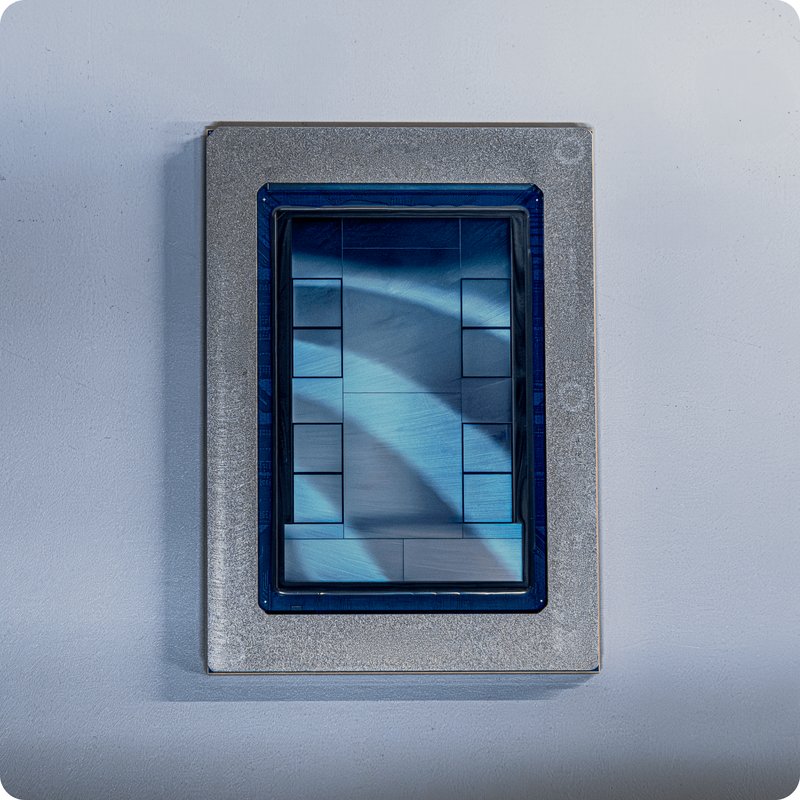
In September, Meta will put its first internally designed AI accelerator into production, with a stated goal: doubling the computing capacity across its data centers. The news, reported by Reuters, confirms that the chip belongs to the MTIA (Meta Training and Inference Accelerator) line, the custom silicon program the company has been working on for years to reduce dependence on external suppliers and contain the infrastructure costs of artificial intelligence.
This isn't simply a replacement for NVIDIA GPUs—it’s a rethinking of the computing architecture around Meta’s specific workloads: training and inference for recommendation models, ranking, and increasingly, in-house Large Language Models. The scale is what matters most: Meta handles billions of requests daily, and even a marginal improvement in efficiency per watt translates into enormous savings and greater sovereignty over its stack.
The decision sends a structural signal to the market. After years in which GPUs were the only serious choice for AI, the major hyperscalers are investing heavily in their own chips: Google with TPUs, Amazon with Trainium and Inferentia, Microsoft with Maia. Meta, which until now had stockpiled record quantities of H100 GPUs, is now moving toward a hybrid architecture where custom silicon supplements GPUs for predictable, high-volume workloads. This further fragments NVIDIA’s monopoly in inference and could accelerate the development of open-source software like vLLM, TensorRT-LLM, and llama.cpp, which become crucial for abstracting hardware diversity.
Who loses? General-purpose GPU suppliers see their hyperscaler market for inference eroding, although training of frontier models remains firmly in NVIDIA’s grip. For companies evaluating on-premise deployment of LLMs, Meta’s move has a halo effect: it shows that custom accelerators can make economic sense even without the economies of scale of a public cloud. Analytical frameworks like those from AI-RADAR help assess these trade-offs, but the direction is clear: the future of large-scale AI workloads is hybrid, with specialized silicon alongside GPUs, all managed on-premise for control, latency, and cost.
Ultimately, the MTIA chip isn’t just a product announcement—it confirms that the era of general-purpose silicon for AI is giving way to a new phase of architectural fragmentation, with profound implications for anyone designing long-term AI infrastructure.







💬 Comments (0)
🔒 Log in or register to comment on articles.
No comments yet. Be the first to comment!