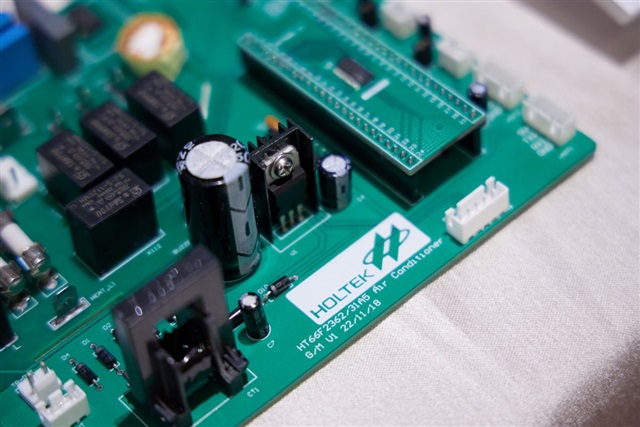
Whenever MCU lead times start moving, the industry's kneejerk reaction is to rush into massive orders. It happened during the pandemic, with procurement queues stretching beyond 50 weeks. Today, however, something has changed. According to early signals filtering through distribution channels, microcontroller deliveries are once again lengthening, but the ecosystem is reacting with composure: no buying frenzy, no distortionary overbooking.
The piece of data, however sector-specific, points to a structural shift in how semiconductor supply chains are managed. Companies have internalized the lessons of the crisis: long-term contracts, inventory buffers handled with more pragmatism, and above all a distrust of the speculative orders that inflated real demand. For the MCU market – ubiquitous components but with thin margins – this moderation is a breath of fresh air for manufacturers, who can plan capacity without the rollercoaster of a "panic and correction" cycle.
What it has to do with on-premise AI hardware
The parallel is less stretched than it seems. The chips used for on-premise inference and training – GPUs, accelerators, FPGAs – share manufacturing nodes and logistical bottlenecks with much simpler microcontrollers. A supply chain that learns to avoid phantom orders and double booking is, by extension, a supply chain that promises greater predictability also for those sizing a local AI cluster.
That is no guarantee: demand for computational capacity for LLMs is growing at rates that analysts struggle to model, and concentration on a few providers (TSMC foremost) remains a risk factor. But the rational behavior of the MCU customer base suggests the market has developed antibodies against artificial bottlenecks – the kind where shortages are amplified by the buyers themselves.
The flip side of margins
There is also a downside. Order moderation may reflect a cooling of end demand, especially in the industrial and automotive sectors that absorb large MCU volumes. If production of edge devices and machinery slows, fabs might end up with unused capacity that could, in theory, be diverted to more profitable lines like advanced AI chips. In practice, though, mature MCU lines cannot be easily reconverted: they rely on different lithography and dedicated equipment. So the impact on the GPU and accelerator pipeline remains an open question.
Those building on-premise environments for LLMs are used to thinking in terms of months-long procurement windows. A less schizophrenic semiconductor industry, if the trend holds, helps reduce uncertainty and makes expansion plans more credible. AI-RADAR will keep monitoring these dynamics, offering analytical frameworks to assess trade-offs between cloud and local deployment. Because when the supply chain quiets down, architectural decisions can finally become technical again, rather than emergency-driven.










💬 Comments (0)
🔒 Log in or register to comment on articles.
No comments yet. Be the first to comment!