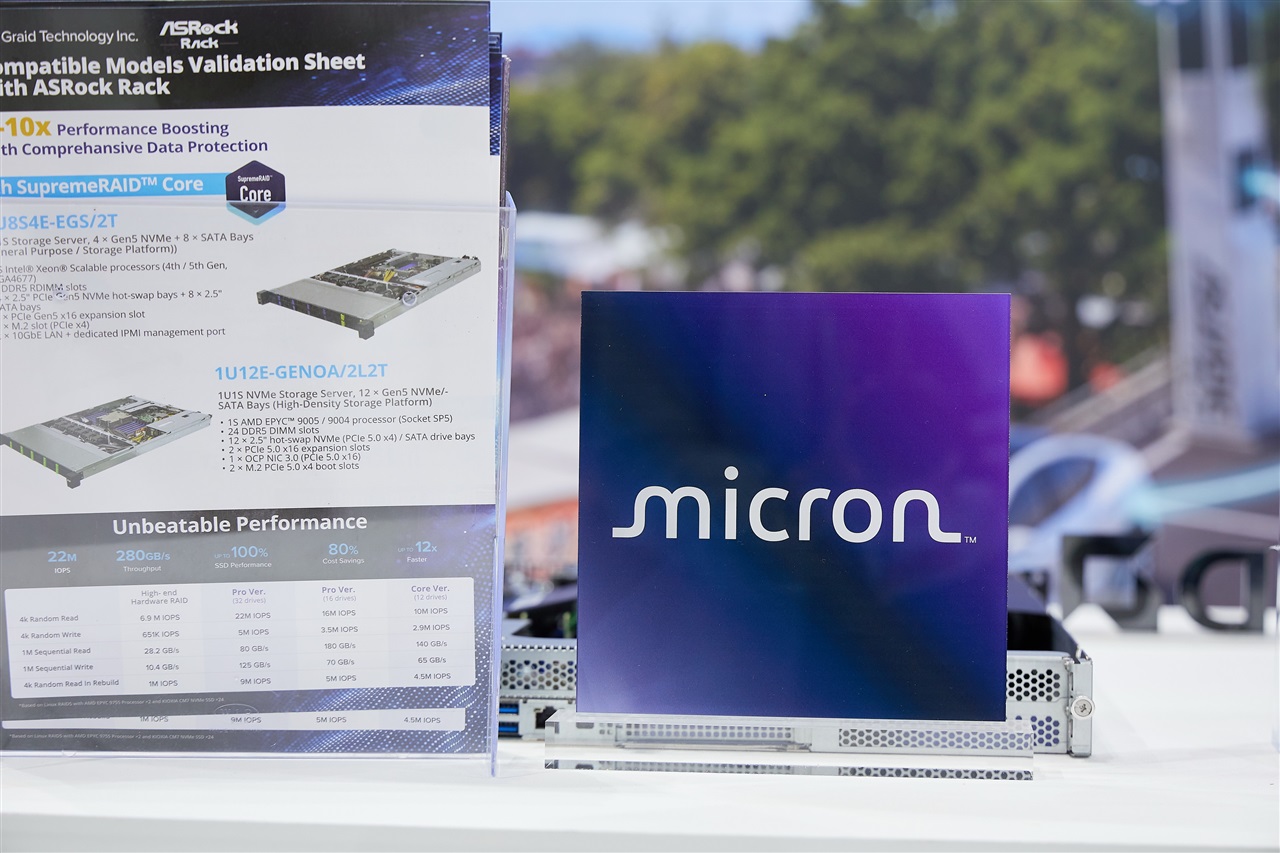
Micron has partnered with Anthropic to accelerate the development of the infrastructure that will support the next wave of language models. The deal, reported by DIGITIMES, does not dive into technical specifics, but the message is clear: memory is becoming the real battlefield for AI.
The partnership bridges two worlds – advanced memory chip manufacturing (HBM, DRAM, NAND) and frontier LLM research with a focus on safety. Anthropic, the company behind models like Claude, has consistently emphasized computational efficiency and robustness, while Micron is one of the three major suppliers of high-bandwidth memory, a component that grows increasingly scarce as model parameters explode.
Memory: the next wall
Today’s bottleneck is not just GPU compute power, but the ability to move data between chips and across modules. With models surpassing a trillion parameters, memory bandwidth and its proximity to the processor dictate inference throughput and the speed of fine-tuning. Anyone running on-premise infrastructure knows this well: without sufficient HBM, even powerful machines become bottlenecks.
The Micron-Anthropic collaboration could lead to hardware-software co-optimization, where models are trained or adapted considering the physical constraints of memory. That’s no minor detail for those evaluating self-hosted LLM deployments: it suggests that future training clusters might integrate better with shared storage and memory components, lowering latency and improving TCO.
Impact on on-prem workloads
For organizations that choose local deployments – for data sovereignty, GDPR compliance, or cost control – a partnership like this signals a clear direction. Next-generation compute nodes will demand more layered memory, with tighter integration between caches and NVMe storage. The collaboration could influence AI server form factors and push toward memory-centric designs, where the model sits entirely in the aggregated VRAM of multiple nodes.
There are no public specs yet, but the combined expertise suggests that future memory chips will be validated against real Anthropic workloads, providing more predictable performance profiles for batch inference and low-latency serving.
Beyond the cloud
The announcement comes as tech giants scramble for HBM supply. While Micron does not dominate the segment like other players, it aims to carve out a role precisely in AI-optimized solutions. Anthropic, for its part, needs infrastructure at scale to keep training ever-larger models without relying exclusively on standard architectures.
AI-RADAR notes that the ripple effects of such collaborations will redefine the parameters that enterprises use to evaluate on-premise investments. It won’t just be about comparing GPU teraflops, but about understanding how memory hierarchy and software-hardware integration will impact real cost per token. For those designing the next AI lab, the news is a reminder: memory is no longer a commodity, but a strategic asset.







💬 Comments (0)
🔒 Log in or register to comment on articles.
No comments yet. Be the first to comment!