Micron Strengthens DDR4 Production in the United States
Micron, one of the world's leading semiconductor manufacturers, has announced a significant expansion of its DDR4 memory production capacity within the United States. This strategic initiative aims to address a global market where the supply of essential components remains tight, a condition exacerbated by the rapid proliferation of artificial intelligence applications.
The decision to boost domestic production reflects a broader trend in the technology sector, focused on strengthening supply chains and mitigating risks associated with reliance on single geographic regions. For companies operating in the AI sector, the availability and stability of memory supply are critical factors for planning and deploying their infrastructures.
The Crucial Role of Memory in the AI Era
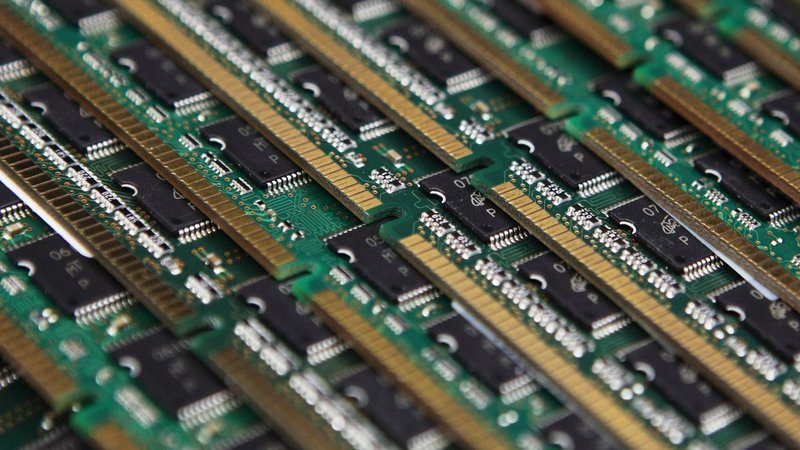
Artificial intelligence, particularly Large Language Models (LLM), demands vast amounts of memory for training and inference. While high-end GPUs primarily utilize HBM (High Bandwidth Memory) or GDDR6X for VRAM, system memory like DDR4 and the more recent DDR5 remains fundamental to the overall architecture of servers and clusters dedicated to AI.
The capacity and speed of system memory directly influence data throughput between CPUs, GPUs, and storage, impacting the latency and overall efficiency of processing pipelines. A limited supply of DDR4 can therefore have cascading repercussions on the assembly of servers and workstations, slowing down the expansion of computing capabilities necessary to sustain AI growth.
Implications for On-Premise Deployment
For organizations evaluating the deployment of LLMs and other AI solutions in self-hosted or on-premise environments, the stability of the supply chain for components like DDR4 memory is a key factor. Hardware availability directly impacts the Total Cost of Ownership (TCO) and the ability to scale infrastructure according to needs.
The choice between cloud and on-premise solutions often relies on a thorough analysis of trade-offs between initial (CapEx) and operational (OpEx) costs, data control, and performance. A robust hardware component supply chain is essential to ensure that investments in local infrastructures can be efficiently realized and maintained. AI-RADAR, for instance, offers analytical frameworks on /llm-onpremise to help companies evaluate these complex trade-offs.
Future Outlook and Supply Chain Sovereignty
Micron's expansion of memory production in the United States is not just a response to current demand, but also a step towards greater resilience in the technology supply chain. This approach can help mitigate geopolitical risks and ensure greater data sovereignty, especially for critical sectors requiring air-gapped environments or strict compliance requirements.
Geographic diversification of semiconductor production is a central theme for many governments and companies seeking to reduce vulnerability to disruptions and market fluctuations. Micron's move highlights how AI demand is not only driving technological innovation but also reshaping global production and procurement strategies.








💬 Comments (0)
🔒 Log in or register to comment on articles.
No comments yet. Be the first to comment!