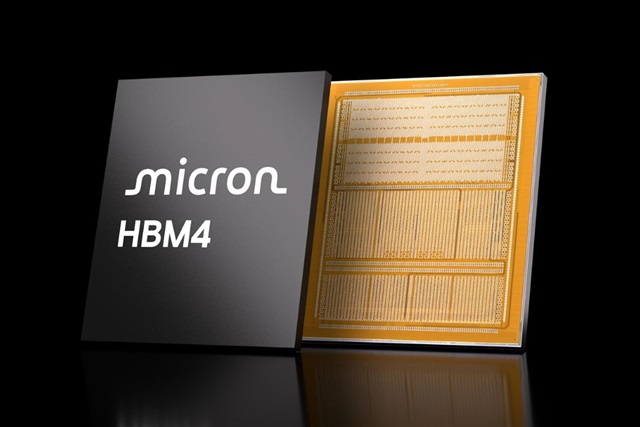
The Rise of HBM4 and Micron's Role in AI
Micron, one of the world's leading semiconductor manufacturers, is strategically directing its efforts towards the development and production of HBM4 (fourth-generation High Bandwidth Memory). This move is not only a signal of the technological direction of the industry but also indicates a potential expansion of its role as a key supplier for Nvidia, the undisputed leader in the GPU market for artificial intelligence. The availability and performance of HBM memories have become a critical factor for the advancement of Large Language Models (LLMs) and other intensive AI applications.
For companies evaluating AI deployments, hardware selection is paramount. HBM memories, integrated directly into GPUs, are essential for ensuring the throughput and low latency required for training and inference of complex models. Micron's commitment to this segment highlights the growing demand for high-performance memory solutions, a non-negotiable requirement for those operating with large-scale AI workloads, whether in the cloud or in self-hosted environments.
The Crucial Role of HBM Memory in AI
HBM memories are distinguished by their ability to offer significantly higher bandwidth compared to traditional GDDR memories, while occupying less physical space and consuming less power per bit transferred. This architecture, which stacks multiple memory dies vertically and connects them via a high-speed interface, is vital for modern GPUs. Large Language Models, in particular, require enormous amounts of VRAM and extremely high bandwidth to handle large datasets and extended contexts, both during the training and inference phases.
Without high-performing HBM memories, GPUs would be unable to feed their processing cores with data quickly enough, creating a bottleneck that would drastically limit overall performance. The evolution from HBM2e to HBM3 and now to HBM4 represents an exponential increase in data processing capability, allowing for the training of increasingly larger models and the execution of inference with larger batch sizes and reduced latencies. This directly impacts the efficiency and scalability of AI systems.
Implications for On-Premise Deployments and TCO
For CTOs, DevOps leads, and infrastructure architects considering self-hosted alternatives to cloud services, the availability and specifications of HBM memories are a determining factor. On-premise LLM deployments require robust hardware optimized to ensure data sovereignty, regulatory compliance, and complete control over the infrastructure. In these scenarios, GPUs equipped with the latest generation HBM become a strategic asset.
The Total Cost of Ownership (TCO) analysis for an on-premise AI infrastructure must consider not only the initial cost of GPUs and memories but also the operational efficiency resulting from superior performance. Higher HBM bandwidth can translate into reduced training times or increased throughput for inference, optimizing resource utilization and lowering long-term energy costs. For those evaluating on-premise deployments, AI-RADAR offers analytical frameworks on /llm-onpremise to assess these trade-offs, highlighting how memory choice directly influences the scalability and sustainability of local solutions.
Future Outlook and Supply Chain Challenges
Micron's commitment to HBM4 underscores a clear trend: high-bandwidth memory will continue to be a critical element for innovation in AI. The demand for AI GPUs is constantly growing, and with it, the need for increasingly powerful and available HBM memories. The diversification of HBM suppliers, with Micron potentially strengthening its position alongside other players, could help mitigate supply chain risks and stabilize prices, a non-negligible aspect for companies investing in AI infrastructure.
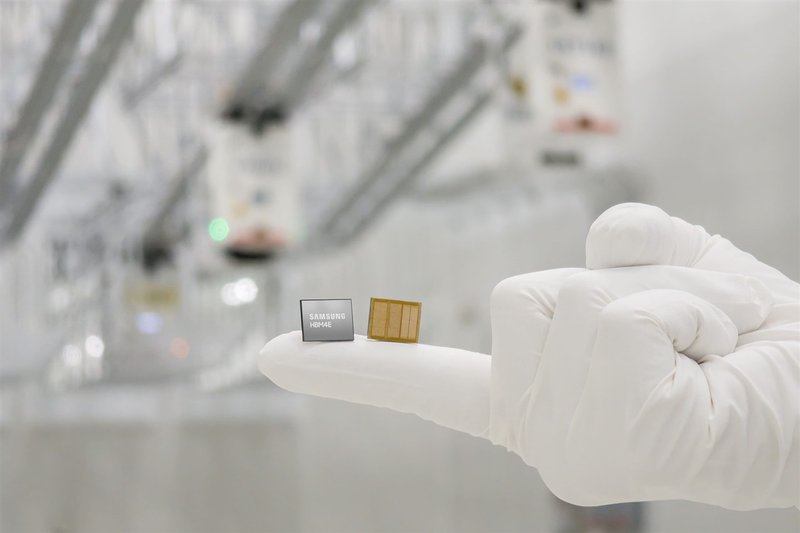
However, HBM production is a complex and technologically intensive process, requiring significant investments in research and development. Challenges include optimizing manufacturing processes, ensuring high yields, and the ability to scale production to meet rapidly expanding global demand. The evolution of HBM memories, with the introduction of future standards like HBM4E, will be fundamental to unlocking new capabilities in Large Language Models and supporting the next generation of AI applications, solidifying memory's role as a strategic component in the age of artificial intelligence.






💬 Comments (0)
🔒 Log in or register to comment on articles.
No comments yet. Be the first to comment!