
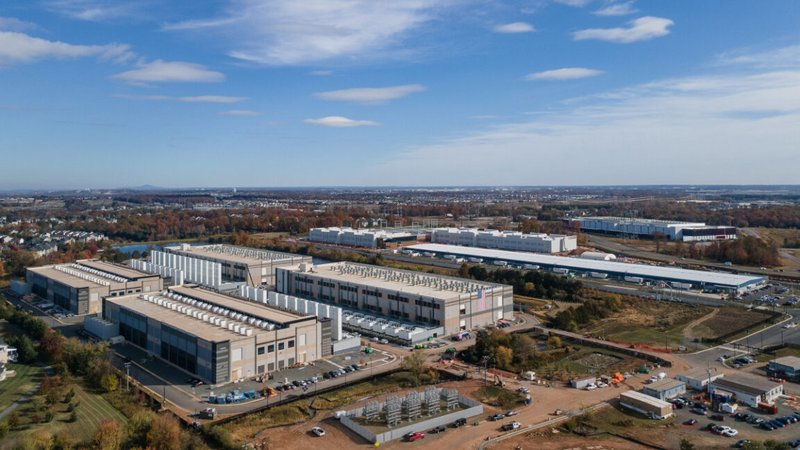
The paradox is right there in that 25% spike. In 2020 Microsoft laid out one of the boldest climate targets in tech: become carbon negative by 2030, removing more CO₂ than it emits. Instead, its latest sustainability report tells the opposite story – emissions jumped a quarter in a single year. The official reason? Building and operating data centers for artificial intelligence.
The number is worse than it looks, and also far more honest. Worse because it reflects the raw, immediate toll of an AI infrastructure build-out that devours electricity to power ever-larger GPU clusters and cool server halls. More honest because Microsoft is transparently counting all emissions, including those from its supply chain (Scope 3), which many companies still leave out. AI is exposing the gap between green rhetoric and industrial reality.
Why AI shifts the climate trajectory
Behind the jump is Microsoft’s strategic choice to embed large language models across its entire ecosystem – from Azure to Copilot, via its deep partnership with OpenAI. Training and serving these LLMs requires compute clusters with thousands of GPUs, each drawing hundreds of watts. A single frontier-model training run can consume as much electricity as hundreds of households use in a year, and continuous inference adds a relentless load the industry has never seen before.
This is not a one-off mishap; it is a regime change. Chip efficiency improves, but the demand for compute grows faster than energy savings can keep up. It is Jevons paradox updated for the AI era: every watt saved by a smarter architecture is quickly swallowed by larger models, longer context windows, and ever more frequent prompts. The emissions curve bends upward, not down.
Who wins and who loses in the AI-vs-climate tug-of-war
In the short run, major cloud providers are caught between chasing AI demand – which promises growing revenue – and defending climate pledges that have become brand assets. Microsoft is not walking back its promise, but the report signals that without a radical intervention the 2030 target will slip out of reach. For enterprise customers, whether on cloud or evaluating on-premise deployments, the message is blunt: AI carries a real energy cost that will sooner or later show up in balance sheets, carbon taxes, and reputation.
Structurally, this tension may accelerate two trends. First, a race toward more efficient inference hardware: specialized chips, aggressive quantization (INT8, INT4), sparse architectures that reduce data movement between memory and compute units. Second, a push toward energy sovereignty: if centralized data centers soak up too much power and generate embarrassing emissions, businesses and governments may prefer local deployments running on renewables, with granular CO₂ accounting. In on-premise AI total cost of ownership discussions, the energy line is no longer a footnote.
A wake-up call for AI infrastructure planning
What Microsoft’s report brings into plain sight is a systemic conflict the whole AI industry will have to address. Performance metrics – tokens per second, throughput, latency – have been the only compass so far. Now a new parameter is emerging: the environmental cost per unit of cognitive work. And it is not a communication accessory; it is already potential regulation, investor pressure, and a condition for social license.
For teams working with self-hosted stacks, the lesson cuts both ways. Direct hardware control lets you pick energy-efficient solutions and track consumption precisely. At the same time, the on-premise ecosystem cannot afford to ignore its energy footprint, because the comparison with cloud – often done solely on GPU-hour pricing – will increasingly incorporate emissions as well. Microsoft’s story is only the first chapter of a narrative that, soon, will shape every deployment decision.




💬 Comments (0)
🔒 Log in or register to comment on articles.
No comments yet. Be the first to comment!