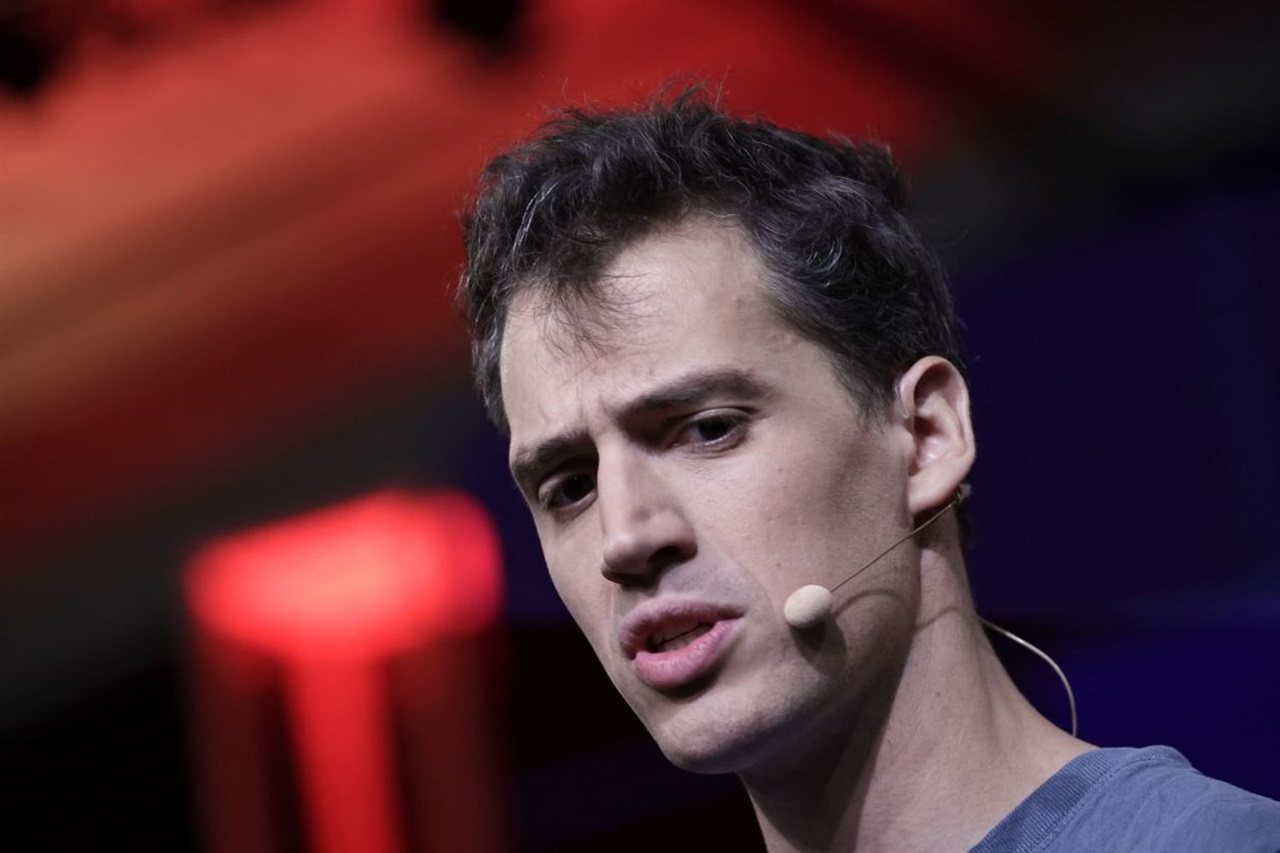
Mistral AI has chosen a political stage to spotlight an unspoken sore point of European artificial intelligence: energy costs. The company, among the most watched in the continent's LLM landscape, has asked Paris to reserve cheap electricity for AI firms based in Europe. The move, reported by DIGITIMES, is no insider detail. It is a structural signal that the AI game is shifting from academic benchmarks to industrial fundamentals – and electricity is the most underestimated line in the Total Cost of Ownership.
Those who manage GPU clusters for on-premise training or inference know it well: an A100 80GB card can draw up to 400 watts, and a rack of dozens of units hits the electricity bill like a small industrial plant. With frontier models, energy appetite explodes, and in Europe power prices remain structurally higher than in regions where US and Chinese hyperscalers are consolidating their infrastructure. Mistral's proposal does not ask for generic subsidies but for a fast lane for those developing AI on the territory, a mechanism that – if implemented – would reshape incentives for companies currently deciding whether to lean on public cloud or invest in self-hosted hardware.
The French context gives substance to the request. The country's nuclear fleet produces electricity at low marginal cost and with an emissions profile that makes the issue less vulnerable to environmental criticism. Earmarking a share for AI firms would mean anchoring European technological competitiveness to a hard infrastructure advantage, not to temporary fiscal transfers. For those who follow AI-RADAR's logic, the link with data sovereignty is immediate: cheap energy lowers the TCO of on-premise deployment, makes self-hosting of LLMs in local data centers more sustainable, and reduces reliance on non-EU cloud providers, while strengthening GDPR compliance and control over data residency.
But it is precisely the definition of a “European AI company” that raises the first knots. Would it include only entities with fully Community-owned capital? Or would a legal headquarters suffice, opening the door to subsidiaries of extra-EU giants? The stakes are high: if subsidized energy ended up powering foreign-owned data centers, the competitive benefit would dilute. Conversely, a tight perimeter would give breathing space to local champions and startups, accelerating exactly that inference and fine-tuning pipeline that today struggles to scale due to prohibitive operational costs.
Mistral's request also signals a meaningful semantic shift: energy policy is de facto becoming industrial AI policy. In the past, debates centered on R&D tax credits or broadband funds; today the hot front is megawatt-hours. This evolution forces public decision-makers to rethink the role of utilities and regulators, and could trigger chain reactions: other Member States with energy surpluses (think of Nordic hydroelectric power) might follow suit, sparking intra-EU competition to attract AI workloads. In such a scenario, those managing on-premise infrastructure should start mapping access to price-controlled energy sources as a strategic variable, on par with the choice between FP16 or INT8 quantization.
The question remains how Brussels would read such a measure on the competition front: state aid disguised as energy policy is nothing new, but applying it explicitly to AI could raise objections at the WTO or from trading partners. Yet Mistral's initiative has the merit of dragging the topic out of technical working groups and into the public debate, reminding everyone that the LLM race is won not only on tokens per second but also on cost per kilowatt-hour.




💬 Comments (0)
🔒 Log in or register to comment on articles.
No comments yet. Be the first to comment!